

Published :
Updated :
 For all latest news, follow The Financial Express Google News channel.
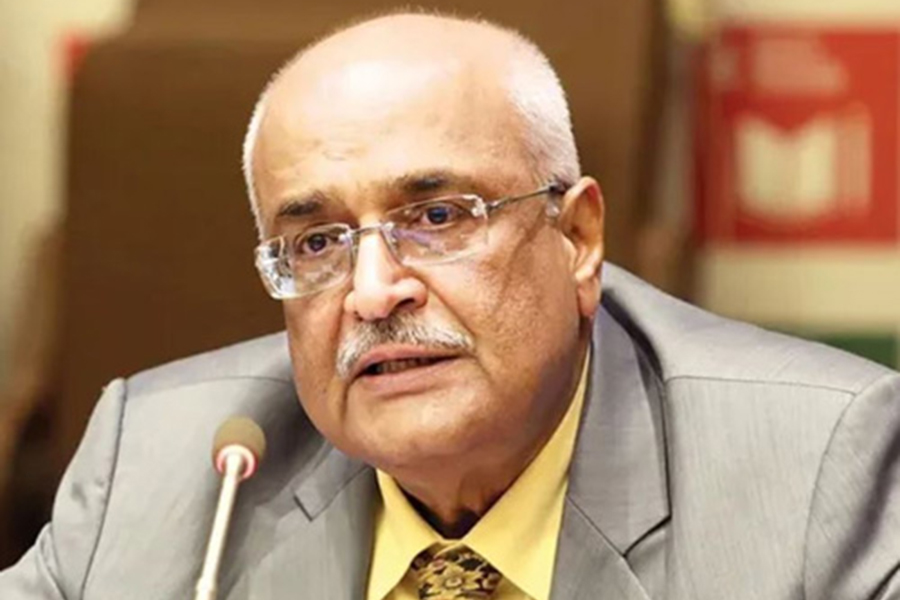
Noted economist Dr Debapriya Bhattacharya has called for all political parties to clear public perception on cybersecurity during their election campaigns, warning of massive digital propaganda ahead of the upcoming national elections.
He said neither the government nor the Election Commission could play their respective roles in checking digital propaganda, which has already spread division, hatred, and violence, affecting both personal and social lives.
Dr Debapriya Bhattacharya, a distinguished fellow of the Centre for Policy Dialogue (CPD), shared his views at an open forum discussion on democratic reconstruction for the digital economy and entrepreneurship on Tuesday.
The Centre for Governance Studies (CGS) organised the discussion to engage the tech community in addressing emerging opportunities and challenges in the digital economy.
Moderated by CGS President Zillur Rahman, the session included former National Board of Revenue (NBR) chairman Muhammad Abdul Mazid, business leaders Abdul Haque, Shahedul Islam Helal, Asif Ibrahim, Jabel Rahman Ghani, Associate Relationship Manager of City Bank Tanha Kate, and Chairman of Daffodil Group Sabur Khan.
Dr Bhattacharya said that while digitalisation has created numerous opportunities, its negative impact is visible in rising unemployment.
Sharing concerns he gathered from people during visits to various districts, he noted that there is public demand for the responsible use of social media and artificial intelligence, which are increasingly being misused to incite violence against women, religion, and differing opinions.
"We cannot move forward if the digital system cannot expand to identify and address corruption," he said, emphasising the need for a national data centre supervised by an autonomous government body independent of the home ministry and Election Commission.
The former NBR chairman underlined the need to change perceptions of digitalisation by leveraging the talents of the country's youth and stressed that a long-term, intensive policy is essential.
"We have to change our perception to develop our own talent and resources by reducing dependency on foreign consultant-based digital systems," he said, highlighting that incidents like the Bangladesh Bank breach and the failure of NBR's automation are partly due to reliance on foreign consultants.
Asif Ibrahim, former president of the Dhaka Chamber of Commerce and Industry, emphasised the need to maintain accurate statistics on entrepreneurship development and ensure necessary infrastructure, noting that the nation aspires to a society free from corruption.
He also stressed improving digital skills across all levels, including rural and urban youth, and providing a smooth system to support their business activities.
Business leader Jabel Rahman Ghani expressed frustration over the political culture in the country, stating that the mindset of political parties and leaders must change to provide the nation with a clear understanding of democracy and governance.
"Whoever forms the next government must listen to the people and give them a clear understanding of their responsibilities," he said, adding that the importance of digital infrastructure can no longer be ignored.
Other speakers highlighted promoting technology-based businesses, freelancing, and start-ups to expand the digital economy by removing policy-level barriers. They stressed using social platforms for employment, business, and marketing rather than just for communication.
They also called for reducing the digital divide between urban and rural areas and emphasised that the government must focus on information security, fake payments, and cashless transactions.
smunima@yahoo.com