

Germany envoy terms Bangladesh’s 2026 polls ‘world’s largest democratic election’
Vows to boost bilateral trade
Published :
Updated :
 For all latest news, follow The Financial Express Google News channel.
Germany’s ambassador to Bangladesh, Dr Rüdiger Lotz, has expressed optimism that Bangladesh will soon rejoin the ranks of vibrant democracies as it prepares for what he described as “the world’s largest democratic election” in 2026, when more than 127 million citizens are expected to vote.
“At a time when democracy faces challenges across many regions of the world, Bangladesh’s election will serve as proof — to quote Abraham Lincoln — that government of the people, by the people, for the people shall not perish from the earth,” said Dr. Lotz.
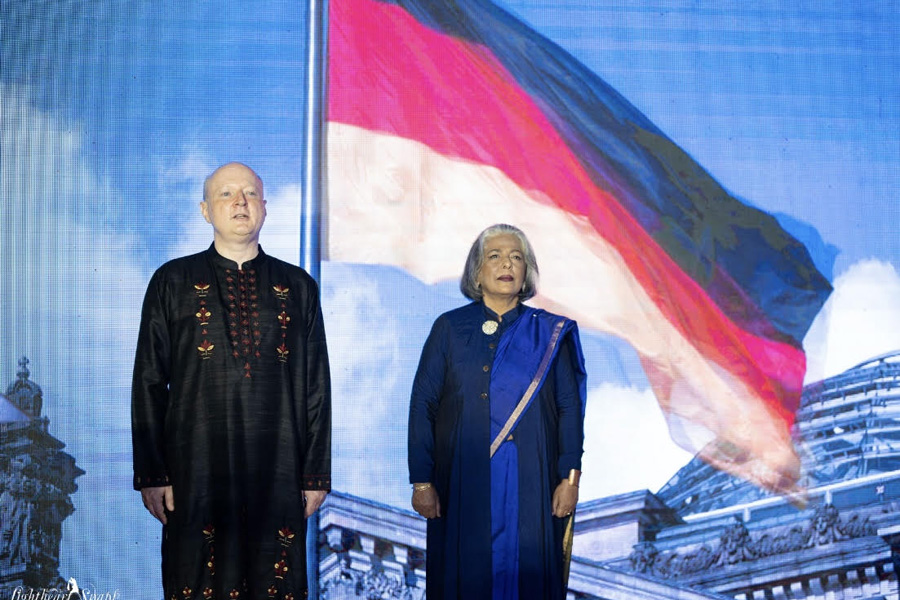
He made the remarks on Wednesday evening at an event hosted by the German Embassy in Dhaka, marking the 35th anniversary of German reunification.
The envoy praised the interim government led by Chief Adviser Muhammad Yunus for steering the country toward democratic restoration after years of political unrest.
“What matters now is ensuring a good election process — one that is free, fair, and credible. I have seen encouraging efforts in this direction from all stakeholders,” he said.
Turning to economic relations, Dr. Lotz highlighted the significant potential to expand bilateral trade and investment, as German and other European companies seek new partners in Asia.
“Bangladesh has impressive growth rates, an emerging middle class of 40 million, a young workforce, and a strong geo-economic position,” he said. “One of my key goals is to attract more German companies to explore the vast opportunities this country offers.”
Germany is currently Bangladesh’s second-largest trading partner, with bilateral trade exceeding €9 billion. Nearly 20 per cent of Germany’s textile imports come from Bangladesh, while sectors such as agribusiness, pharmaceuticals, and logistics are gaining importance, he noted.
Dr. Lotz also mentioned the rising demand for German exports, including machinery, consumer goods, and automobiles, and urged Bangladesh to address business environment challenges such as regulatory clarity, governance, and infrastructure.
He stressed that Germany views Bangladesh not only as a commercial partner but also as a nation with shared values. “We have had close ties since 1971,” he said. “Germany looks forward to deepening relations with Bangladesh as a partner that shares both interests and values.”
The ambassador cited recent high-level exchanges, including meetings between Professor Yunus and German Chancellor Olaf Scholz, as signs of growing cooperation.
“I am confident we will see an even closer partnership as Bangladesh becomes a key player in Asia and a pillar of regional stability,” he said.
Dr. Lotz reaffirmed Germany’s commitment to work jointly with Bangladesh on climate change and sustainable development, pledging continued support through agencies like GIZ and KfW, which have already contributed to over €3.5 billion in development assistance since Bangladesh’s independence.
He also welcomed the growing number of Bangladeshi students in Germany — now around 7,000 — calling it “a win-win situation for both countries.”
“All of this,” he concluded, “is being done in close coordination with our European partners under Team Europe.”
mirmostafiz@yahoo.com