
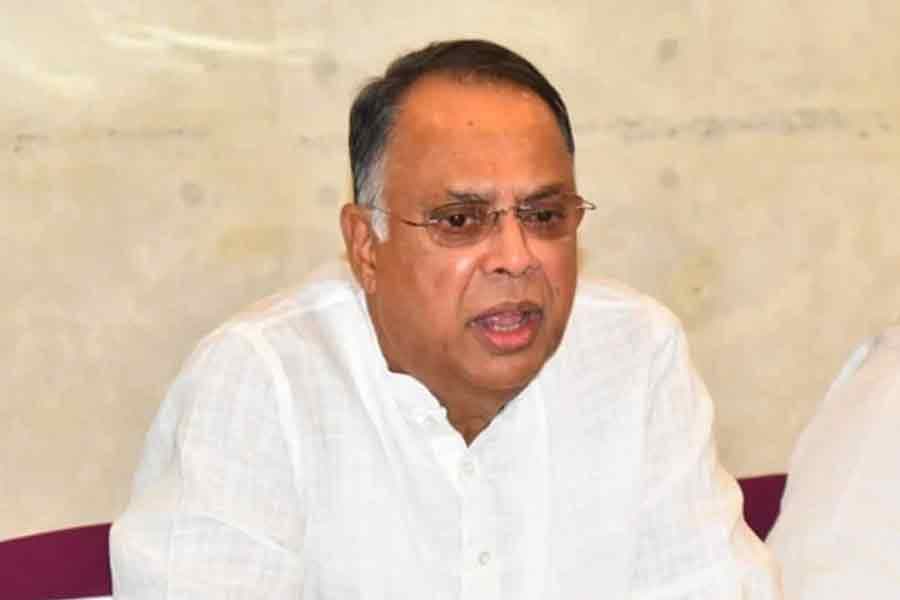
The government has a plan to generate 5,000 megawatts of electricity from solar power within the next five years, Iqbal Hasan Mahmood, the minister for the Ministry of Power, Energy and Mineral Resources, said Tuesday.
“Immediately after taking office, Prime Minister Tarique Rahman raised the issue of solar power in his second cabinet meeting and asked us for a concrete plan on how to increase solar power generation,” he said, pointing out the government’s move towards establishing solar power.
The minister made these remarks while speaking as the chief guest at a seminar titled “Roadmap Towards 10,000 Megawatts Solar Power, 2030,” at the Institution of Engineers, Bangladesh (IEB), marking its 78th founding anniversary.
The IEB President and RAJUK Engineer Mohammad Riazul Islam (Riju) chaired the event.
The previous government kept the power and energy sector import-dependent for money laundering, which has now left a debt burden of Tk 560 billion that the current government must bear, the minister alleged.
Although the previous government required rooftop solar panels for connections, most installations were only for show and are now lying unused and covered in dust, he added.
Proposing a business-oriented model, he suggested installing solar panels on rooftops across Dhaka and beyond, dividing into blocks.
“If the city is divided into six or more blocks, each investor could be given one block. They would generate electricity and sell it privately, without government interference,” he said.
The minister opined, declaring solar projects tax-free and offering incentives like waiving or reducing holding tax for households that install solar panels.
“If someone invests under this facility, the government can collect income tax from them after five years. I don’t see any problem with that,” he said.
Government-owned land, such as vacant plots under the Railway Ministry, Roads Department, and Land Ministry, can be used for solar panel installations.
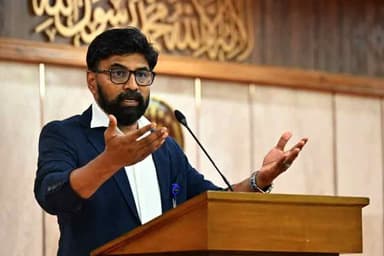
At the seminar, BUET Professor Dr. Md. Ziaur Rahman Khan presented the keynote paper.
He noted that while renewable energy currently contributes about 5.0 per cent of the country’s supply, the target is to raise it to 30 per cent by 2030, requiring a rapid increase from the current 1.5 gigawatts (GW) to 10 GW.
Analysing examples from Vietnam, India, and Pakistan, he showed that rapid solar expansion is possible but unsustainable without strong grids and policy support.
Vietnam added 16.5 GW in two years but wasted much due to weak grids, while India succeeded in lowering costs through competitive auctions and “plug-and-play” infrastructure.
For Bangladesh, successful initiatives like solar home systems, solar irrigation pumps, and net metering in the garments sector were highlighted.
However, land scarcity, high import duties, bureaucratic delays, and approval complexities remain major obstacles. High tariffs on panels, inverters, and batteries are discouraging investment.
The roadmap emphasized integrating solar with agriculture, floating solar projects on Kaptai Lake, removing tariffs, and developing smart grids and battery storage.
It also proposed community solar, green bonds, and opportunities for expatriate investment.
The seminar was conducted by IEB Dhaka Centre’s Secretary Engineer K.M. Asaduzzaman, with speeches from ABP Convener and former MP Engineer Shahrin Islam Chowdhury Tuhin, Chief Advisor Engineer A.N.H. Akhtar Hossain, and IEB Honorary General Secretary Professor Dr. Engineer Md. Sabbir Mostafa Khan, among others.
azizjst@yahoo.com