

Knowledge-sharing forum for Asia, Arab states on EIIP opens in Savar
Published :
Updated :
 For all latest news, follow The Financial Express Google News channel.
The first-ever inter-regional knowledge-sharing forum for Asia and the Arab States on employment-intensive infrastructure programmes (EIIP) opened in Savar, bringing together 75 participants from 18 countries across the two regions.
The forum taps into the International Labour Organization’s (ILO) 50 years of experience of applying employment-intensive investment approaches and technologies to address unemployment and underemployment through public investment, usually in the development of infrastructure and environmental works, according to a statement issued on Tuesday.
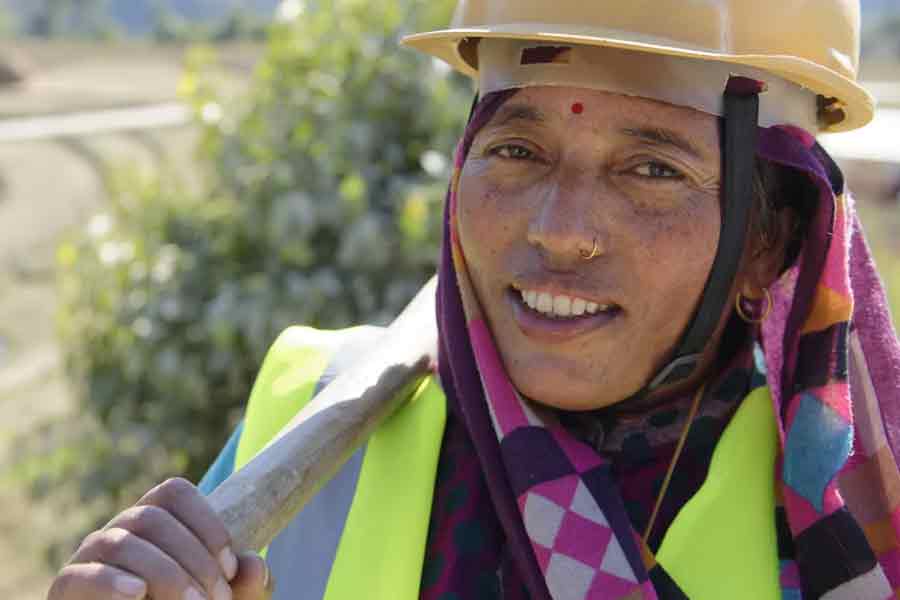
It has succeeded in generating jobs locally, especially for the most vulnerable and marginalised such as women, youth, persons with disabilities, and indigenous communities, lifting millions of people out of poverty and building community resilience to climate shocks and natural disasters.
The statement quoted Abdur Rashid Miah, chief engineer at the Bangladesh Local Government Engineering Department, as saying, “In the face of climate change, disasters, and socio-economic shocks, countries in the global South have much to learn from each other, especially from the ILO approach, which emphasizes employment generation through public investment in infrastructure developments.”
“Through South-South technical cooperation we look forward, for example, to learning from India, Indonesia, and the Philippines more on disaster response; from Lebanon and Jordan on integrating employment in conflict-affected areas; and from Sri Lanka, Nepal and Pakistan on water management and irrigation infrastructure, areas highly relevant to our own climate resilience efforts,” he added.
The ILO employment-intensive infrastructure programme has implemented a wide range of projects valued at over $365 million across Asia and the Arab States, in the past 15 years, addressing unemployment and responding to geopolitical crises and climate-related natural disasters, according to the statement.
It integrates participatory and local resource-based methods, income generation, capacity-building, gender inclusion, and sustainability.
“What distinguishes the ILO approach are three things: a rights-based approach, a localized approach, and supporting civil society and local and national institutions, thereby creating a sustainable approach to employment creation,” said Mito Tsukamoto, Branch Chief, Employment in Investments.
ILO Country Director in Bangladesh Tuomo Poutiainen said South-South cooperation energizes job creation but cautioned on the need to ensure that EIIPs address not only employment and economic concerns but also the environmental and social ones by embracing decent work.
Vice-President of the Bangladesh Employers’ Federation Tahmid Ahmed said, “Employment-intensive investment programmes have proven to be an effective strategy for creating jobs, fostering economic resilience, and driving social progress. We must also emphasize collaboration to face global challenges such as climate change.”
Workers’ representative and Chairman of the National Coordination Committee for Workers’ Welfare in Bangladesh, Badal Khan, affirmed the importance of the EIIP approach to countering high unemployment and under-employment rates in Bangladesh.
EIIP projects in the Arab States, where unemployment levels are currently higher than during the pandemic, typically begin with emergency employment in the reconstruction of public works and have become a model for inclusive employment in national public works programmes.
In Asia Pacific, the EIIP projects typically address post-natural disaster situations, targeting the most vulnerable populations and tackling poverty through local resource-based approaches. They predominantly focus on climate change, unemployment, and urbanization, with activities involving community-based works, rural roads, irrigation, and other key infrastructure.
munni_fe@yahoo.com