

Published :
Updated :
 For all latest news, follow The Financial Express Google News channel.
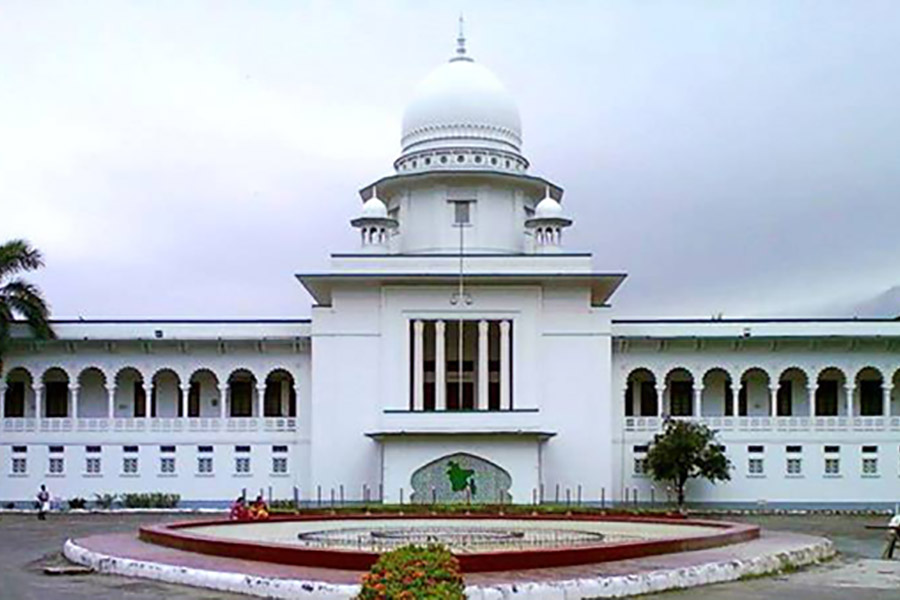
Law Minister Asaduzzaman says he opposes the proposed lowering of the Supreme Court judges' retirement age, suggesting instead that the age limit be increased to utilise their experience.
He spoke to reporters after a courtesy meeting with the prosecution team at the International Crimes Tribunal (ICT) in Dhaka around 3pm on Monday.
Asked if there is any plan to reduce the retirement age from 67 to 65 years, Asaduzzaman said: "The Opposition raised the issue in a parliamentary special committee meeting. We said this is not a forum for discussion.
“The issue will be discussed thoroughly in the Constitution Amendment Committee when formed because it is linked to constitutional amendment."
The minister said he will oppose the proposal to reduce the retirement age if he is named in the committee.
“I do support increasing the age limit. But this shall not be unto death,” he said, citing the “same practice” in many countries across the world.
“The more experienced the judges are, the better legal services we receive. For example, in the US, there is no fixed retirement age for Supreme Court judges,” he said.
Asaduzzaman, also the Jhenaidah-1 MP, however, said: “If someone takes the initiative to reduce the retirement age of our esteemed judges from what it is currently (67 years), we’ll consider the reasons.”
On the decision of barring journalists from courtrooms at the Supreme Court, he said it is an administrative move, not a judicial order.
As journalists asked if it reflected a “stubborn” decision by the chief justice, he objected to the question, saying: “But he [chief justice] knows very well why he decided so.”
The minister, however, said the chief justice would reconsider the decision.
"But I don't think it is right for me, as the law minister, to negotiate with him or exert any influence on this issue."
When asked about the government’s efforts to repatriate convicts and fugitives including the former prime minister Sheikh Hasina from India, the minister said: "Our relevant ministry is working on this issue."
Asaduzzaman said during the meeting at the ICT, they discussed how to deal with legal and administrative problems.
About the backlog of cases at the tribunal, he said: “The increase in the number of cases is not a matter of concern for us. Crimes have to be tried.
“The challenge for us is whether justice is being ensured or not. We will do so.”
Responding to a question on whether the post-July Uprising “mob violence” or lynching will be tried at the ICT as crimes against humanity, he said if it is an ordinary crime, it falls under “general” law.
"If it is tried in the tribunal, any freedom struggle, mass uprising or revolution will be disrespected,” he argued, but pledged to look into such incidents.
He told the journalists that the work of the ICT investigators regarding the 2013 Shapla Chattar massacre is “nothing outside the government's policy”.
“The prosecution team is moving forward at its own pace because the government has a policy," he added.\