

Published :
Updated :
 For all latest news, follow The Financial Express Google News channel.
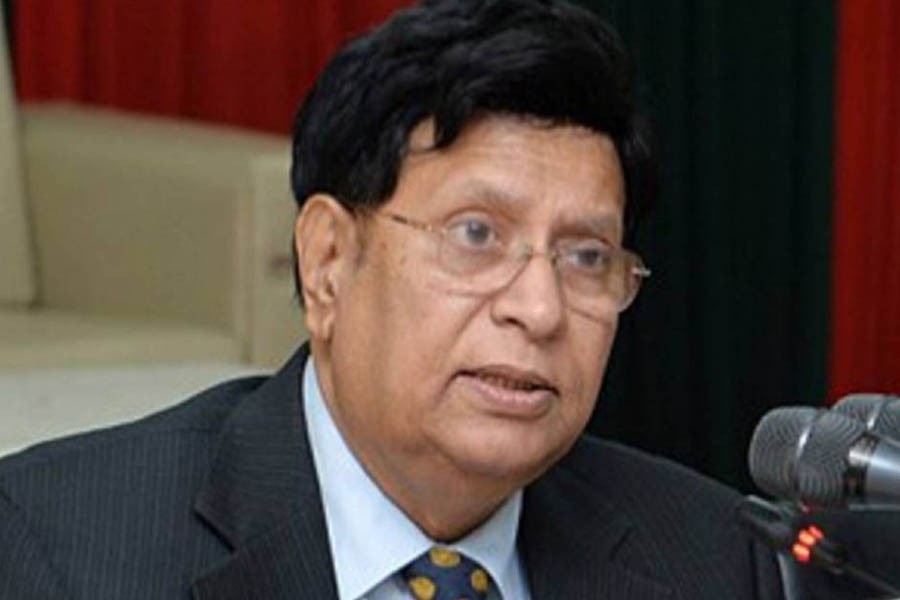
Foreign Minister AK Abdul Momen has denounced the United States and Canadian governments for their failure to deport two fugitive killers of Bangabandhu Sheikh Mujibur Rahman back to Bangladesh.
“The killers of Bangabandhu are still on the run. We know about two cases -- one in the United States and another in Canada. The whereabouts of three other fugitive convicts are still unknown,” the minister said on Tuesday at a tree-planting event on the first day of August, the month of mourning to commemorate Bangabandhu's assassination, reports bdnews24.com.
“The self-proclaimed assassins have been living in the same countries that lecture about humanism, speak out about human rights, but give refuge to these self-confessed murderers. They should be ashamed.”
Six killers of Bangabandhu were executed in two separate phases. The five other death penalty recipients are Abdur Rashid, Shariful Haque Dalim, Risaldar Moslehuddin (Khan), M Rashed Chowdhury, and AHMB Noor Chowdhury. They are all absconding.
Rashed lives in the United States, while Noor resides in Canada. They were not extradited to Bangladesh, despite several calls from the ruling Awami League government.
Neither the government nor detectives have found any trace of the other convicts. Even though a newspaper report said last year that Moslehuddin was in India, the authorities could not verify the report.
Four years after Bangladesh gained its independence, the architect of its liberation, Sheikh Mujibur Rahman, was assassinated, along with most of his family, on August 15, 1975, by a group of rogue army officers at his residence in Dhaka's Dhanmondi.
His daughters, Sheikh Hasina and Sheikh Rehana, escaped the massacre as they were in Europe at the time.
After the gruesome murders, 12 army officers involved were awarded jobs in diplomatic missions abroad in 1977, when General Ziaur Rahman, who founded the BNP, seized power through a military coup.
Bangladesh’s first military ruler later promulgated the Indemnity Ordinance to protect the self-proclaimed killers of Bangabandhu.
The ordinance was abrogated on November 12, 1996, when the Awami League returned to power after two decades, paving the way to bring the killers to justice.
But the case proceedings came to a near halt after the BNP-Jamaat-e-Islami coalition government came to power.
After regaining power, the Awami League restarted the trials. Following the verdict in the case, six of the killers were hanged.
Though all the killers were given the death penalty, the ruling party leaders have always said the conspirators of the Bangabandhu assassination have not been brought to justice.
They have also claimed that ‘a foreign power’ was involved in the conspiracy.