

Ousted AL govt left people ‘hostage’ to IMF bailout deal: Titumir
Published :
Updated :
 For all latest news, follow The Financial Express Google News channel.
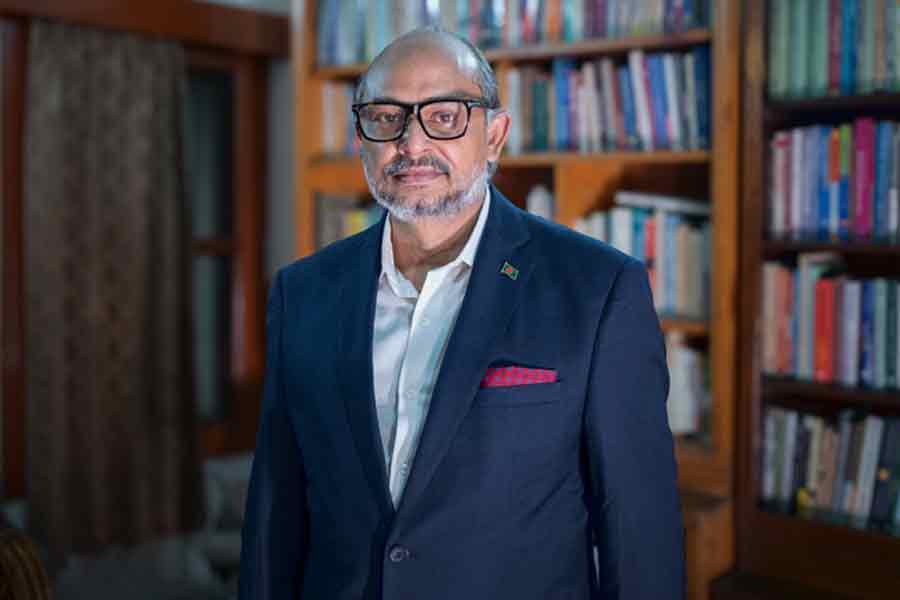
Prime Minister’s Finance and Planning Adviser Rashed Al Mahmud Titumir has said the ousted Awami League government left the people ‘hostage’ to the International Monetary Fund (IMF) through its bailout loans agreement, arguing that a lack of public accountability led to the acceptance of stringent conditions.
Amid ongoing discussions over Bangladesh’s IMF programme and delays in the disbursement of the fifth tranche, he made the remarks while speaking as the chief guest at a seminar titled “Macroeconomic Stability, Financial Capacity and the Government’s 180-Day Action Plan” organised by the Economic Reporters’ Forum (ERF) in Dhaka on Saturday.
He also criticised international institutions, accusing them of applying “double standards”, as they highlight rising poverty over the past three years while simultaneously advising cuts in subsidies and direct support.
“If prices are adjusted in a textbook manner, inflation will rise, and farmers as well as low-income groups will suffer,” he said, adding that higher diesel prices would hit farmers during the irrigation season.
He further said IMF data itself indicates that poverty has increased in Bangladesh over the past three years. “When we introduce farmer cards to address poverty, they say direct subsidies cannot be given,” he noted.
The adviser said the government’s position is to respect agreements signed with the IMF and the United States, but stressed that any provisions seen as contrary to national interest would be reviewed.
Referring to IMF conditions, he said, “They say they can change their conditions, but we cannot change ours.”
“We inherited an economy growing at 3 per cent. If we are now asked to raise the tax-to-GDP ratio to 9.2 per cent, how is that feasible?” he questioned.
“They suggest introducing a turnover tax. If any business from Teknaf to Tetulia demands it, we will consider it,” he added.
Citing IMF Article IV consultations, he said subsidy-reduction prescriptions are applied unevenly across countries, while Bangladesh has supported reforms in Special Drawing Rights (SDR).
Referring to the Ukraine-Russia war period, he said global fuel and gas prices were not adjusted in line with market realities, despite the fact that electricity prices were repeatedly increased under the previous government.
Dr Mustafizur Rahman, Distinguished Fellow of the Centre for Policy Dialogue (CPD), attended as an honoured guest.
Special guests included Mahmud Hasan Khan, President of BGMEA; Mohammad Hatem, President of BKMEA; and Md Rafiqul Islam, Secretary General of the Footwear, Leather Goods & Accessories Exporters Association (FLAXA).
ERF President Doulot Akter Mala chaired the event, while General Secretary Abul Kasem moderated it.
newsmanjasi@gmail.com