

Published :
Updated :
 For all latest news, follow The Financial Express Google News channel.
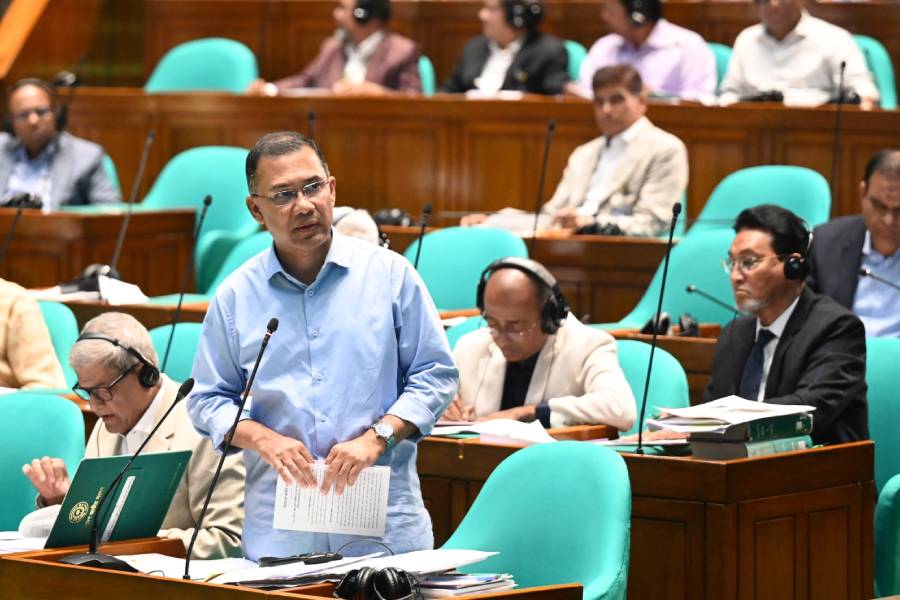
Prime Minister Tarique Rahman on Wednesday unveiled a set of master plans to implement “smart agriculture” initiatives aimed at increasing agricultural production, diversifying agricultural products, and addressing the impacts of climate change.
As part of this plan, the “Farmer Card” was launched on 14 April. Through this card, farmers will directly receive 10 different types of services.
Prime Minister Tarique Rahman told parliament on Wednesday.
Responding to a written question from Tangail-6 lawmaker Md. Rabiul Awal, the prime minister, said the Farmer Card, launched on 14 April, would allow farmers to access 10 categories of services directly, including subsidised inputs, low-cost machinery, irrigation support, agricultural credit, crop insurance, training, and real-time weather and market information.
Rahman said Bangladesh is an agriculture-dependent country, where the sector plays a central role in ensuring food security, reducing poverty and sustaining economic growth. However, he noted that climate change, population pressure, shrinking farmland and technological limitations continue to pose significant challenges.
He said the Farmer Card had been introduced to address these challenges and transform agriculture into a sustainable and profitable sector by increasing production and productivity.
Through the card, farmers will receive services such as fair-price agricultural inputs, government subsidies and incentives, affordable irrigation, easy loans, crop insurance, marketing support, training, digital access to weather and market data, and advisory services on pest and disease control. He added that the programme would gradually be extended to all farmers nationwide.
The prime minister further said the government has undertaken a series of complementary initiatives to modernise agriculture. These include expanding the use of high-yielding seeds, balanced fertiliser application and modern irrigation systems, alongside a canal excavation programme covering 20,000 kilometres. Subsidies are also being provided to promote mechanisation, making equipment such as tractors, harvesters and reapers more accessible.
Rahman said a “crop zoning” system has been introduced to ensure optimal land use and bring fallow land under cultivation by aligning crops with local soil and climate conditions. He added that special projects are under way to utilise underused land in Sylhet and riverine char areas through improved water management and targeted interventions.
He said the government is placing strong emphasis on diversifying agricultural production beyond rice to include fruits, vegetables, pulses, oilseeds, spices and flowers, in an effort to stabilise farmer incomes and expand export opportunities.
The prime minister also said that to ensure transparency and accountability, subsidies and incentives for seeds, fertiliser and machinery will be distributed through the Farmer Card.
He added that low-interest agricultural loans and crop insurance schemes are being introduced, alongside rehabilitation programmes for farmers affected by natural disasters.
In the 2025–26 fiscal year, 7 billion taka has been allocated for agricultural rehabilitation, with over 2.5 million small and marginal farmers already receiving free inputs under the programme.
Rahman said the government is constructing modern cold storage facilities and warehouses to reduce post-harvest losses, along with mini cold storage units for perishable goods and air-flow systems for onion preservation.
He added that plans are in place to establish agricultural export zones in the northern region and expand procurement centres.
He further said that agricultural research and innovation are being prioritised through institutions such as the Bangladesh Agricultural Research Institute, Bangladesh Rice Research Institute and Bangladesh Institute of Nuclear Agriculture, which are working to develop high-yielding, disease-resistant and climate-resilient crop varieties.
Highlighting climate adaptation, the prime minister said “climate-smart agriculture” initiatives are being implemented, including the cultivation of salt-, drought- and flood-tolerant crops, improved water management and environmentally sustainable farming practices.
He said efforts are underway to reduce irrigation, fertiliser and pesticide use, introduce prepaid irrigation systems and apply Alternate Wetting and Drying (AWD) methods to conserve groundwater.
He added that digital tools, including mobile applications such as “Khamari Apps”, will support farmers with location-specific guidance on crop selection, weather conditions and efficient input use, while precision agriculture techniques are also being promoted.