

Published :
Updated :
 For all latest news, follow The Financial Express Google News channel.
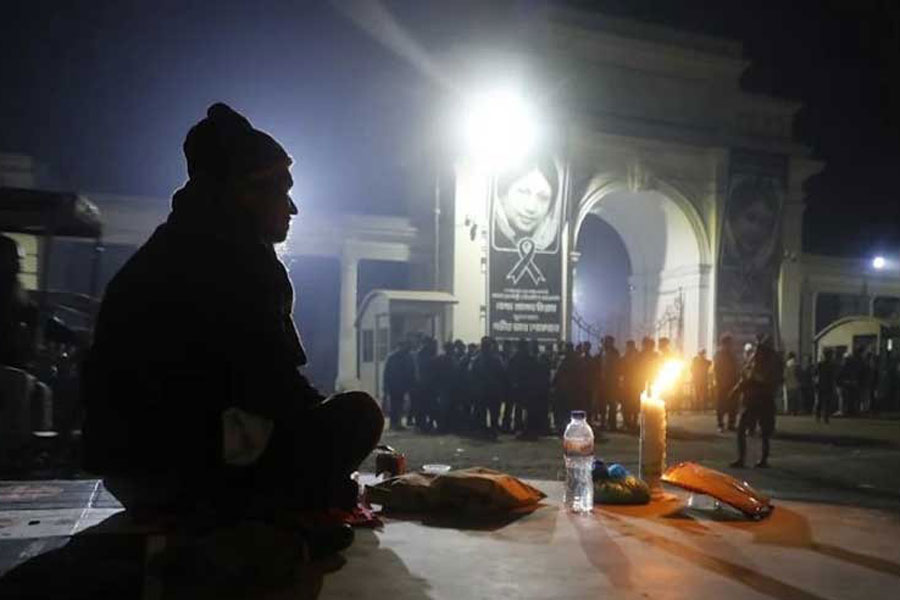
Police have allegedly barred attendance at the annual urs at the shrine of Shah Khaza Sharfuddin Chishti, located next to the High Court, devotees have said.
Police, however, said the daytime observances of the urs had already ended, and that some devotees remained at the site afterwards.
They were not allowed to enter the shrine premises for security, which lie within the High Court compound.
According to devotees, the three-day annual urs of the centuries-old shrine, popularly known as the High Court shrine, was scheduled to begin on Friday.
Followers from different parts of the country gathered at the shrine premises in the evening for the occasion.
They alleged that police later asked them to leave the inner compound of the shrine and prevented them from entering the main structure.
Some devotees said they were not even allowed to light candles in keeping with customary practice before leaving.
A devotee named Mahathero Mohammad livestreamed several videos from the shrine premises in the evening.
In the footage, several followers were seen complaining that they were barred from entering the shrine, while some expressed anger and frustration towards the authorities.
Responding to the allegations, Deputy Commissioner Masud Alam of the Ramna Division of Dhaka Metropolitan Police said: “There was an annual programme there. Food was distributed in the afternoon. Although the event was supposed to end by the evening, some people were unwilling to leave.”
He said, “Along with devotees, addicts also gather there. Judges of the High Court have decided that no unwanted persons should be allowed to enter the area after evening hours, as the security of the Supreme Court is a sensitive and important matter.”
“The police responsible for Supreme Court security are following those instructions.”
Architectural researcher and journalist Tarun Sarkar said devotees believe Shah Khaza Sharfuddin Chishti is buried at the High Court shrine.
Historical records indicate that followers have preserved and visited the shrine for more than a hundred years.
It is commonly believed that Khaza Sharfuddin came to Dhaka during the reign of Mughal emperor Akbar to preach Islam, although detailed historical evidence about his life remains limited.
A Mughal-era architectural structure still stands within the shrine compound.
According to popular accounts, Mughal Subahdar Islam Khan died under mysterious circumstances in Bhawal in 1613, and was initially buried in this area, now part of the High Court premises.
After Dhaka was established as a centre of Mughal administration, the area developed into an elite residential zone known as Bagh-e-Badshahi.
Islam Khan’s remains were later taken to Fatehpur Sikri and reburied beside his grandfather Sheikh Salim Chishti.