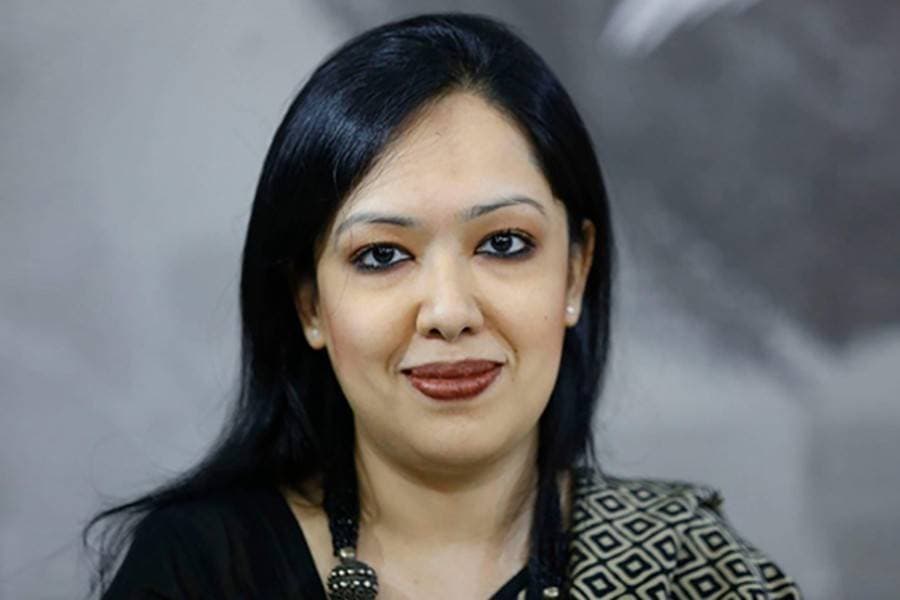
Independent Member of Parliament Rumeen Farhana has called on the government to take strict measures against hundi and money laundering, warning that economic recovery will remain elusive without addressing large-scale financial leakages and rising defaulted loans.
Speaking in the Jatiya Sangsad during the discussion on the motion of thanks to the President’s address on Tuesday, she said, “Unless the $234 billion siphoned out of the country is recovered, or the Tk 600,000 crore in defaulted loans within the banking sector is reduced, no economic reform will yield meaningful results.”
Highlighting concerns over growth, Farhana noted that Bangladesh’s GDP growth rate stands at 3.49 percent, but employment generation has failed to keep pace. “This is what is known as jobless growth, which poses a significant long-term risk to economic stability and inclusive development,” she said.
She pointed out a worrying trend in unemployment, stating that educated joblessness is on the rise due to a lack of skills and language proficiency. “While unemployment among those with below secondary education is 3.01 percent, it rises sharply to 8.7 percent among higher degree holders,” she added, emphasizing the failure to provide job-oriented education.
On inflation, she cited recent data from the Bangladesh Bureau of Statistics, noting that food inflation reached 9.30 percent in February — the highest in 13 months. She warned that high food prices disproportionately affect low- and middle-income groups, increasing poverty, malnutrition, and negatively impacting the cognitive development of future generations.
Farhana also highlighted external sector challenges, noting that foreign exchange reserves stood at $34.78 billion as of February 19. She identified key sources of foreign currency earnings, including garment exports, remittances from nearly 10 million expatriates, foreign loans, foreign direct investment (FDI), and foreign aid.
Calling for reduced dependence on the ready-made garment sector, she urged diversification of exports, creation of an investment-friendly environment, and increased export of skilled labor. She referenced economist Mustafizur Rahman, who warned of rising debt repayment pressures in the future, stressing the need to boost income streams.
Addressing illicit financial flows, Farhana said, “Over the past 15 years, approximately $234 billion has been laundered out of the country, according to central bank estimates. About 75 percent of this has occurred through over- and under-invoicing in trade.” She added that around $68 billion was siphoned off through such practices in the last decade alone, warning that stopping false invoicing is essential to curb money laundering.
Criticizing the government, she questioned appointments in key financial and academic institutions. “Central banks in South Asia typically appoint highly qualified and experienced professionals. However, the current appointee in Bangladesh is a political figure and a factory managing director,” she said.
She also raised concerns over politicization in university appointments, alleging that vice-chancellors and pro-vice-chancellors are being appointed based on political affiliation. “Political involvement is not the issue, but making it a prerequisite for appointment is unfortunate,” she told the House.