

Security stepped up at Jashore border amid fears of sacrificial hide smuggling to India
Published :
Updated :
 For all latest news, follow The Financial Express Google News channel.
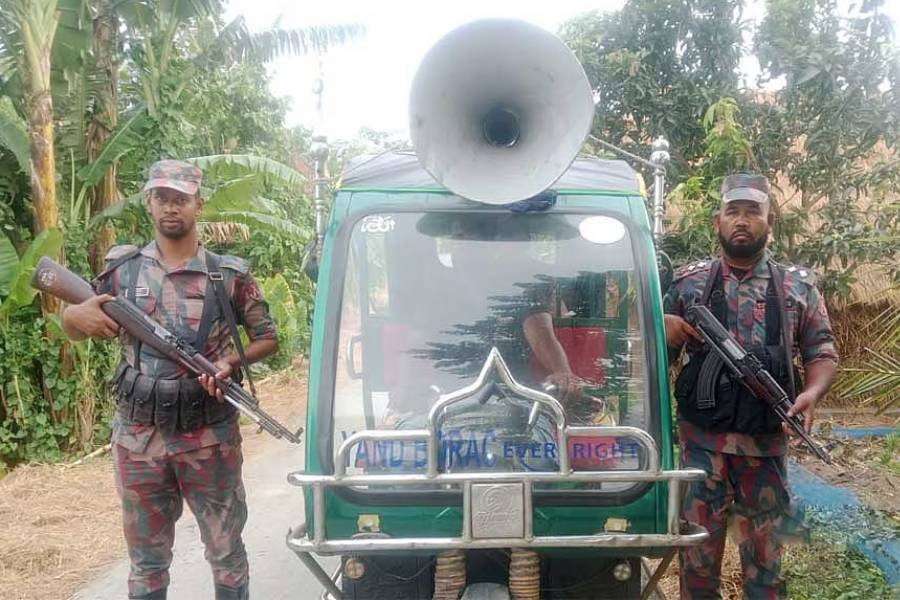
Security forces have put Jashore’s border crossings on special alert to stop sacrificial animal hides from being smuggled into India following Eid-ul-Azha.
Traders say a cash crunch among local dealers could push hides into the hands of smugglers.
Law-enforcing agencies have identified a string of border points along the 102-km frontier in Sharsha Upazila as known smuggling routes, including Shikarpur, Kashipur, Raghunathpur, Benapole’s Putkhali, Daulatpur, Sadipur, Ghiba, Goga, Rudrapur, Agrabhulot, Panchbhulot and Dadkhali.
Lt Col Nafiz Imtiaz Ahsan, commander of Khulna 21 Border Guard Bangladesh (BGB) Battalion, said they have tightened security in these high-risk zones, boosted boots on the ground, and deployed river patrols.
He added that the border guards are maintaining a zero-tolerance stance to crack down on smuggling, illegal entry, and any post-Eid cross-border crimes.
Rajarhat in Jashore stands as the largest marketplace for animal hides in the country after Dhaka.
More than 200 wholesale warehouses see bustling trade driven by merchants from 21 districts, with nearly 10,000 people relying on this commercial hub directly and indirectly.
Jashore rawhide traders, however, are deeply worried that a significant volume of hides might be siphoned off into India.
They point out that the volume of sacrificial cattle is relatively low, yet official rawhide prices have been set flat.
Compounding the crisis are skyrocketing salt prices, unpaid dues trapped with tannery owners, and the tanners' endless dallying over clearing outstanding balances.
Trader Moslem Ali of Sharsha said opportunistic smugglers move in precisely when professional traders run short of cash.
"They go neighbourhood to neighbourhood buying up hides at above-market prices and then hand them over to smugglers when the moment is right," he said.
Traders Monir Hossain of Benapole, Sheikh Sahidul Islam of Bagachra, Moslem Ali of Sharsha and Yakub Ali of Nabharan all echoed the same concern.
They argued that although the government sanctions loans for tannery owners to buy rawhides, the tanners do not channel the entire capital into the market.
Grassroots traders are also entirely cut off from bank loans, leaving them flat broke during the peak Eid season.
This funding vacuum allows syndicates to artificially depress rawhide prices, forcing dishonest traders to opt for secret border tracks in pursuit of better returns.
Against this backdrop, police and Rapid Action Battalion (RAB) have taken up positions alongside BGB at the identified border areas.
Additional police deployment and checkpoints have been set up to prevent smuggling and protect traders.
Sharsha Police chief Maruf Hossein and Benapole Port Police chief Russel Mia are actively monitoring the Sharsha borderlands.
Officer Ashraf Hossein said, "Alongside the BGB maintaining maximum vigil on the frontier, we have banned all rawhide-laden vehicles heading toward the border line.
“All border police outposts have been ordered to stay on high alert."
Jashore-49 BGB Battalion Commander Lt Cl Golam Md Saiful Alam Khan also confirmed their defensive posture along the Sharsha border.
"The likelihood of rawhide being smuggled through the Jashore border is extremely slim. Nevertheless, we are not letting our guard down.”
“All Border Outpost (BOP) camps have been alerted, and we have put extra patrols in place since the afternoon of Eid day," he added.