

Published :
Updated :
 For all latest news, follow The Financial Express Google News channel.
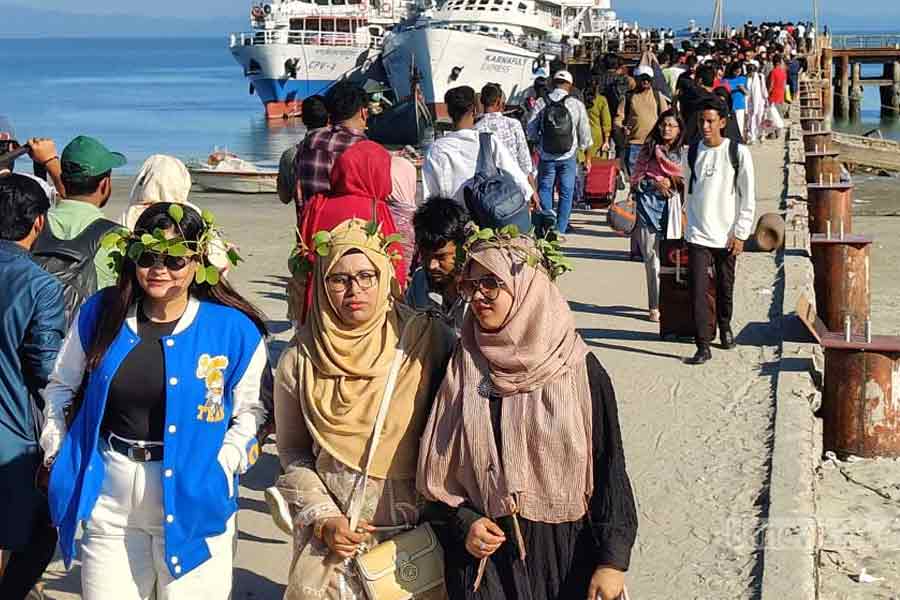
As the last tourist vessel pulled away from the jetty on Jan 31, the coral island of St Martin’s slipped into an unfamiliar quiet, its beaches emptied not by weather, but by a government order aimed at giving the battered ecosystem a chance to breathe.
The early closure of the tourism seasons triggered widespread concern among local residents dependent on visitors for their livelihoods.
The order, taken by the Ministry of Environment, Forest and Climate Change, directed that no tourist-carrying vessels will be allowed to operate to the island from Feb 1.
Although tourist travel to St Martin’s is typically permitted every year from Oct 1 to Mar 31, authorities curtailed the season this year, setting Jan 31 as the final date, citing growing environmental risks.
Cox’s Bazar Additional District Magistrate Imran Hossain Sajib said appropriate steps would be taken if the government revises its decision later.
Dhaka University teacher Alauddin, who visited the island this season, welcomed the restrictions.
“Limiting tourists this year has reduced indiscriminate use of single-use plastics, environmental pollution in various forms, and uncontrolled extraction of coral stones. This is a good initiative by the government,” he said.
Autorickshaw driver Mohammad Hamid was among those anxious about the shutdown.
He said the end of tourist arrivals means he will once again struggle to feed his family.
He plans to return to fishing, adding that he remains worried as he has yet to repay the loan he took to buy his rickshaw.
MA Abdur Rahman, president of the St Martin’s Hotel, Motel and Resort Owners’ Association, said many business owners failed to recover their investments this season.
“Most have incurred losses instead of profits. With tourism halted, people’s hardship will increase over the coming months,” he said.
St Martin’s Union BNP President Nurul Alam said the island’s residents are entirely dependent on tourism.
“We understand the need to protect the environment, but keeping tourism closed for such a long period without alternative income arrangements will make survival extremely difficult,” he said.
St Martin’s Union Parishad Acting Chairman Foyezul Islam echoed the concern.
“Everyone is frustrated by the sudden long-term shutdown. If the season could have been extended a little, it would have been easier for locals to survive,” he said.
Under government directives, lighting on the beach at night, loud music and barbecue parties, entry into keora forests, and collection and sale of keora fruit were completely banned.
The ministry also prohibited harming any biodiversity, including marine turtles, birds, corals, king crabs, shells and oysters.
All motorised vehicles, including motorcycles, were banned from the beach.
Strict restrictions were imposed on carrying single-use plastics such as polythene, and tourists were advised to carry their own water flasks.
According to the administration, an extended absence of tourists will give corals, marine turtles, birds and other marine species the opportunity to restore their natural habitats.
The long-term move aims to reverse damage caused by excessive tourist pressure and unregulated activities and is expected to help restore the island’s ecological balance.