

Strengthen birth, death registration law to ensure universal coverage, speakers tell journalists’ workshop
Published :
Updated :
 For all latest news, follow The Financial Express Google News channel.
The Government of Bangladesh is committed to ensuring universal birth and death registration by 2030; however, the limitations in the existing law and its weak implementation act as the main obstacles to achieving this goal, experts and journalists said at a workshop.
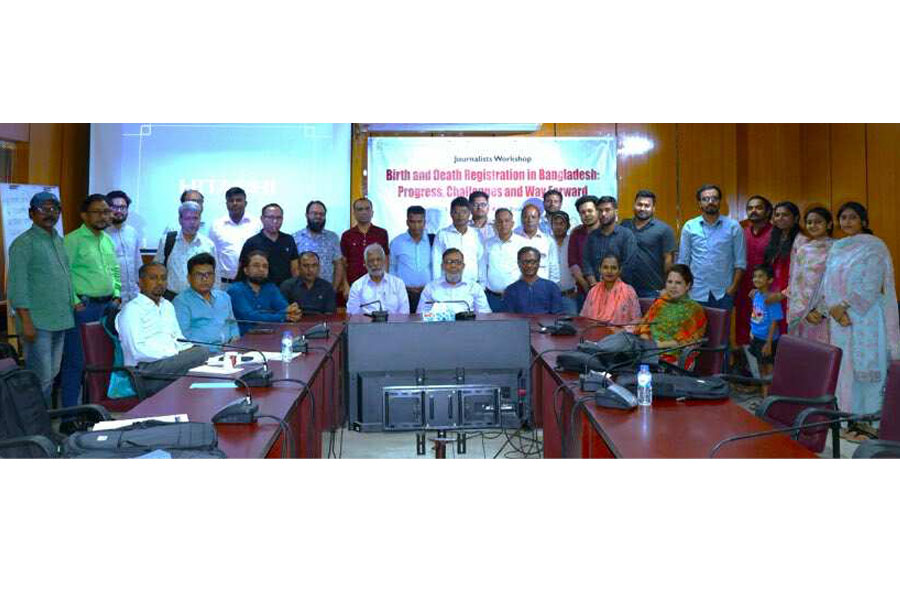
Stressing the need for amending and strictly implementing the law, they made these observations at a two-day journalists’ workshop titled “Birth and Death Registration in Bangladesh: Progress, Challenges, and Way Forward”, held on 05–06 November 2025 at Bangladesh Medical Association (BMA) Bhaban, Dhaka.
The workshop was organized by PROGGA (Knowledge for Progress) with support from Global Health Advocacy Incubator (GHAI), according to a media release.
A total of 30 journalists from print, television, and online media participated in the workshop.
The current rate of birth registration in Bangladesh is 50 percent, while death registration is 47 percent, both of which are substantially lower than the global averages of 77 and 74 percent, respectively, the release says.
Under the existing law, a family is responsible for reporting births and deaths, while the health sector’s role remains optional. However, nearly 67 percent of children in Bangladesh are born in healthcare facilities, according to the release.
Muhammad Ruhul Quddus, Bangladesh Country Lead, GHAI, stated, “We are committed to ensuring universal birth and death registration by 2030. To achieve this, we must reform the law and ensure its effective implementation.”
Md. Nazrul Islam, Country Coordinator, Vital Strategies, said, “Awareness about the importance of birth and death registration among the mass people must be increased. We also need to strengthen the capacity of registrars, improve technology, and strengthen intersectoral coordination.”
Md. Moyeen Uddin, Country Coordinator, Vital Strategies; Kawsar Rahman, Chief Reporter, Janakantha, and ABM Zubair, Executive Director, PROGGA, were also present as discussants.
PROGGA’s Head of Programs, Md. Hasan Shahriar and Coordinator Mashiat Abedin delivered presentations in the workshop, the release adds.