

TIB finds Tk 29.27 billion irregularities in six BPDB solar projects
Published :
Updated :
 For all latest news, follow The Financial Express Google News channel.
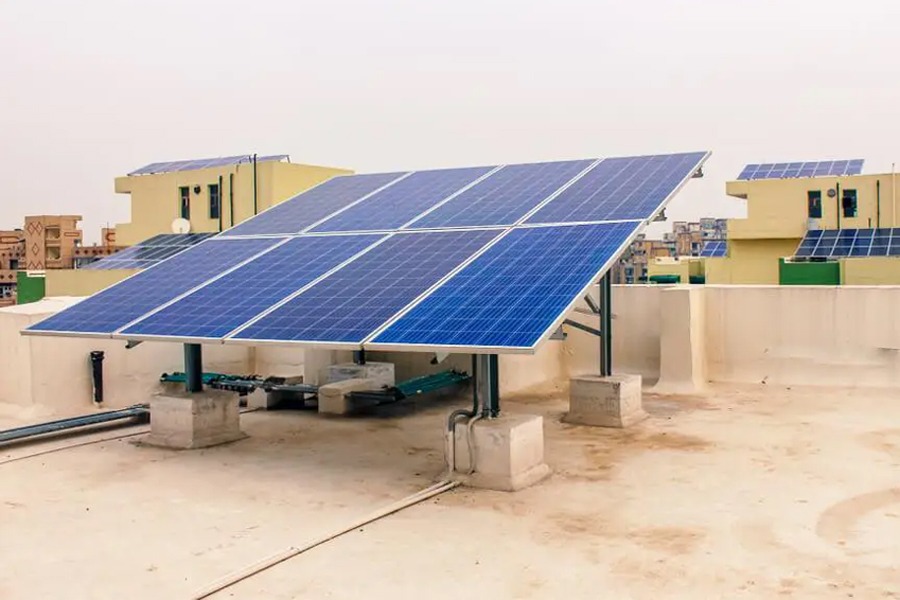
Irregularities amounting to over Tk 29.27 billion were identified in six government and independent power producer (IPP) solar projects undertaken by the Bangladesh Power Development Board (BPDB) between October 2010 and October 2025, according to a study released by Transparency International Bangladesh (TIB).
Citing BPDB accounts, TIB in the study said, "An average of Tk 80 million per megawatt is required for solar power generation, the six projects covered by the study were estimated to cost an average of Tk 138 million per MW, more than 1.5 times higher. These projects incurred a total excess expenditure of TK 29.27 billion over the required amount".
TIB disclosed the findings at a press briefing held at its Dhanmondi office in Dhaka city on Wednesday.
Md Newazul Moula, Coordinator, Energy Governance, TIB and Ashna Islam, Assistant Coordinator, Energy Governance, TIB, presented the study findings at the press conference.
Speaking at the function, Dr Iftekharuzzaman, Executive Director of TIB, said since the renewable energy sector has not been given priority in principle, the possibility of meeting the target of the renewable energy sector by 2050 is continuously decreasing.
The research report noted that even in some cases, despite the government projects being set up on its own land where there is no issue of land acquisition or lease, the cost of setting up per megawatt has been shown to be Tk 140.8 million (1.81 million US dollars), which is significantly more expensive than other solar projects in the country.
Besides, a total corruption of Tk 2.49 billion has been estimated for the land acquisition and compensation payment in the 5 IPP solar projects, it said.
Despite national commitments to clean energy, the report found that, although nearly $30 billion was attracted in foreign investment in the power sector between 2010 and 2023, 96.7 per cent went to fossil fuel–based projects, while only 3.3 per cent was invested in renewable energy.
TIB also found that the Environmental Clearance Certificate (ECC) was initially issued under the Red Category but was later reclassified as Orange Category. Additionally, it is alleged that environmental clearances were granted by the Department of Environment for project construction in areas adjacent to embankments, despite non-compliance with EIA approval conditions and the absence of a no-objection certificate from the Water Development Board.
TIB also pointed out that, compared to fossil fuels, renewable energy projects receive substantially fewer incentives, including tax benefits, customs duty waivers, VAT exemptions and insurance incentives, creating an uneven policy environment.
To ensure transparency and accountability in the power sector, TIB recommended the formation of an independent oversight and regulatory authority, comprising experts and representatives from civil society, to monitor project implementation and financial governance.
sajibur@gmail.com