

Published :
Updated :
 For all latest news, follow The Financial Express Google News channel.
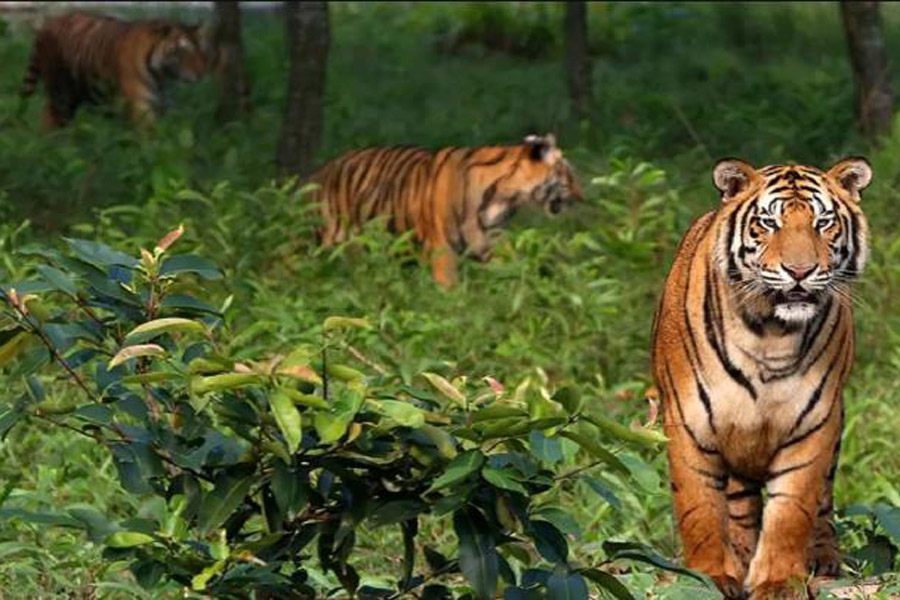
The Sundarbans tiger population has increased to 125 in the latest government tiger survey in 2023-24 from the last one of 114 tigers in 2018.
The tiger density is 2.64 per 100 square kilometres. Compared to 2018, the tiger population has increased by 11, reflecting a growth rate of 9.65 per cent, and a 17.92 per cent rise since 2015.
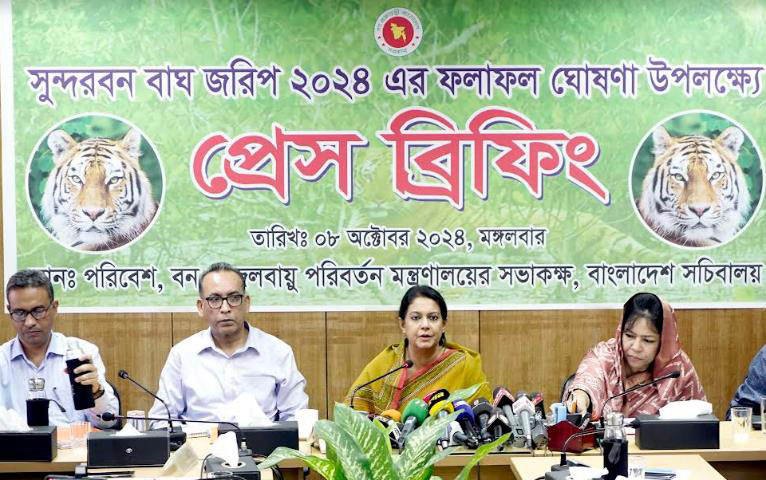
Syeda Rizwana Hasan, Advisor to the Ministry of Environment, Forest, and Climate Change, shared the survey details at a news conference held at the secretariat on Tuesday.
In 2015, the Sundarbans had 106 tigers with a density of 2.17. By 2018, the number had risen to 114, with a density of 2.55, marking an 8 per cent increase.
The advisor further mentioned that 21 tiger cubs were photographed in the 2023-24 survey, although they were not included in the count due to the high mortality rate among cubs. In comparison, only 5 cubs were captured on camera in the 2015 and 2018 surveys.
The tiger count was determined through the analysis of photos and data, with input from experts from India, New Zealand, and the United States.
The survey, which began in January 2023 and concluded in March 2024, deployed 1,210 cameras in 605 grids across the Sundarbans for 318 days. Tigers were spotted in 368 grids, and from over 1 million photos and videos, 7,297 tiger images were obtained—an unprecedented number.
Rizwana Hasan expressed that the rise in the tiger population is a source of joy for the entire nation.
To support tiger conservation, the government has declared 53.52 per cent of the forest as protected, built 60 kilometres of nylon fencing, established 12 shelter centres, provided compensation and rewards, and formed 49 Village Tiger Response Teams.
She emphasized the need for public cooperation alongside government efforts.
nsrafsanju@gmail.com