

UN panel demands immediate release of Shahriar Kabir from 'arbitrary' detention
Published :
Updated :
 For all latest news, follow The Financial Express Google News channel.
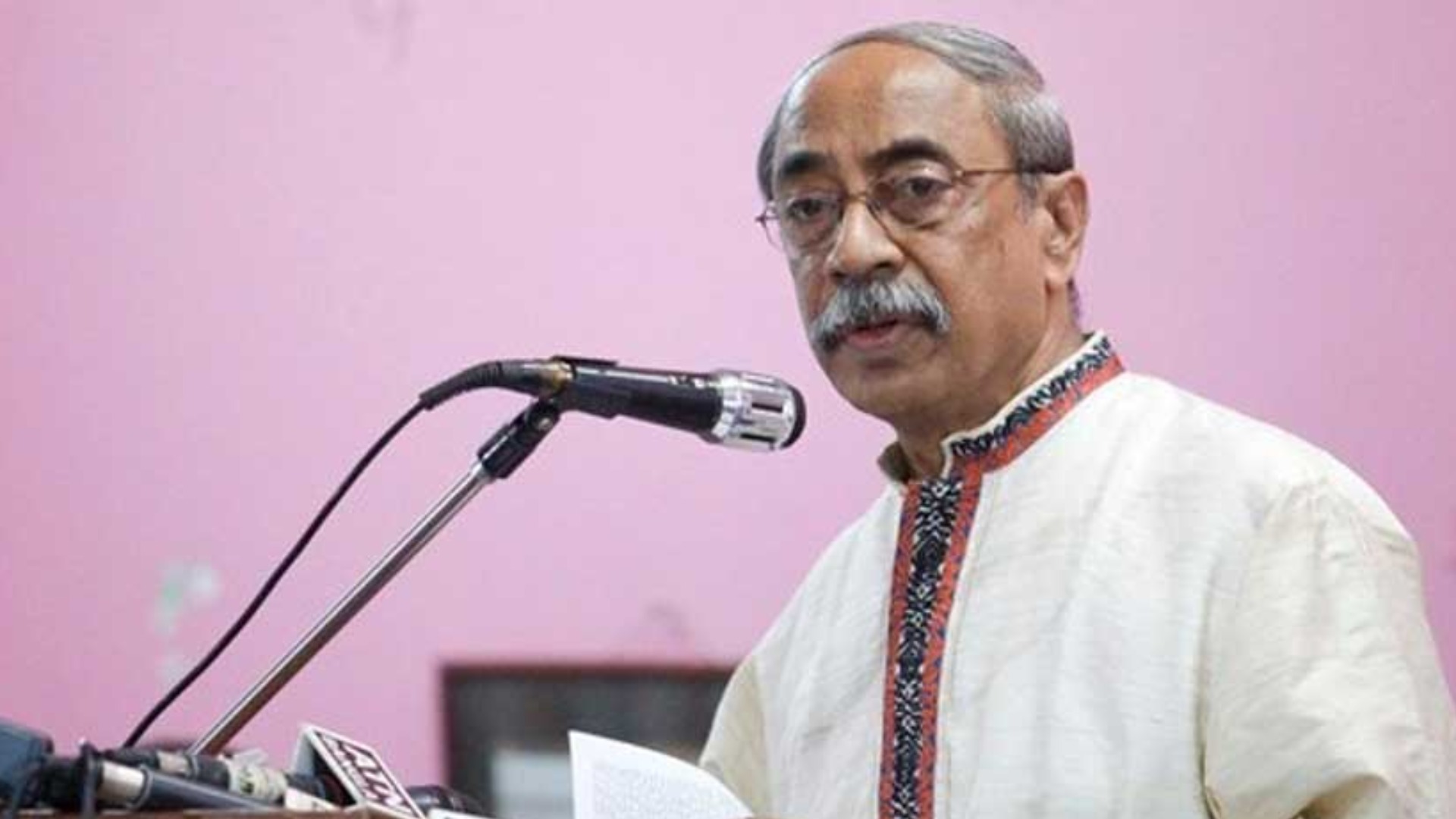
The United Nations’ Working Group on Arbitrary Detention has found the detention of Bangladeshi filmmaker, writer, and human rights defender Shahriar Kabir “arbitrary and unlawful”
In its detailed opinion submitted on Saturday, the Working Group found that Kabir’s arrest, repeated remand orders and nearly year-long pretrial detention “lacked legal basis, breached fair-trial standards, and involved discriminatory targeting”.
The opinion, adopted at the Working Group’s 103rd session in August 2025, follows a communication submitted in February and a late interim government response in May.
The UN panel reviewed extensive documentation, testimony and legal arguments before concluding that Bangladesh violated multiple provisions of the Universal Declaration of Human Rights and the International Covenant on Civil and Political Rights.
ARREST ‘WITHOUT WARRANT, UNCLEAR CHARGES’
Kabir, 74, a wheelchair user with “multiple health conditions”, was arrested shortly after midnight on Sept 17, 2024 by members of the Detective Branch.
The UN report noted that police officers from four stations -- Banani, Badda, Tejgaon and Ramna -- accompanied the team, but none informed him of the legal basis for the arrest.
He was told only that it related to a “murder case”, without further explanation, and was prevented from taking essential medicines or clothing, it said.
It added that journalists seeking information were told by the four stations that they knew nothing about his arrest. Kabir’s family reportedly was not notified of his whereabouts.
According to the report, court records later revealed that he was held at the Detective Branch headquarters on Minto Road and was eventually shown as an accused in Ramna Police Station Case No. 1, dated Sept 5, 2024.
The Working Group found that the government failed to demonstrate any urgent grounds or credible information justifying Kabir’s warrantless arrest, stressing that such arrests “must remain the exception, not the rule”.
The panel noted that the police did not establish probable cause, despite alleging crimes as serious as “murder and attempted murder”.
MOB ASSAULTS DURING COURT APPEARANCE
The Working Group noted that when Kabir was produced before the Dhaka Metropolitan Magistrate Court at 9.30am on the day of his arrest, he faced violent mobs.
It said videos circulating online showed groups throwing objects and shouting abuse as he emerged in handcuffs, adding that, though police provided a helmet and bulletproof vest, they failed to shield him and did not assist him with a wheelchair or elevator access, instead dragging him up staircases despite metal implants in his leg.
The report mentioned that, inside the courthouse, crowds attacked him again. Senior lawyers from the Dhaka Bar Association could not reach him due to the hostility, preventing him from securing representation. The court did not appoint counsel on his behalf.
The Working Group described this as a “violation” of Kabir’s right to legal assistance and equality before the court. It held the government responsible for protecting detainees from mob violence, as Kabir’s public stance against religious extremism made him a predictable target.
MULTIPLE CASES AND PROLONGED PRETRIAL DETENTION
The UN panel said Kabir has been named in nine murder-related cases, mainly tied to the July–August 2024 protests. In six of these, he was “shown arrest” while already detained, a practice the UN panel called a “long-standing bad practice” used to justify extended custody.
It noted that his lawyer filed multiple bail petitions -- on Sept 23, Oct 1, 2, 6, 14, 23 and 30, Feb 11 -- citing Kabir’s age, frail health, lack of evidence, and the cases stemming from his views of secularism and human rights. All were rejected by magistrates’ and sessions courts, without meaningful individual assessment.
The Working Group said this pattern reflected a lack of judicial independence and a disregard for international obligations. It stressed that pretrial detention must be exceptional, time-bound and subject to regular judicial review -- conditions not met in Kabir’s case. Nearly a year after the arrest, no chargesheet had been submitted.
‘DENIAL OF MEDICAL TREATMENT’
The UN panel expressed alarm at Kabir’s treatment in custody, including alleged denial of adequate medical care. His family’s medicines were allegedly not provided to him, and he suffered a mini-stroke, kidney stones, chest infections, and severe pain linked to unsafe conditions, including having to sleep on the floor during cold weather. Prison doctors advised against his repeated physical appearance in court.
Applications for special treatment due to his age and medical condition were allegedly denied without explanation. The Working Group said these failures violated Bangladesh’s obligations under international law, including the Nelson Mandela Rules on the treatment of prisoners.
The government’s claim that his health was monitored by “a medical representative” was deemed insufficient and unsupported by evidence.
POLITICAL MOTIVATION BEHIND DETENTION
The Working Group concluded that Kabir’s detention stemmed primarily from his “peaceful exercise of civil and political rights”.
It noted that Kabir is known for his documentaries on extremist networks and for advocating justice for 1971 war crimes. He had been preparing public criticism of the interim government’s decisions, including “releasing from detention individuals accused of terrorism and for failing to protect religious and ethnic minorities”.
Police allegedly pressured him to confess to blasphemy, and a public prosecutor told the court that his detention was linked to “a debate Kabir had with a religious leader on a television talk show”.
These actions, the panel said, indicated that Kabir was being punished for his “political opinions, his secular views, and his influence among younger activists”.
It said the detention thus fell under category II and category V of arbitrary detention -- relating to violations of freedom of expression, thought and participation in public affairs, and discriminatory targeting.
The group expressed concern about the “chilling effect” on secular activists, noting that many had retreated from public engagement due to fear of reprisals.
VIOLATIONS OF FAIR-TRIAL RIGHTS
The Working Group documented several breaches of due process, including:
• Denial of legal counsel of his choice;
• Court appearances under conditions that endangered his safety;
• Intimidation of lawyers;
• Lack of timely submission of chargesheets;
• Denial of adequate time and facilities to prepare a defence;
• Prolonged pretrial detention without justification.
• These violations, the panel said, were severe enough to render the entire process arbitrary under category III.
Key findings
• No legal basis for arrest or continued detention.
• Charges appear politically motivated and lack credible evidence.
• Repeated mob violence compromised fair-trial rights.
• Medical neglect amounted to “inhuman and degrading treatment”.
• Detention served to silence secular and human rights advocacy.
Recommendations
The Working Group called on Bangladesh to:
• Release Shahriar Kabir immediately.
• Provide compensation and reparations.
• Conduct an independent investigation into his arrest and ill-treatment.
• Hold accountable those responsible for violations.
• Reforms to align Bangladesh law and practices with international law.
Amid a wave of arrests following the government change, writer, journalist, and documentary filmmaker Kabir was detained on Sept 17, 2024, Monday night.
A recipient of the Bangla Academy Award, Kabir is also a children’s literature author.
He has played an active role in the activities of the Ekattorer Ghatak Dalal Nirmul Committee.
Kabir was instrumental in forming the committee and, following the death of “Shaheed Janani” Jahanara Imam in 1994, became its president.
He served in the role until 2024, after which he was appointed chair of the advisory board.
After completing his education career, Kabir joined the weekly magazine Bichitra as a journalist in 1972.
He later served as its executive editor until 1992.
Between 1976 and 1980, he was the general secretary of the Bangladesh Lekhak Shibir (Bangladesh Writers’ Camp).