

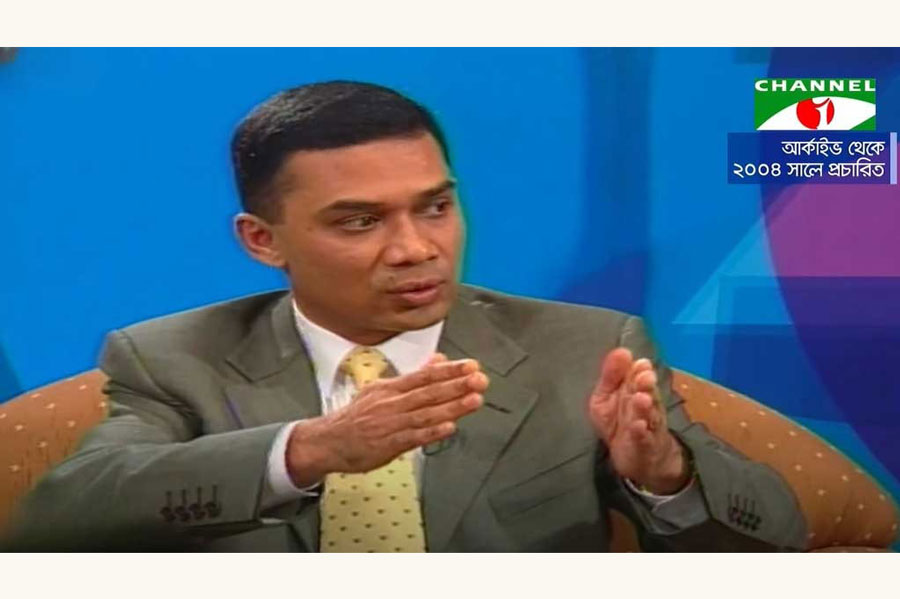
What BNP leader Tarique Rahman said in his first interview 22 years ago
Published :
Updated :
 For all latest news, follow The Financial Express Google News channel.
“What would you do if you became prime minister right now? When do you see yourself assuming state power?”
Those were the questions posed by journalist Matiur Rahman Chowdhury in an interview 22 years ago.
The interviewee was Tarique Rahman -- the elder son of then prime minister Khaleda Zia and now the acting chairman of the Bangladesh Nationalist Party (BNP).
At the time, Tarique said he was not thinking about becoming prime minister, nor did he harbour ambitions of taking state power.
Bangladesh has since gone through many political upheavals. Tarique was jailed, and after his release spent more than 17 years living in exile in the United Kingdom.
That exile came to an end on Dec 25, when Tarique returned to Bangladesh and told a gathering of hundreds of thousands of supporters: “I have a plan”.
BNP activists are now voicing hopes of seeing him as the country’s next prime minister.
The interview with Manabzamin Editor Matiur was conducted for broadcaster Channel i on Dec 28, 2003, at a time when the BNP was in power. It was broadcast on Jan 1, 2004, and was recently re-aired by the channel to mark Tarique's return to the country.
At the time, Tarique was the BNP’s senior joint secretary general. Although he was not part of the government, there was widespread discussion and criticism over his influence within the administration.
In the interview, Tarique said politics should not be treated as a profession, describing it instead as an ideology. He said politicians, too, needed a separate profession to earn a living.
He added that the central issue should be how sincerely a government seeks to address the country’s problems.
Then aged 38, Tarique said both Sheikh Mujibur Rahman, Bangladesh’s independence leader, and Ziaur Rahman, former president and the BNP’s founder, had made important contributions to the country and its people, and argued that it would be better not to draw them into day-to-day political disputes.
A transcript of the Channel i interview is published here for readers.
Matiur Rahman Chowdhury: Dear viewers and listeners, Assalamu Alaikum. I hope you are all well and in good health. Today we have before you a guest who needs no introduction. Everyone knows him by a single name. He is Tarique Rahman. A new sensation in politics, he is currently the subject of widespread discussion. Though he is not in government, his critics are vocal. Sometimes he responds, sometimes he remains silent. A young man blessed with the wisdom and talent of both his father and mother, an emerging bright star in politics in his own right. Tarique Rahman, thank you very much for coming to the Channel i studio.
Tarique Rahman: Thank you.
Matiur Rahman Chowdhury: Let me extend my New Year's greetings to you.
Tarique Rahman: Thank you. I also personally extend New Year's greetings to you.
Matiur Rahman Chowdhury: How are you?
Tarique Rahman: By the grace of Allah, I am well.
Matiur Rahman Chowdhury: What do you want to do?
Tarique Rahman: In what sense?
Matiur Rahman Chowdhury: Politics, economics, society, the country, the nation?
Tarique Rahman: Very briefly, since I have entered politics, if given the opportunity I want to do some good.
Matiur Rahman Chowdhury: For example?
Tarique Rahman: Something better. It's not possible for one person to do everything. But to the extent possible, to get as close as possible to what people expect, I will try if given the chance.
Matiur Rahman Chowdhury: The past, present, future?
Tarique Rahman: The past has both good and bad. We should leave behind the bad aspects of the past, keep the good with us, and try so that we can do even better in the future.
Matiur Rahman Chowdhury: Over tea, at tea tables, even at the Press Club, you are discussed everywhere. There are storms of discussion around you. Speeches are made about you at Paltan Maidan. Why?
Tarique Rahman: Those who do it can explain best why they do so. But how do I see it? When good work of mine is discussed positively, I feel encouraged. When mistakes are criticised, I try to ensure they are not repeated.
Matiur Rahman Chowdhury: Why did you enter politics?
Tarique Rahman: Actually, it is largely connected to circumstances. Very briefly, during the 1991 national election, when our Prime Minister Begum Khaleda Zia contested from five constituencies, she was busy with other seats and party candidates. I had to go to her constituencies at the request of the people there. Especially when I went to my own area, I promised the people I would come during and after the election.
Matiur Rahman Chowdhury: By your own area, you mean Bogura?
Tarique Rahman: Bogura Gabtoli, Bogura-7. When I went there, I spoke with people before the election, and after the election again, there were calls to stay involved. Gradually, from the local Thana (police station), then my district, and then due to pressure at various times from party leaders, activists, and supporters, I slowly became involved in politics. One could say circumstances largely compelled me.
Matiur Rahman Chowdhury: Whose ideals do you prefer? Your father’s or your mother’s?
Tarique Rahman: Both.
Matiur Rahman Chowdhury: How so? Please explain. Though both your father and mother share the same ideology, they have two different styles. Which do you prefer?
Tarique Rahman: It's not really a matter of preference here. Both forms of politics revolve around the same ideology. Both of their politics aim at the same ideals. And very naturally, that is my goal as well.
Matiur Rahman Chowdhury: From what we have seen, it often appears that you somewhat follow or emulate [former] president Ziaur Rahman.
Tarique Rahman: Isn’t that natural? Every child follows their father, especially their good qualities.
Matiur Rahman Chowdhury: If you were prime minister right now, what would you do?
Tarique Rahman: I am not thinking about that at the moment. So I'm not answering that.
Matiur Rahman Chowdhury: But the opportunity will come. You are involved in politics. What would be your first agenda?
Tarique Rahman: Naturally, it would be to fulfil, as early as possible, the priorities and commitments most important to people at that moment.
Matiur Rahman Chowdhury: You remained behind the scenes, especially before the 2001 election, and then suddenly came to the forefront. Was this how you planned to enter frontline politics?
Tarique Rahman: It was not really a matter of being behind the scenes or in front. I tried to do as much as I could for my party. After the election, due to pressure from party leaders and activists from various levels, and in response to their demands, the highest forum of our party, the BNP Standing Committee, decided to give me an official position.
Matiur Rahman Chowdhury: Many say you are a product of dynastic politics. You yourself say you did not enter politics by virtue of family legacy. But the reality is that you come from a prominent political family. In June 2002, you became the first joint secretary general of the BNP. Since then, you have been traveling across the country, speaking everywhere, being discussed and criticised. You are not in government, yet you remain a constant topic of discussion. How do you view this?
Tarique Rahman: I see it as discussion driven by ignorance. Either people speak out of ignorance, without knowing or understanding, or they have some weakness or vested interest.
Matiur Rahman Chowdhury: Before entering politics, you were involved in business and became known as a fairly successful businessman. Why did you go into business before politics?
Tarique Rahman: Well, what else could I do? Either I had to do a job somewhere, run a business, or have a profession. I had to earn a living.
Matiur Rahman Chowdhury: But many politicians are not from any profession.
Tarique Rahman: I disagree. If you look at any developed country -- the Western world, Europe, America -- politicians have ideology as the driving force behind their politics, and their business or profession as their livelihood. Business is a profession. Politics cannot be a profession. Politics is an ideology. Politics is my ideology, but I still need a profession to survive.
Matiur Rahman Chowdhury: What is your assessment of the government?
Tarique Rahman: In a country like Bangladesh, there are many problems. The most important issue is how sincere the government is in running the country properly and protecting the people’s interests. That sincerity is the key. With limited resources, sincere governance is the most important factor. We may not have achieved complete success, but if we continue with sincerity, In sha Allah we will succeed.
Matiur Rahman Chowdhury: What about rising prices?
Matiur Rahman Chowdhury: [Rising] commodity prices -- the most discussed issue -- hasn’t your party raised this with the government?
Tarique Rahman: We have. Leaders at various levels of our party have conveyed concerns. Many in the government are from our own party. You have seen that the government has reduced taxes on various goods and waived LC margins at banks. We are trying. The government is trying.
Matiur Rahman Chowdhury: Bangladeshi politics follows two streams associated with two individuals -- martyred president Ziaur Rahman and Bangabandhu. As a young politician dreaming of a new Bangladesh, how do you evaluate these two leaders?
Tarique Rahman: I believe both contributed to the country and its people. It is better not to drag them into everyday political disputes. People view them both with respect.
Matiur Rahman Chowdhury: Let’s talk about media. How do you see the future of electronic and print media in Bangladesh?
Tarique Rahman: We’re actually speaking from within the media itself right now. Often we see media professionals mixing their political beliefs with their profession. Everyone has political views, but those should be expressed on voting day, through the ballot. While reporting, journalists should prioritise professionalism over personal ideology. If that happens, media will be more credible and better accepted.
Matiur Rahman Chowdhury: You are involved in party politics. When will you enter parliamentary politics? [Will it be from] Sylhet or Bogura?
Tarique Rahman: No decision has been made yet.
Matiur Rahman Chowdhury: Will it be in the next election?
Tarique Rahman: If it happens, it would naturally be during a national election. No decision yet.
Matiur Rahman Chowdhury: It is often said that President Zia was generous in recognising people’s contributions, sometimes rewarding them beyond what they had contributed. Do you share that quality?
Tarique Rahman: That's not for me to say. Others would be better suited to answer that.
Matiur Rahman Chowdhury: What is the future of democracy in Bangladesh?
Tarique Rahman: I believe it is good. Since 1991, we have been in a democratic process. Elections are being held every five years. There are problems, but they will gradually fade, and the situation will become better.
Matiur Rahman: Do you ever think about or dream of governing the state, and if so, when?
Tarique Rahman: I do not dream of it. If it is destined, Allah will decide when.
Matiur Rahman Chowdhury: Your father was president and Army chief. Your mother has been prime minister three times. How did you experience their joys and sorrows?
Tarique Rahman: Like any other child sees their parents’ joys and sorrows.
Matiur Rahman Chowdhury: Given their roles at the helm of the state in a country like Bangladesh...
Tarique Rahman: Even then, to me, they were not president or prime minister. They were my father and mother.
Matiur Rahman Chowdhury: What kind of Bangladesh do you want to see?
Tarique Rahman: A country I admire is Malaysia. Twenty years ago, they were like us. In 15–20 years, the country developed rapidly. Socially and culturally, it resembles Bangladesh. I want to see that kind of change -- progress, movement, development.
Matiur Rahman Chowdhury: It is said that the quality of leadership seen there [in Malaysia] has not yet developed in Bangladesh.
Tarique Rahman: It will develop. It hasn’t yet, but it will. They developed strong, capable leadership from among their own national leaders, and we will do the same.
Matiur Rahman Chowdhury: How optimistic are you that such leadership will emerge?
Tarique Rahman: I am absolutely optimistic.
Matiur Rahman Chowdhury: Will it happen very soon, or will it take more time?
Tarique Rahman: I believe the process has already begun. Parliamentary democracy began its journey in this country in 1991. Before that, there were nine or 10 years of political movements and struggles. Now we have entered a structured process, and it is gradually moving forward. Democracy itself, its foundation, is slowly becoming stronger. Everything develops this way: it begins as a process. I believe the process of building quality leadership has already started.
Matiur Rahman Chowdhury: But our electoral system is deeply affected by corruption. Those who have money, especially black money, are able to become members of Parliament.
Tarique Rahman: But you mentioned earlier that the last election was neutral.
Matiur Rahman Chowdhury: Yes, it was neutral. But there is no denying that money still plays a role in influencing elections.
Tarique Rahman: That’s true.
Matiur Rahman Chowdhury: If that cannot be stopped, then quality leadership cannot emerge.
Tarique Rahman: This cannot be stopped through laws or force alone. What happens is that as elections continue, every five years, people become accustomed to the democratic process. Gradually, citizens become more conscious and aware of who is saying what on their behalf and what they actually intend to do. As people grow more aware, these negative influences slowly diminish. At one time they were very strong, but now they have reduced. Although I do not contest elections myself, I am directly involved with the process, and I have seen this firsthand. From my personal experience, the influence of muscle power, money, intimidation, and fear is gradually declining. People are becoming more thoughtful. No matter what we say, rural people and those in smaller towns think carefully. They consider what a politician is saying, what they plan to do for them, and what their future vision is. It is no longer only about force, fear, or money.
Matiur Rahman Chowdhury: So you are observing a change in people’s mindset.
Tarique Rahman: Yes.
Matiur Rahman Chowdhury: We often see you visiting villages. Recently you went to Muktagacha, and before that to various villages in Bogura. You also try to identify successful individuals. What motivates this approach?
Tarique Rahman: There are actually two motivations. First, I personally believe that if Bangladesh is an agriculture-based country, then agriculture must be strengthened and enriched. That is one objective -- to encourage people not to leave usable land unused. In many villages, homes have open spaces where families can raise poultry or grow vegetables. This can reduce hardship, generate additional income, and meet household needs. That is one aspect.
The second aspect is that, as you mentioned, resources are limited and the population is large. This population must be brought into productive activity. We must increase productivity by engaging them. That is why I try to inspire unemployed or frustrated people by pointing to those who have succeeded—people who were once unemployed like them but started with what little they had and gradually improved their lives and livelihoods. If they could do it, why not you? You belong to the same country. If they can succeed, so can you. I try, within my capacity, to raise awareness and encourage people.
Matiur Rahman Chowdhury: You are saying that you want people to become self-reliant. But in reality, Bangladesh is not experiencing sufficient industrialisation. Very few industries are being established.
Tarique Rahman: Industrialisation is happening -- clearly it is happening. Why would it not be?
Matiur Rahman Chowdhury: But not at the scale it should be. As a result, unemployment is increasing, especially among educated young people, because job creation efforts are limited.
Tarique Rahman: That is precisely why I am saying that employment cannot be created through a single sector alone. Industry is a large sector, but agriculture is an even larger one. Agriculture has the capacity to employ far more people. We already have many industries whose products are exported abroad, but agricultural exports have not yet reached their potential, despite enormous possibilities. If we can gradually begin exporting agricultural products, imagine how far we could go. We are trying; the government is trying; and we as a party are trying. I believe the true role of political parties is to raise awareness and show people the right path. A promising time and a better country lie ahead of us. If we all work sincerely, put aside past divisions, and move forward together, we can surely build a better country for future generations.