


The 13th national parliamentary election of Bangladesh is knocking at the door. According to the Election Commission, the landmark polling day has been scheduled for 12th February of this year, following prolonged anticipation to revive the country's democratic process.
During the election period, an MP (Member of Parliament) candidate has to build strong public relations (PR) in their constituency to mobilise voter support. Public meetings, assemblies, rallies, conferences, and other events are among the conventional tools candidates use for political outreach.
The execution of those activities require a substantial financial resources, which sometimes exceed the economic capacity of the average citizen. This reality may reinforce the widespread notion that electoral participation is reserved for the affluent rather than the ordinary people.
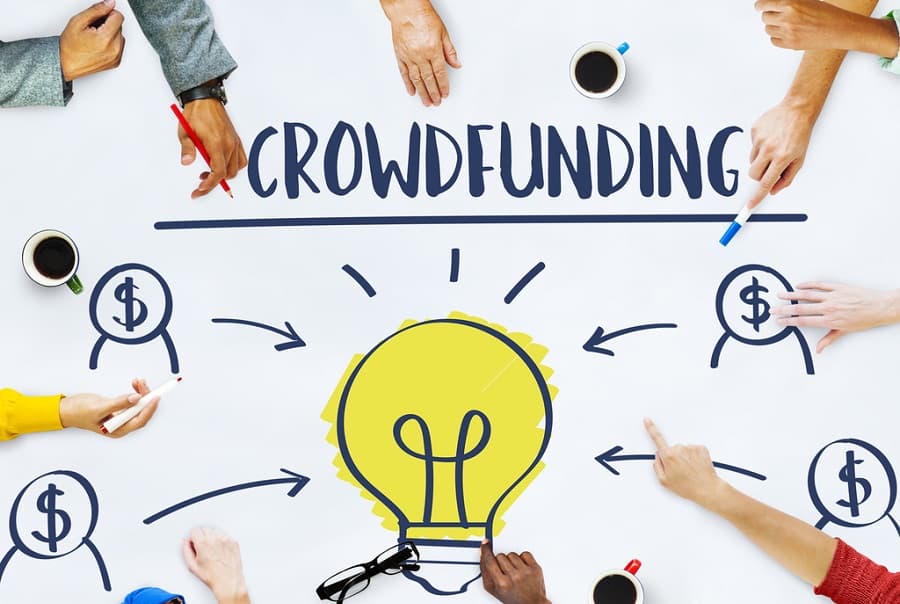
However, this practice is challenged by the emergence of crowdfunding, in which electoral costs are collected through contributions from the general public. The candidates allow people to contribute to their election funds, enabling them to send money according to their capacity.
The implication of crowdfunding in politics is not new. It first came to light in the United States (US) presidential election of 2008, when presidential candidate Barack Obama formally announced that he would raise his electoral funds through public donations.
US citizens spontaneously sent money to Obama's campaign, which gained popularity not only in America but also in other countries worldwide. Around 66 per cent of Obama's 2008 election costs were covered by crowdfunding.
Since then, the two major political parties in America, including Republicans and Democrats, have begun covering their electoral costs through crowdfunding, with businesspeople and other significant stakeholders also joining the effort, even in the 2024 presidential election.
The concept of crowdfunding is also practised in Bangladesh, as some MP candidates are covering their election costs through this medium, which ordinary citizens in the country have sometimes welcomed.
One noteworthy characteristic of this mechanism is that it enables financially non-solvent individuals to participate in elections and work for the country.
Dr Tasnim Jara, an individual MP candidate from Dhaka-9, has collected around 47 lakhs taka through crowdfunding. Barrister Asaduzzaman Fuaad, MP candidate from Amar Bangladesh Party (AB Party), has also collected funds for the election through this process.
Moreover, several candidates from the National Citizens Party (NCP), including Nahid Islam, Hasnat Abdullah, and Hannan Masud, are also expected to collect their election funds through this process.
Through crowdfunding, a candidate can build a bridge between himself and voters, creating a direct, meaningful relationship even before launching a formal election campaign.
Besides, the flow of illegal money can also be curbed through this process, as candidates do not need to rely on power politics. Also, it provides middle- and lower-income citizens with a realistic opportunity to compete in national elections.
Tanvir Anjum Shovon is the Research and Innovation Secretary at Chittagong University Central Students' Union (CUCSU). He said, "I appreciate the implication of crowdfunding in politics as it opens the field of scope to participate in elections for all kinds of people."
"Before, the MP election was limited to the big political parties and businesspeople. As a result, youths and social workers often failed to participate in national politics and to work for the country's people. But crowdfunding will also allow those people to contest in parliamentary elections and contribute to society," he added.
Despite being a much-talked-about mechanism, crowdfunding is not immune to criticism. It may be used as a tool to deceive ordinary people, as the sources of this funding often get abstract.
People are only informed of the total amount collected, but donors are not revealed, which may open the door to doubt and trickery.
The funds may be collected from a specific group, but the candidate discloses them as contributions from all kinds of people to show their connectivity across all spheres of society.
Dr Tanvir Mohammad Hayder Arif is the Professor of Depatment of Banking and Insurance at the University of Chittagong. He said, "For a few candidates, crowdfunding functions well. But most candidates may not recognise the public, but rather the big donors. As a result, it may be seen that, when the person is elected as an MP, he will work for the interest of the donors, which may include the business community or political leaders."
"Moreover, Bangladesh does not have proper laws that will accurately disclose the donor's amount and relevant data, which calls into question the lack of transparency. That is another reason why crowdfunding may not be an appropriate mechanism in Bangladesh," added Professor Tanvir.
Bangladesh is going through a transitional period in politics, as conventional political rhythms are no longer acceptable to the people. In this situation, people of this country have to wait to see the real impact of crowdfunding in the long run.