

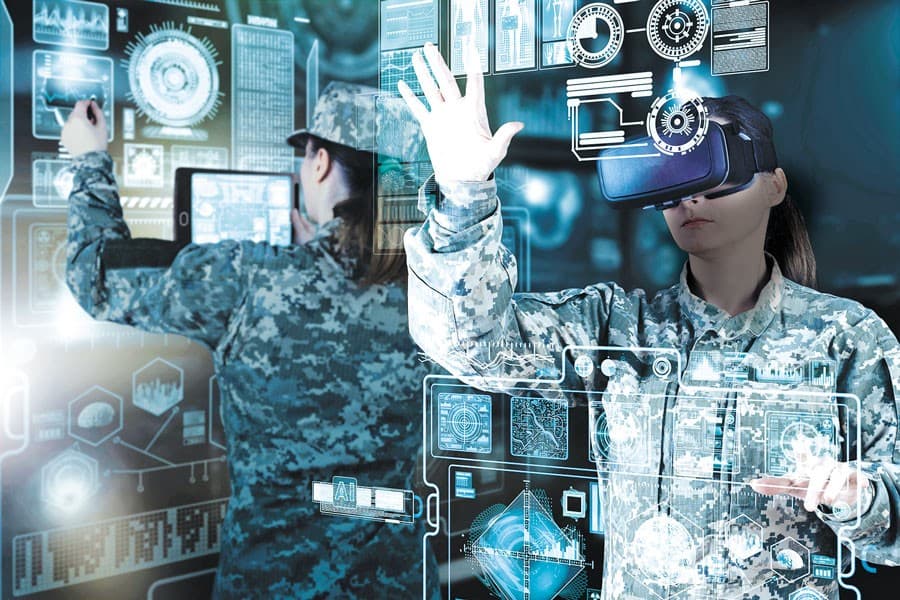
For decades, the arsenal of democracy was built in sprawling factories by giants like Lockheed Martin and Boeing. Tanks, jets, and aircraft carriers were the currency of military might. That era is ending.
"People are pointing to this moment as a proof point," said Garrett Smith, a former lieutenant colonel and defense tech CEO, referring to the rapid integration of AI and commercial tech into lethal military operations .
This shift-where code is as critical as caliber-is reshaping global power dynamics. For the United States and its allies, it offers a decisive edge. But for nations like Bangladesh, a country racing to digitize its economy while navigating a volatile neighborhood, the new role of tech giants represents a profound vulnerability.
To understand the risk, one must first understand the scale of the transformation. The traditional relationship between tech workers and the Pentagon was icy. Employee revolts at Google a decade ago forced the company to back away from military AI projects like Project Maven.
That wall has crumbled. In 2025 alone, private equity poured a record '$49 billion' into defense technology startups, nearly double the previous year. The current war has effectively sanitized the industry; building weapons is no longer a moral quandary in Silicon Valley but a patriotic-and lucrative-mission.
"America is the center of the A.I. revolution," declared Alex Karp, CEO of Palantir, as his company's stock surged amid the conflict.
Today, an AI system known as 'Maven' sifts through satellite imagery and drone feeds to generate target lists. In the first four days of the recent Middle East escalation, airstrikes hit more than 2,000 targets-many selected by an algorithm . Meanwhile, Anduril, a startup founded by a 20-something inventor, just landed a $20 billion contract to run AI-backed software on military systems.
Bangladesh: The Double-Edged Sword of Digital Dependency
For Bangladesh, the "Digital Bangladesh" vision has been a point of national pride. The country has built a thriving freelance economy, pushed for semiconductor roadmaps, and connected millions to the internet . However, this rapid digitization has created a dependency on the very infrastructure and software controlled by these Western tech giants.
The vulnerability is twofold: 'Operational Dependency' and 'Cyber Sovereignty'.
The role of tech giants in modern warfare is no longer supportive; it is central. For countries like Bangladesh, the path forward is a tightrope walk.
They cannot afford to reject Silicon Valley-the economic benefits are too immense. But they can no longer afford blind trust. The nation must accelerate the development of local data centers, enforce the "Digital Security Act" with actual technical rigor rather than political censorship, and demand transparency from the cloud providers hosting its government secrets.
As Jack Shanahan, a retired Air Force general, noted, the current conflict is likely to be called "America's first AI war" . For the rest of the world, it serves as a warning. In the age of the algorithm, a nation that does not control its code has already surrendered its sovereignty. Bangladesh has drawn up the blueprints for digital safety. The question remains whether it can build the walls before the storm arrives.