

Published :
Updated :
 For all latest news, follow The Financial Express Google News channel.
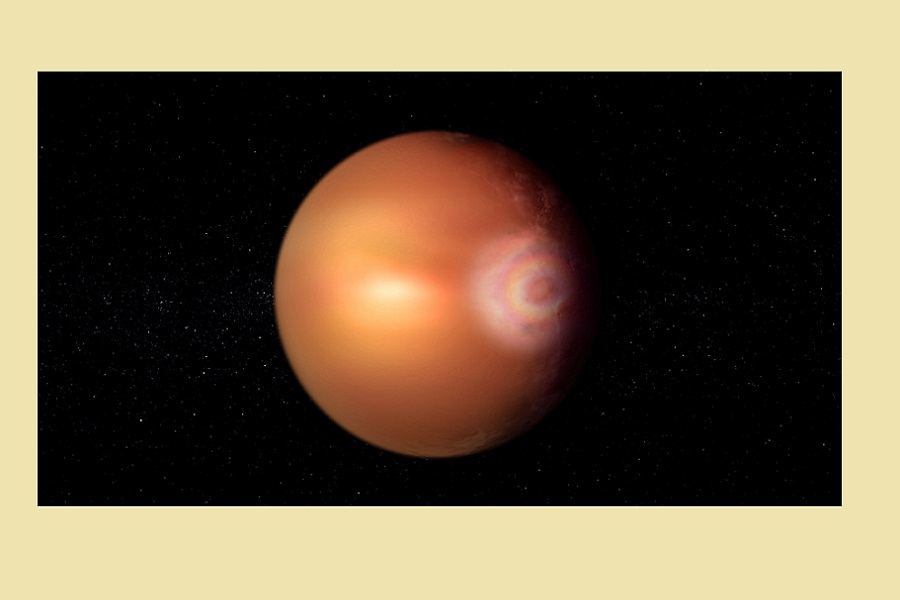
Astronomers have discovered a rare phenomenon on a planet outside our solar system. This 'glory effect' creates rainbow-like patterns and has only been observed on Venus.
WASP-76b, a scorching gas giant nearly twice the size of Jupiter, is located a staggering 637 light-years away.
So, what makes this effect so unique? Unlike rainbows, glories require particular conditions.
Light must squeeze through tiny gaps, like those between water droplets in clouds, to bend and create those mesmerizing rings. Scientists believe WASP-76b's atmosphere might hold the key.
This discovery wouldn't have been possible without Cheops, a small but mighty space telescope. Its three-year observation of WASP-76b revealed hints of the glory effect. If future studies confirm this finding, it could be a game-changer.
Understanding how glories form on distant planets could illuminate their atmospheres and habitability.
NASA's James Webb Space Telescope. With its advanced capabilities, the Webb Telescope could provide definitive proof of the glory effect on WASP-76b.
This scorching hot planet, with one side facing eternal sunlight and the other shrouded in darkness, might hold the secrets to unlocking the mysteries of distant worlds.