

Published :
Updated :
 For all latest news, follow The Financial Express Google News channel.
An unmanned Russian cargo spacecraft has a problem with an antenna so it will have to be manually docked when it reaches the International Space Station (ISS), Russia's Roscosmos state space corporation said in a statement.
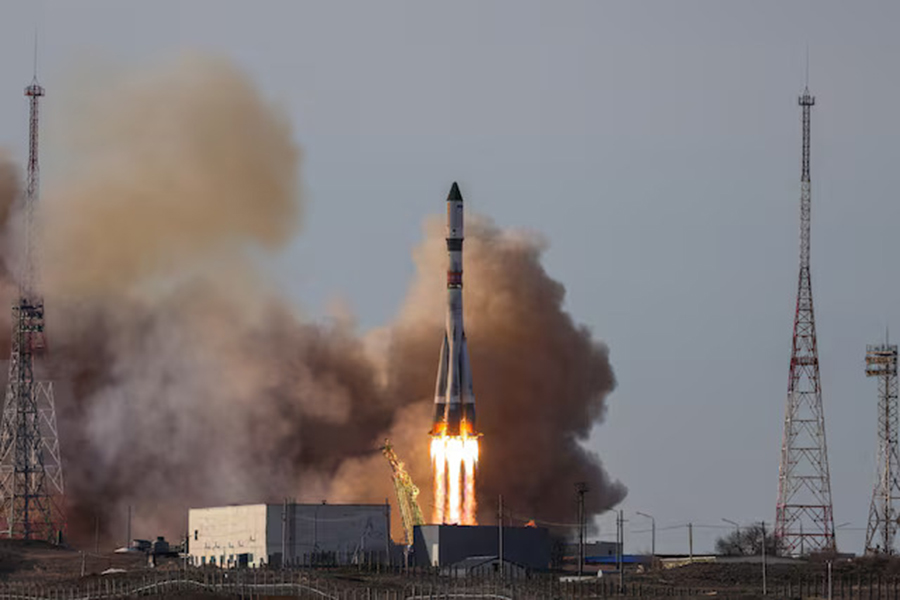
A Soyuz-2.1a rocket launched the Progress MS-33 cargo spacecraft on Sunday from Baikonur in Kazakhstan but a problem with one of the KURS automated rendezvous antennas was identified, Roscosmos said.
Russian cosmonaut Sergei Kud-Sverchkov, the current ISS commander, will manually dock the cargo ship on Tuesday at about 13:35 GMT, Roscosmos said.
"A manual approach of ships to the ISS is regularly practiced by cosmonauts in training," said Oleg Kononenko, head of Russia's Cosmonaut Training Center.
NASA said all other systems are operating as normal and that Roscosmos will continue troubleshooting the antenna.
The cargo ship is carrying about 2.5 tonnes of food, water, fuel, oxygen and supplies for the crew aboard the ISS.
There are currently seven crew aboard the ISS including Russians Kud-Sverchkov, Sergei Mikayev and Andrei Fedyaev, US astronauts Christopher Williams, Jessica Meir and Jack Hathaway, and France's Sophie Adenot.