

Published :
Updated :
 For all latest news, follow The Financial Express Google News channel.
Human life is deemed precious because of its ephemerality. Mankind strives to do something worthwhile with its limited time, to leave a trace to remember it after its demise.
But what if that wasn’t the case anymore? What if Homo sapiens, as a species, could transcend death, create for itself an extraordinary lifespan, and unlock its power to limitless potential?
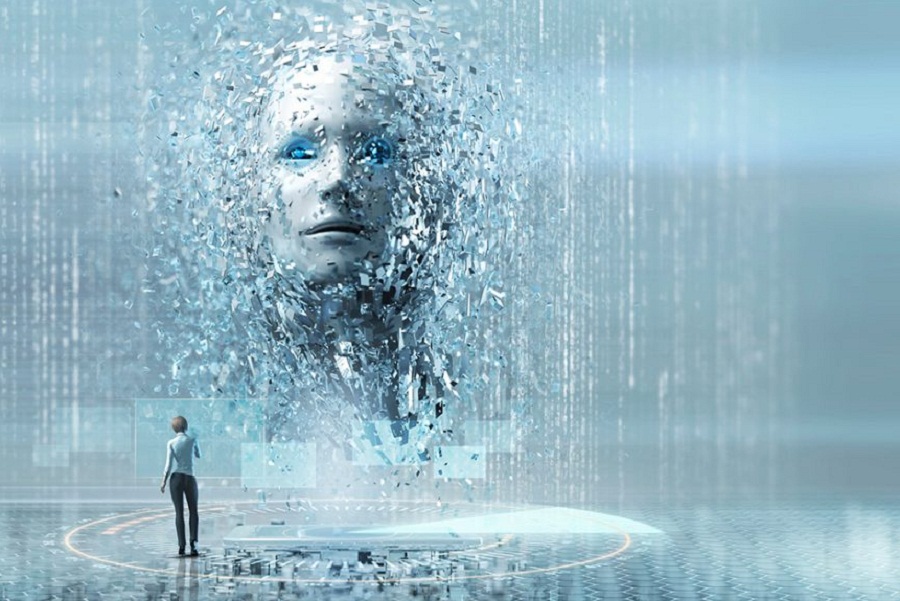
This ideology constitutes the basis of transhumanism, a movement that cultivates a belief in ‘enhanced beings’ in the future, where humans will be free of naturally imposed biological constraints and will inhabit a deathless future. With an enhanced health span free of disease and unnecessary suffering, humans will be able to accomplish so much more.
The concept of technologically enhancing our bodies isn’t novel. Devices such as hearing aids, heart pacemakers and prosthetic limbs have been around for quite some time and were developed to alleviate suffering.
But transhumanism takes this concept several steps further. It explores a much more extensive application of technology in our day-to-day lives, characterised by extreme personalisation.
Contact lenses that can take pictures or videos or which measure glucose levels in eye fluids, translator earbuds that will allow us to communicate anywhere in the world, and exosuits that could increase our physical strength are some of the many products transhumanists aspire to use extensively.
The brain-machine interface is a burgeoning area of research and development, with companies such as Neuralink, DARPA and Facebook already developing wearable and implantable brain microchips, devices that will allow us to communicate at the speed of our thoughts.
With advancements made at an exponential scale, the line between humans and machines is expected to blur. Proponents claim that humans will ultimately achieve immortality, if not biologically, then digitally, by uploading their minds into computers through brain-machine interfaces, whereby our consciousness will reside in a digital space long after it has left its biological habitat.
But humans would reap the most spectacular benefits through biological augmentation, allowing an increased insight into our genomes. By so doing, we could one day eradicate all heritable diseases through the groundbreaking CRISPR technique, create exosuits to aid the elderly in their movement, or perhaps select the most intelligent embryo for fetal development.
As ecstatic advocates are about the arrival of such a transformed age, most of the technology required to achieve these goals is still unrealised and will require decades for fruition.
As a result, several transhumanists have opted to have their bodies cryogenically preserved until medical science reaches the point of its ability to resurrect these bodies and allow them to have their bodies and minds augmented and enhanced.
As of 2014, 250 corpses have been cryogenically preserved in the USA, and 1,500 people have signed up for their remains to be preserved. 4 cryogenic facilities exist in the world to date -- 3 in the USA and 1 in Russia.
There’s no doubt that transhumanism will usher us into a cyborg era, one in which the symbiosis between man and tech will be perceived as normal, if not crucial. And because of this, this new intellectual paradigm engenders a wide array of ethical questions.
The already stratified human race would experience a deeper chasm based on the ability to afford augmentation, with factors such as perseverance or diligence losing their impact on success.
In sports, for instance, athletes running on carbon blades outperform those who run on natural limbs. It would be natural for several athletes to wish to have their perfectly functional and healthy legs replaced by prosthetics to escalate their ability.
Although critics have found this notion repulsive, many proponents don’t seem to find the idea of replacing healthy limbs with synthetic ones to win gold medals as transgressing the bounds of ethics in any way.
The ethical ambiguity aside, many critics are also dubious of the technological developments that will allegedly change our future. The whole idea of uploading our minds or consciousness onto a digital platform entails that the human brain is analogous to computers.
In terms of functionality, however, the human brain barely resembles the latter. Neuroscientists, on the other hand, are still ambiguous about their perception of ‘consciousness’,; the idea that a conscious entity could be built from scratch is simply unimaginable, as that would necessitate replicating the 1000 trillion neural connections crisscrossing our brain.
All in all, transhumanism is a grey area, on the one hand promising mankind the Elixir of Life and, on the other hand, limited by ethical dilemmas and, of course, the tools available. But humanity has progressed so much in so little a time it isn’t incredulous to believe that they may be able to transfigure themselves into posthumans, a race unshackled by bodily frailty and natural imperfection.
The transhumanists could, however, along with envisioning a sci-fi future and working towards lofty goals, channel their resources and energy into improving the human condition today.
fawziyaosman@iut-dhaka.edu