

Published :
Updated :
 For all latest news, follow The Financial Express Google News channel.
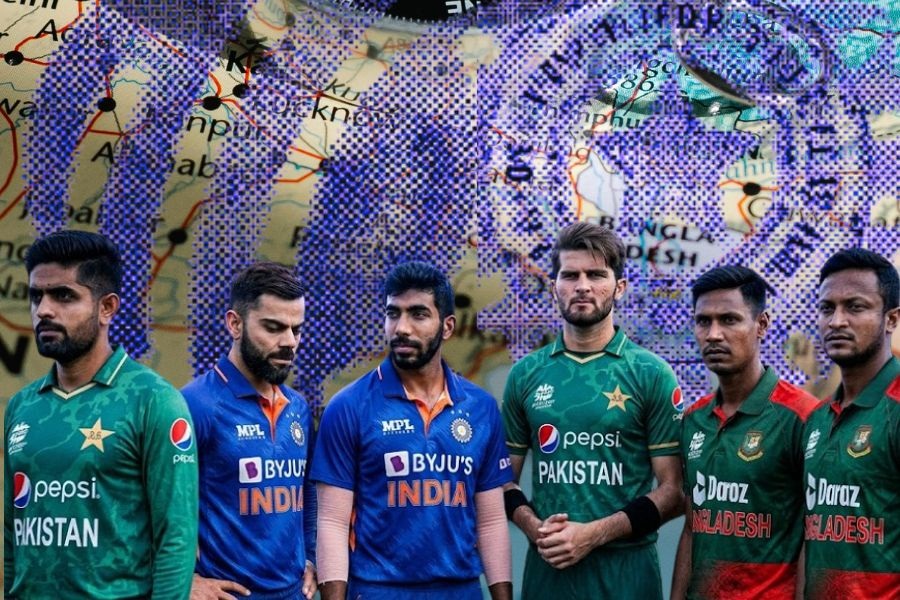
Three months have passed, and a lot has happened in the sports arena in 2026. A Cricket World Cup T20 without Bangladesh, uncertainties between the Indo-Pak match, Iran got banned by FIFA; sports, which had been a matter of shared happiness among common people and sweet debates among youth during college class breaks, have now been replaced by 'nationalism', 'border disputes', or geopolitical 'games' of who is friends with whom. The traditional map of global diplomacy is being redrawn, not in the corridors of Geneva or New York, but on the manicured grass of cricket fields and the synthetic turf of football stadiums.
We have entered an era where a 'soft signal' from a television umpire can carry as much weight as a formal communiqué from a Foreign Ministry.
As the world becomes increasingly fractured by geopolitical rivalries, sports have emerged as the ultimate 'double-edged sword', acting simultaneously as a fragile bridge for dialogue and a high-stakes arena for political posturing, while being shaped by geopolitical interests.
Nationalism matters more?
The year 2026 began with a diplomatic tremor in South Asia that fundamentally altered the landscape of international cricket.
For decades, the India-Pakistan rivalry has been the sport's most bankable commodity. Still, the recent standoff over the 2025 Champions Trophy and the 2026 T20 World Cup has pushed the 'Hybrid Model' of sports hosting to its limit.
India's refusal to travel to Pakistan for the Champions Trophy, citing security and geopolitical concerns, forced the International Cricket Council (ICC) to move India's fixtures to Dubai.
While this created a logistical nightmare, it gave rise to a peculiar economic phenomenon. By strictly limiting India-Pakistan encounters to multi-nation tournaments, a 'scarcity premium' has been created.
"We are witnessing the weaponisation of participation," says Liam Hennessey, a senior sports consultant at The Guardian. "When India and Pakistan don't play a bilateral series, the commercial value of their tournament matches skyrockets. It's no longer just a game; it's a billion-dollar broadcast event that essentially subsidises the rest of the cricketing world. In 2026, the 'hype' is the only market that never crashes."
The financial stakes are staggering. Estimates suggest that a single India-Pakistan fixture in 2026 generates roughly $180 million in advertising and broadcast revenue, accounting for nearly 20% of the ICC's total revenue pool for an entire World Cup cycle. This 'enforced absence' in bilateral play has made the rivalry 'too big to fail,' forcing hostile neighbours to sit at the same table to protect their shared financial interests.
Bangladesh-India: a new friction point?
While India-Pakistan is an old fire, a new one sparked in early 2026 between India and Bangladesh. Following political shifts in Dhaka and the rise of a new administration, the Bangladesh Cricket Board (BCB) briefly withdrew from touring India for the 2026 T20 World Cup, citing safety concerns.
This row saw Bangladesh replaced by Scotland in the initial draw, a move that sent shockwaves through the region. However, the appointment of a new Sports Minister in Dhaka, Aminul Haque, signalled a swift pivot back to 'cricket diplomacy.' The message is clear: if the cricket stops, the economic and social fallout is too great for any neighbouring regime to ignore.
Iran and the FIFA mandate
Beyond the subcontinent, the most profound intersection of sports and social change is occurring in Tehran. For years, the FIFA-Iran dispute over the ban on women in stadiums has been a flashpoint for international pressure.
In early 2026, the threat of a total ban from the 2026 FIFA World Cup (hosted by the US, Canada, and Mexico) forced the Iranian authorities into a historic concession.
Following the tragic legacy of the 'Blue Girl' and sustained pressure from FIFA President Gianni Infantino, Iran has begun allowing segregated but significant numbers of female fans into league matches.
FIFA's role here has evolved from a governing body to a quasi-governmental regulator of social norms. By leveraging the 'right to play,' international sporting bodies are now dictating domestic policy in ways traditional sanctions have failed to achieve.
Shaping the future
This atmosphere of constant diplomatic friction is creating a lucrative new market: the Global Neutral Hub. Cities like Dubai, Doha, and Colombo have transformed into 'Diplomatic duty-free zones', places where nations that cannot stand each other's presence on home soil can compete under a flag of commercial truce. The future of sports diplomacy in 2026 is no longer about 'Ping Pong Diplomacy'—the idea that a game can bring peace. Instead, it is about 'Regulated Rivalry.'
Marçal Jané, a prominent sports analyst for the Better World Campaign, said, "Sports are a non-politicised, neutral entry point for dialogue. In 2026, we don't expect a football match to end a war, but we do expect it to keep the phone lines open."
In recent times, there has been a significant change seen among the spectators as well. Where spectators used to appreciate one another even in moments of crisis, it has now been replaced by 'nationalist' sentiments. Legends like Sunil Gavaskar echo the voices of governments' sentiment, sharing views in the statements "Why do they have to buy Pakistani cricketers?" questioning that Indian money will be used to buy arms that will be used to attack India.
As we look 'backword' (forward0 the remainder of 2026, the trend is undeniable. Sports are no longer a distraction from politics. Now geopolitical tensions are being carried to green fields.
Whether it is India using its cricketing 'soft power' to influence regional security, or FIFA using the World Cup to push for human rights in the Middle East, the scoreboard is now a ledger of national prestige and diplomatic leverage.
The 'New Market' of 2026 is one in which tension is monetised. While the old sports lovers may mourn the loss of 'sport for sport's sake, the reality is that in a divided world, the playing field is often the only ground left where everyone is still willing to play.
mohd.imranasifkhan@gmail.com