

Bangladesh restores lottery system for IPO share allocation under revised rules
Published :
Updated :
 For all latest news, follow The Financial Express Google News channel.
The lottery system for allocating shares to investors in initial public offerings has been reinstated in Bangladesh’s capital market.
Officials of the Bangladesh Securities and Exchange Commission (BSEC) say shares of companies coming to the market through IPOs will now be distributed through a lottery instead of proportional allotment.
Following reforms to the IPO framework, the “Bangladesh Securities and Exchange Commission (Public Offer of Equity Securities) Rules, 2025” was gazetted on Dec 30.
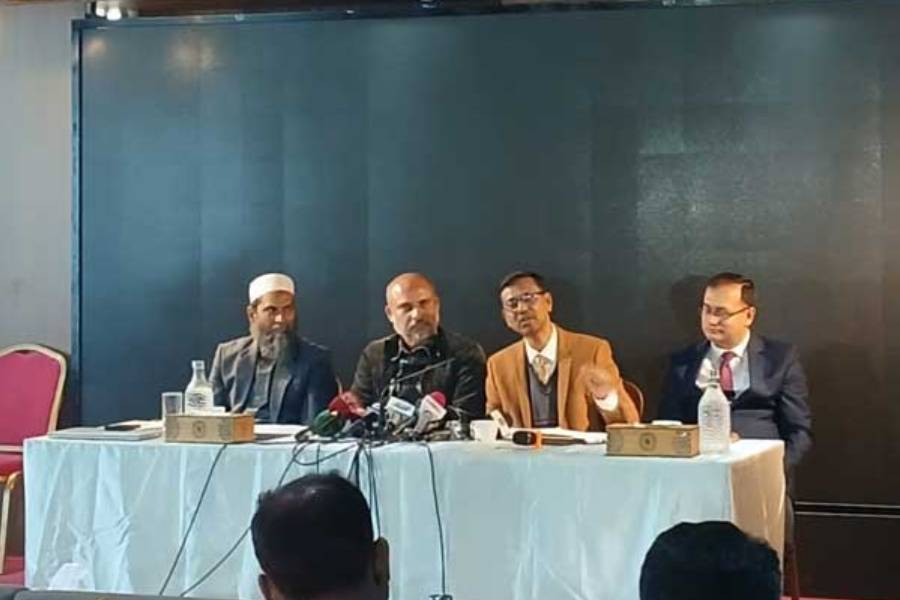
The revised rules were explained at a press conference at the BSEC office in Agargaon on Wednesday.
Under the amended framework, stock exchanges will give primary approval to IPO proposals, with the BSEC issuing final approval based on their recommendations.
Interested companies will be allowed to apply for listing on one or both of the country’s stock exchanges. To be listed on the main board, a company must have paid-up capital of at least Tk 300 million.
After an IPO, at least 10 percent of a company’s total shares must be floated in the stock market, while the minimum post-IPO paid-up capital must be Tk 500 million.
To enter the market under the new rules, a company will have to offer shares worth at least Tk 200 million.
The regulator may relax this condition in the case of fundamentally strong or multinational companies.
Following an IPO, a company’s paid-up capital will not be allowed to exceed Tk 1.25 billion. Funds raised through the IPO will have to be utilised within five years of completion of the process.
The lottery-based share allotment system was scrapped in 2024, when the BSEC introduced proportional allocation based on investor demand and deposited funds.
Under that system, investors were required to have a minimum investment of Tk 50,000 in the main market to apply for IPO shares, with allotment made proportionately among all applicants.
After the fall of the Awami League government following the July Uprising in 2024, several taskforces were formed to reform the financial sector.
Structural reforms in the capital market are now under way based on recommendations from those taskforces.
At the briefing, BSEC spokesperson Abul Kalam said the taskforce held discussions with all stakeholders while preparing the amendments.
“Priority has been given to areas where there was consensus and common recommendations,” he said.
“This will make implementation easier. The system will be market-driven. Many aspects of the previous framework were not market-driven.”