

BSEC removes bar on whistleblowers sharing information
Move follows experts' criticism of proposed rules
Published :
Updated :
 For all latest news, follow The Financial Express Google News channel.
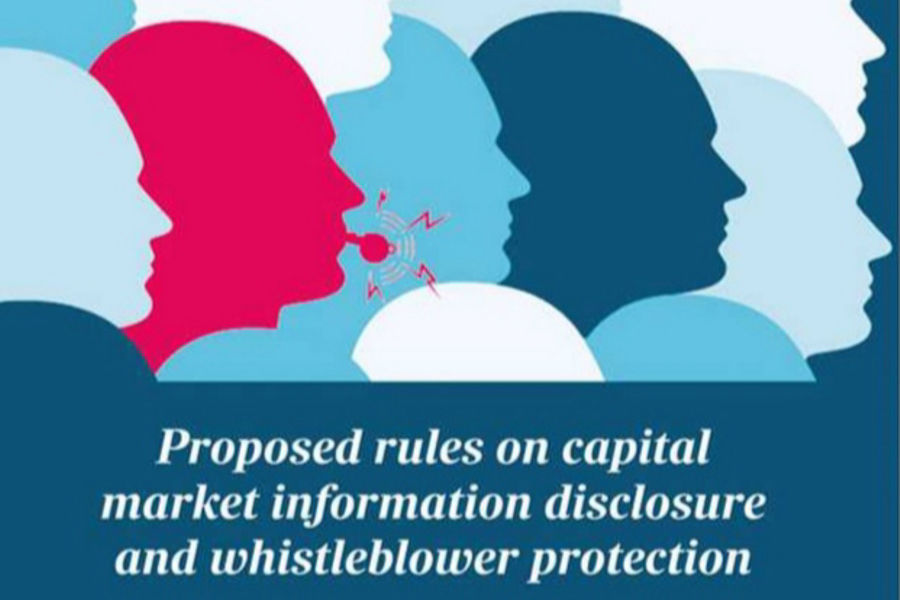
In a significant policy shift, the Bangladesh Securities and Exchange Commission (BSEC) has now decided in principle to allow whistleblowers to share with the media or other authorities the information they have submitted to the regulator.Bangladesh market trends
The securities regulator took the decision in response to strong criticism from experts over a provision in the proposed whistleblower rules that barred the disclosure of information to any other person or authority.
The proposed rules titled "Bangladesh Securities and Exchange Commission (Capital Market Related Information Disclosure and Whistleblower Protection) Rules, 2026" are intended to encourage insiders to report corruption and misconduct in the capital market.
But the prohibitive restriction has drawn strong opposition from experts, including Dr Iftekharuzzaman, executive director of Transparency International Bangladesh (TIB). They argue that whistleblowers should have the freedom to share information with others.
The regulator has already uploaded the draft rules on its website and sought public opinions.
"The regulator has accepted the experts' opinion made on the proposed provision regarding sharing of information by the whistleblowers," said BSEC spokesperson Md Abul Kalam.
The contentious clause prohibiting such disclosures would be removed from the rules, which are being finalised after reviewing public feedback, he added.
Under the proposed framework, whistleblowers who submit information to the regulator for investigation and possible punitive measures would be required to make certain commitments. One such commitment earlier required the informant to declare: "I will not disclose information related to the complaint to any other person or authority."
Experts argued that such a restriction undermines the very purpose of the rules.
Terming the provision "unacceptable", they questioned the regulator's intent, saying that if confidential information remains accessible only to the securities regulator, it could be misused to shield wrongdoers.
DR Iftekharuzzaman said the BSEC must ensure the protection of the identity and safety of whistleblowers. Even if they make the information public, the regulator should remain responsible for ensuring their protection.
"Whistleblowers should be at liberty to disseminate information to any other authority and the media for the sake of their own safety," he added.
BSEC spokesperson Abul Kalam said no other commissions in the country had yet introduced whistleblower rules, although such frameworks exist in many countries.
"The BSEC has now drafted such rules and sought public opinion with a very good intention," he said, adding that the draft would be finalised after incorporating feedback from experts and stakeholders.
According to the draft rules, a whistleblower may be an individual or a group that voluntarily provides the regulator with original written information regarding corruption or violations of securities laws that have occurred, are ongoing or are likely to occur.
The proposed rules define a whistleblower as any officer or employee of a market intermediary registered with the BSEC, any listed company, issuer, registered fund or SVP (special purpose vehicle), as well as any member of the board of directors, board of trustees, auditor, or any person associated with them.
Once finalised, the rules, the first of their kind, will enable the regulator to initiate investigations based on insider information and help strengthen market discipline.
Currently, the BSEC largely depends on media reports and financial statements of listed companies and market intermediaries to take regulatory action. In the absence of legal protection, insiders have been reluctant to share information with the regulator.Mobile financial services
Globally, at least 59 countries have enacted specific whistleblower protection laws, including comprehensive frameworks in the United States, Canada, Australia, Japan, India, South Korea and the United Kingdom, as well as across member states of the European Union.
Under the draft rules, insiders of listed companies and market intermediaries will be able to submit information directly to the BSEC chairman.
The information will then be forwarded to a designated officer, who will examine its relevance and check for prima facie evidence before sending it back to the chairman.
To ensure confidentiality, the identity of the whistleblower will be recorded using coded references.
If prima facie evidence is found, the chairman will instruct the department concerned to prepare terms of reference for an investigation following further verification.
The BSEC's inquiry and investigation department will then conduct the probe, after which hearings will be held and penalties may be imposed based on the findings.
Following regulatory action, the designated officer may propose rewarding the whistleblower with a share of the penalties recovered.
Under the draft rules, whistleblowers may receive incentives of up to 25 per cent of the fines realised from the wrongdoers.
However, the rules stipulate that the identity of the information provider will in no way be disclosed during the investigation or in legal proceedings.
mufazzal.fe@gmail.com