

Published :
Updated :
 For all latest news, follow The Financial Express Google News channel.
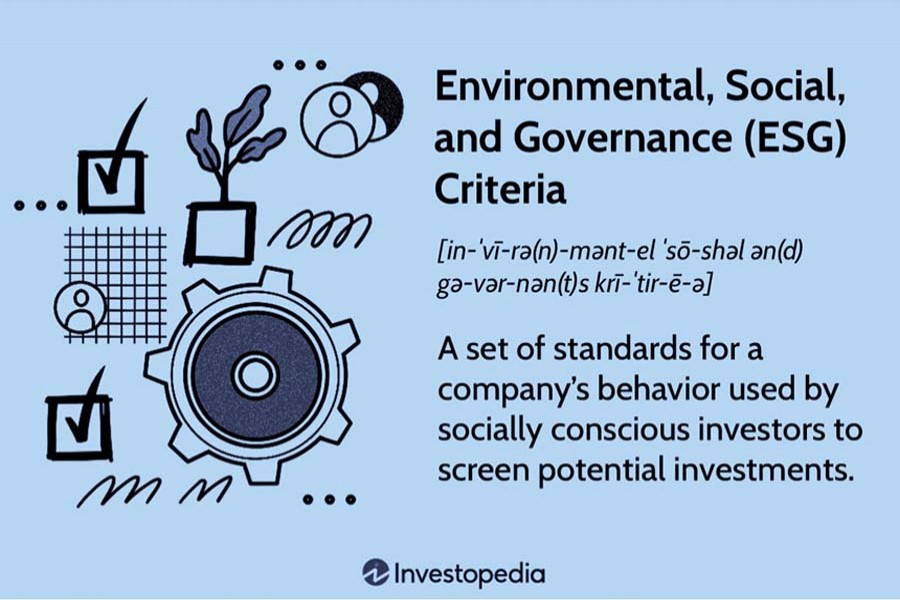
The securities regulator has made Environmental, Social and Governance (ESG) disclosures mandatory for listed companies as it moves to overhaul corporate governance rules to promote sustainability, strengthen accountability, and improve risk management.
The Bangladesh Securities and Exchange Commission (BSEC) has sought public opinions within two weeks from Thursday before finalising and enforcing the Corporate Governance Rules 2026.
From then on, listed companies will be required to formally disclose ESG-related information in their annual reports, moving beyond traditional financial reporting frameworks.
Such reporting was previously encouraged or discussed informally, said BSEC spokesperson Md Abul Kalam.
The rules assign direct responsibility to the audit committee to ensure ESG reporting and oversight, effectively embedding sustainability considerations into mainstream governance structures.
Market observers say the move aligns Bangladesh with global investor expectations, where ESG metrics are increasingly used to assess long-term corporate
value, risk exposure, and ethical conduct.
Md Moniruzzaman, managing director and chief executive officer of Prime Bank Securities, told
The FE that while some foreign funds specifically target ESG-compliant companies, the overall impact will ultimately depend
on the broader governance standards of the country's capital market.
Companies will also be required to integrate ESG considerations within broader disclosures, including Management Discussion and Analysis (MD&A) and risk reporting, marking a transition toward integrated reporting standards.
Board structure tightened, independence strengthened
Alongside ESG reforms, the regulator aims to bring qualitative changes to board governance requirements through the revised governance rules.
As per the 2026 rules, listed companies must maintain boards with five to 20 directors, with at least one female director and a minimum of three independent directors or one-third of the board, whichever is higher. The existing rules provide for one-fifth independent directors.
To strengthen accountability, sponsors, promoters, and directors must jointly hold at least 30 per cent of company shares, while individual non-executive directors are required to hold a minimum 2 per cent stake.
Separate individuals must serve as chairman and managing director or chief executive officer of a company to avoid concentration of authority.
Independent directors under stricter scrutiny
The 2026 rules introduce a more rigorous framework for independent directors, requiring a minimum of 12 years of professional experience-or eight years in the case of female candidates.
Appointments will follow a multi-step process involving board committees, regulatory approval, and shareholder endorsement, significantly reducing discretionary appointments.
Independent directors will serve a three-year term, renewable once, with a cooling-off period of three years before reappointment.
The "fit and proper" criteria is intended to exclude individuals with financial defaults, criminal records, or conflicts of interest, while the rules also limit the number of board positions an individual can hold.
Committees to drive governance and sustainability
The revised rules strengthen board sub-committees, particularly in relation to ESG and risk oversight.
An audit committee, chaired by an independent director, will not only oversee financial reporting and audits but also ensure ESG disclosures are properly made.
The Nomination and Remuneration Committee (NRC) will guide board composition, diversity, and executive compensation policies.
A significant addition is the Risk Management Committee (RMC), which will oversee enterprise-wide risk frameworks, including emerging risks linked to sustainability, compliance, and operational resilience.
Broader disclosure and compliance requirements
The new framework significantly expands disclosure obligations.
Companies must publish detailed MD&A reports outlining financial performance, liquidity, and forward-looking strategies, while also disclosing structured risk factors ranked by materiality.
Directors' reports will now include comprehensive details on industry outlook, related-party transactions, IPO fund utilisation, dividend policies, and multi-year financial performance.
Corporate governance compliance audits or certificates must now be obtained from a firm of chartered secretaries, as they are deemed to have the best understanding of governance facts, said the spokesperson.
Stock exchanges have been tasked with reviewing compliance and reporting irregularities to the regulator.
To prevent companies from neglecting shareholders while spending on CSR, the rules stipulate that companies must hold regular AGMs and provide at least 10 per cent dividends before engaging in CSR activities.
A shift toward sustainability-led governance
On the revised rules, analysts say the mandatory ESG disclosure requirement marks a fundamental shift in regulatory philosophy-from a purely financial reporting model to a sustainability-led governance framework.
By integrating ESG into audit oversight, risk management, and annual reporting, the regulator is effectively pushing companies to adopt more transparent, responsible, and globally aligned business practices.
The reforms are expected to improve investor confidence, particularly among institutional and foreign investors, while encouraging companies to address environmental risks, social responsibilities, and governance weaknesses more systematically.
farhan.fardaus@gmail.com