

Pubali Bank slashes NPLs to 2.05pc, shifts focus to AI-driven digital banking
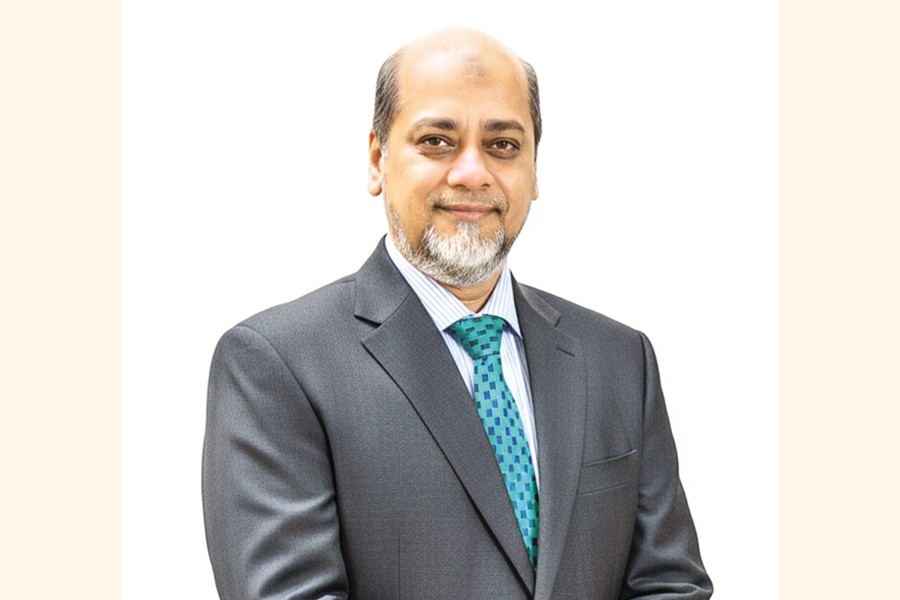
Says MD and CEO Mohammad Ali in an exclusive interview with the FE
Published :
Updated :
 For all latest news, follow The Financial Express Google News channel.
Making remarkable progress in controlling non-performing loans (NPLs), Pubali Bank PLC is now intensifying its efforts to establish supremacy in digital banking operations in the coming days.
Keeping in mind the latest changes in the classified-loan-counting method-which pushed up NPL pressure in 2024, the country's one of the oldest commercial banks adopted a different approach by giving full attention on recovery conferences across the country every month instead of holding business conferences throughout the year.
Simultaneously, bank executives continue to make gentle approaches to defaulted clients on a regular basis to motivate them to get regularised by paying overdue installments, Managing Director and Chief Executive Officer of the bank Mohammad Ali said in an exclusive interview with The Financial Express recently.
"We worked as a team. We did not disturb anyone. Our approach was too gentle and we managed to make them understand the changed CL-counting method," he said.
The NPL ratio stood at 5.40 per cent by the end of September last year, but their continuous recovery efforts, coupled with the Bangladesh Bank (BB)-instructed policy supports and partial write-off facilities, helped reduce the NPL burden to 2.05 per cent by December 2025, he said.
"This (the NPL ratio) is probably the lowest in the industry. We need to keep the momentum going in the coming days," he said.
Once considered a problematic lender, the bank has now emerged as one of the country's leading banks, ridding on a series of reforms backed by short-, mid- and long-term plans.
"In every KPI (key performance indicator) parameter, the position of the bank is between first and third," he said.
Under the existing sluggish investment regime, the experienced banker said the bank has been maintaining a balanced investment portfolio, keeping growth and job creation in mind.
The previous calendar year was not suitable for investment, as private-sector credit demand remained subdued.
Despite this, he said, they invested half of the deposits mobilised in 2025 for the private sector, while the remaining portion was invested in government securities. "And we earned an operating profit of Tk 30.30 billion in 2025, which is probably the second highest among private commercial banks."
About the bank's future plans, the top executive, whose tenure has recently been expanded by another three years by the board and the central bank, said digital transformation has emerged as a key factor of sustainability across the globe.
Adoption of such digital transformation across the bank's services will not only strengthen its footprint further in the country's banking landscape but also enable the commercial lender to deliver a better customer experience in days to come when artificial intelligence (AI), data mining, big-data analytics, paperless banking, digital currencies and blockchain technology are expected to be dominating the banking services.
"We have to have supremacy here, especially in AI and big-data analytics, in the coming days," the MD-cum-CEO said.
Globally, banks invested around $250 billion in artificial intelligence in 2024, with the figure rising to $1.50 trillion in 2025. "Just think how much money will be invested this year. So, if we can't cope with the changes, particularly in AI, we will be doomed," he said.
About the role of top bank executives under the current banking environment, he said the bankers who compromised compliance in the last few years are now in serious trouble. "Some are either in jail, under social pressures or on the run. This is visible. Despite this visibility, if any bank executive embraces non-compliance, it will be very unfortunate," he added.
jubairfe1980@gmail.com