

INTERVIEW
Real turnaround requires honesty, commitment
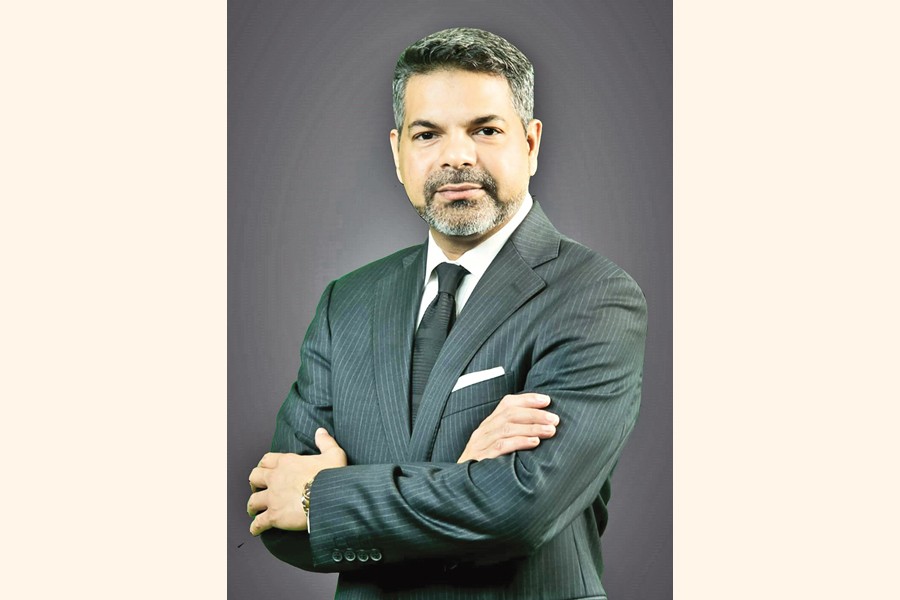
Says City Bank Chairman Hossain Khaled about struggling commercial banks in an interview with The FE
Published :
Updated :
 For all latest news, follow The Financial Express Google News channel.
A real turnaround of the struggling commercial banks in Bangladesh requires honesty and commitment, and there are no shortcuts, City Bank Chairman Hossain Khaled says in an interview with The Financial Express.
Sharing the experience of how City became one of the leading banks from a problematic one through various reforms and business transformations by riding on cutting-edge technology over the years, he calls upon the liquidity-crisis-ridden lenders to properly study City Bank and act accordingly.
"Yes, there was a time when City Bank was considered a problem bank, with issues in asset quality, governance, and overall direction. What changed it were a few decisive turning points," he says.
At the very outset, he says, they had the courage to accept the reality, with the board and the management choosing to confront the problems head-on, recognise losses, and clean up the loan book.
Secondly, the bank undertook a business transformation initiative coupled with the required changes in the management, bringing in a leadership team in 2007.
The team is led by the current managing director and chief executive officer, Mashrur Arefin, who has since guided the bank to unprecedented heights.
The lender then established strategic clarity, focusing on governance, technology, customer centricity, and sustainability, which were reflected in their recognition as the best bank, the best digital bank, and a top sustainable bank.
Finally, they drove a deep cultural shift, moving from relationship-based banking to a disciplined and analytics-driven model.
"A real turnaround requires honesty and commitment, and there are no shortcuts. If we could do it, others can follow and repeat. City Bank can be their case study or benchmark to follow," the chairman says.
He says City Bank's growth and business expansion until now is truly a story of reinvention.
"It evolved from a traditional branch-centric bank into a diversified universal institution with a strong retail franchise; premium service platforms like Citygem and Sapphire; a leading corporate and trade finance business recognised by the Asian Development Bank (ADB); a rapidly expanding small and medium enterprise (SME) portfolio; and subsidiaries, such as City Brokerage, City Capital, City Hong Kong, and CBL Money Transfer; that have extended our capital market and cross-border capabilities."
Khaled says the current business environment is undoubtedly challenging, with the Bangladesh Bank maintaining a contractionary stance by keeping the policy rate as high as 10 per cent and through tight liquidity to curb inflation.
On the other hand, the private sector credit growth has dropped to historic lows, he says.
"In such conditions, our banking focus has been on staying compliant, disciplined, and resilient. Our philosophy is simple: protect the foundation - liquidity, capital, and asset quality - and allow growth to come from strength, not aggression," he also says.
About the bank's plan for the next five years, he says it aspires to become a digital-first, sustainability-led universal bank that serves Bangladesh with the agility of a fintech.
Practically, this means transforming Citytouch into a full lifestyle platform - payments, savings, credit, investments, insurance, and even travel and commerce - while partnering with fintechs and deploying artificial intelligence (AI) responsibly across credit, collections, fraud, and services, he says.
Speaking about the bank's balance sheet, he says they will maintain strong capital and liquidity; gradually increase the share of retail, SME, and sustainable finance; and grow fee-based businesses.
"Our City Credit Bureau initiative will help strengthen credit information and reduce default risks across the market."
Regarding the ongoing merger move under the Bank Resolution Ordinance 2025, he says merging five severely crisis-ridden Islamic banks into a single entity is a bold step to contain systemic risks and safeguard depositors.
The decision carries both positive aspects and risks. On the positive side, it shows the regulator is willing to act decisively, and if executed well, it could create a stronger, better-capitalised Islamic bank, he says.
But the process must be transparent, and those responsible for past failures must be held accountable, he observes.
"Otherwise, we risk socialising losses while privatising gains. Additionally, I would expect to see professional and high-calibre bankers experienced in such transformation leading the board, not just bureaucrats or policymakers," he adds.
About the central bank-initiated policy support to revive the struggling businesses, he says in a period of high interest rates, political uncertainty, and external shocks, some targeted policy support, such as temporary rescheduling windows, refinance schemes, or time-bound liquidity facilities, can genuinely help prevent unnecessary bankruptcies and large-scale job losses.
However, if these measures turn into permanent cushions, they risk creating moral hazard and weakening overall credit discipline, he warns.
The facility should be given to support viable businesses, particularly exporters and SMEs affected by external pressures, but not to protect wilful defaulters or politically connected borrowers, he says.
"At City Bank, we use such facilities carefully, but we pair them with conservative classification and provisioning. We prefer recognising stress early rather than masking it through cosmetic rescheduling," he adds.
jubairfe1980@gmail.com