

Apparel sector may face same consequence jute industry did: BKMEA President
Published :
Updated :
 For all latest news, follow The Financial Express Google News channel.
Bangladesh Knitwear Manufacturers and Exporters Association (BKMEA) President Mohammad Hatem has warned that the country’s apparel industry may face a crisis similar to the consequences once seen in the jute sector.
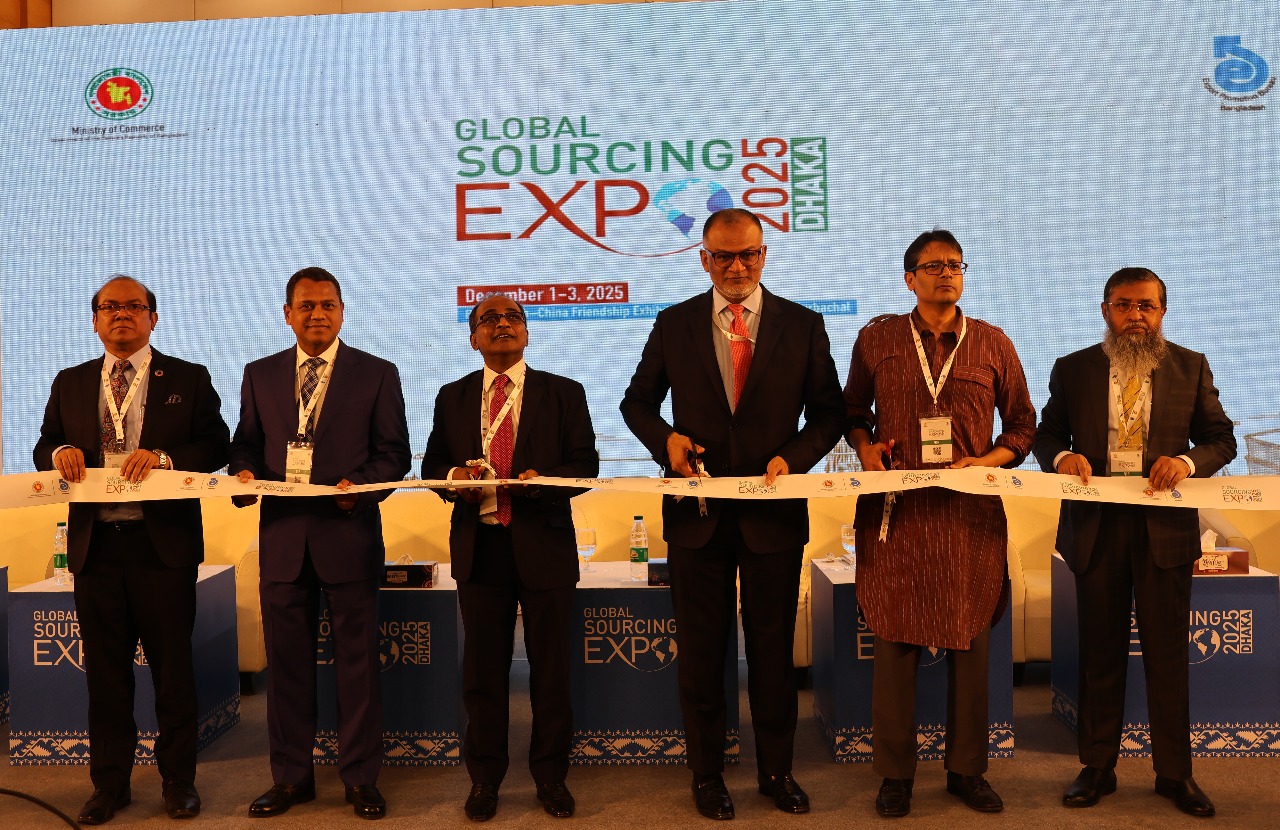
He expressed his concern on Monday at a seminar titled “The Potential of Bangladesh’s RMG Sector: The Way Forward”, organised by BKMEA during the Global Sourcing Expo 2025 at the Bangladesh–China Friendship Exhibition Centre in Purbachal.
Referring to a recent text conversation with Brigadier General (Retd) Dr M Sakhawat Hossain, Adviser for Labour, Employment and Shipping in the interim government, Mr Hatem said he holds him in the highest regard.
“However,” he said, “through the changes in labour laws for this sector, it appears that the seeds of destruction have been sown—just as happened to the jute sector—which will become visible over time.”
He added that although the industry accepted concessions in many areas, “we asked for safeguards in only three issues, yet even those have gone against the interests of the industry.”
Calling the reforms “deceptive”, he said, “We feel somewhat betrayed. We are ready to hand over the keys of our factories within a year to them; we hope they will be able to run the industry as well as they run the government.”
Syeda Rizwana Hasan, Adviser to the Minister of Environment, Forest and Climate Change and Minister of Water Resources, has virtually joined as the chief guest of the seminar.
She said Bangladesh’s apparel industry has established a strong international brand image that must be protected.
“We believe we will be able to uphold that reputation,” she said.
She noted that had fear not overshadowed the negotiations, Bangladesh might have achieved a better outcome in tariff discussions.
“It would not have been difficult to adapt to the labour law changes—this situation should not have arisen,” she added.
Ms Hasan stressed that the sector must remain sustainable. Suspending production in a dying industry due to environmental concerns, she said, is not a viable solution. She also pointed out that the apparel sector has been the pioneer of Bangladesh’s green industrial transformation.
IFIC Bank Managing Director Syed Mansur Mustafa said the bank is now prioritising SME financing.
Referring to media reports on the closure of 400 factories, he said the reasons behind the shutdowns should be properly investigated.
He noted that banks generally do not take collateral for RMG loans as the industry operates largely through back-to-back letters of credit.
“Businesses that take loans must repay them. Otherwise, if some borrowers default, the entire sector is put at risk,” he warned.
Event moderator Fazlee Shamim Ehsan, President of the Employers’ Federation, said banking policies should be framed to support good borrowers.
“At times, we observed that the government all policy support goes to patronising bad loans,” he added.
He further explained that the bad loan borrowers take facilities to reschedule their loans, paying only 2 per cent of the outstanding debt.
“To encourage good borrowers, such practices should end,” he added.
FBCCI Administrator Md Abdur Rahim Khan said the narrowness of Bangladesh’s export basket becomes evident during trade negotiations.
However, he expressed hope that after LDC graduation, the country will be able to navigate global markets, although exports to some destinations may face tariffs.
Akhter Hossain Apurbo, Director of the Bangladesh Employers’ Federation, said many competing developing countries receive incentives to enhance export competitiveness. Bangladesh should also consider similar support, he argued.
Responding to the remarks, Mr Rahim Khan—also an additional secretary at the Ministry of Commerce—said the government is exploring alternative forms of support for exporters, though these will not include direct cash incentives.
“Support may come through packaging, logistics, or other mechanisms,” he added.
EPB Vice-Chairman Hasan Arif said Bangladesh must push forward to overcome various challenges for a brighter future of its export industries.
Syed Sultan, Chairman of the Labour Reform Committee, said the apparel industry has grown over the past 40 years on a strong foundation that will not be weakened by labour law changes.
“We are all committed to ensuring a dignified workplace for all,” he said.
The three-day Global Sourcing Expo, initiated by the Export Promotion Bureau (EPB) and the Ministry of Commerce, is being held with the objective of showcasing Bangladesh's export potential in the global market and further strengthening international business relations.
Buyers, investors and sourcing organisations from different countries of the world, including Afghanistan, China, Iran, Japan, Myanmar, Pakistan, Singapore, Sri Lanka, Thailand, UAE and USA will participate in this expo.
As many as 125 organisations from eight notable export sectors of Bangladesh, namely ready-made garments, leather and leather products, jute and jute products, agriculture and agricultural products, plastic and kitchenware, home decor and furniture, pharmaceutical and ICT sectors, multinational companies, wholesalers, supply chain representatives and important decision-makers from various export markets will participate in this event.