


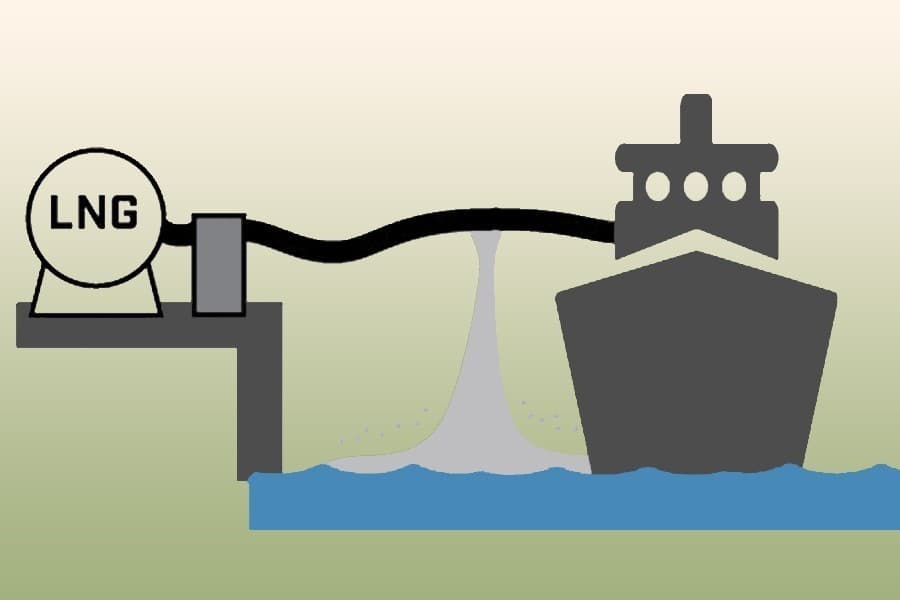


Bangladesh is seeking long-term partnerships to diversify its energy-import sources and plans to establish a land-based liquefied natural gas (LNG) terminal to strengthen supply security, as geopolitical tensions threaten key global shipping routes.


Energy, Power and Mineral Resources Minister Iqbal Hassan Mahmood Tuku said disruptions in LNG shipments through the Strait of Hormuz have exposed vulnerabilities in Bangladesh's energy supply chain, prompting the government to accelerate efforts to secure alternative sources and attract fresh investment in the sector.
"We are seeking long-term partnerships for diversified sources to ensure a stable energy supply arrangement," he was quoted as saying at the inaugural Indo-Pacific Energy Security Ministerial and Business Forum in Tokyo on Sunday.
"A large share of Bangladesh's liquefied natural gas (LNG) imports passes through the Strait of Hormuz," the minister said, adding that current disruptions along this route pose a major threat to Bangladesh's energy security.
"Cancellation or non-delivery of cargoes under long-term LNG contracts forces Bangladesh to procure LNG from the spot market at significantly higher prices," he said.
"For Bangladesh, higher LNG and oil prices substantially increase fiscal pressure, while rising electricity generation costs affect the competitiveness of domestic industries," he added.
Delivery of seven LNG cargoes to Bangladesh has already been affected following a force majeure declared by QatarEnergy and disruptions along the Strait of Hormuz.
Speaking at the forum, the minister said the Bangladesh government has adopted a targeted 180-day action plan alongside a comprehensive five-year plan after assuming office about a month ago.
"One of our key priorities is to promote increased investment in Bangladesh's energy sector. I would like to highlight several areas where we are seeking investment," Mr Tuku said.
The government plans to launch both onshore and offshore bidding rounds this year with updated financial and commercial terms designed to attract investors, he said.
These terms include full depreciation of profit, government payment of investors' taxes, competitive pricing linked to international benchmarks and long-term fiscal stability, he added.
The minister also said the government is committed to actively assisting contractors in obtaining licence approvals, land access and operational support through a coordinated investor-friendly approach.
"Alongside these developments, Bangladesh is planning to establish a land-based LNG terminal to strengthen long-term energy security and support the country's growing energy demand," he said.
"The project will be implemented under a public-private partnership (PPP) initiative," he said.
With government support for land development, port access and other logistical facilities, the project would provide investors with a bankable structure, long-term offtake agreements and stable returns, he added.
Officials said Bangladesh lifted rationing of oil distribution to consumers ahead of the Eid holidays on March 15 after imposing restrictions for around 10 days through petrol pumps to cope with supply constraints.
The government had also restricted decorative lighting in shopping malls and announced early closure of public universities ahead of the upcoming Eid-ul-Fitr.
Bangladesh currently imports around 7.5 million tonnes of LNG annually to meet domestic demand amid a sharp decline in domestic natural gas production.
The country also imports about 7.5 million tonnes of refined and crude oil combined each year to meet fuel demand.
In addition, around 2.0 million tonnes of liquefied petroleum gas (LPG) are imported annually by the private sector to meet demand for cooking, transport and some industrial uses.
azizjst@yahoo.com