

Bangladesh's apparel exports can fetch $122.01b by 2030 thru investing in climate adaptation
Published :
Updated :
 For all latest news, follow The Financial Express Google News channel.
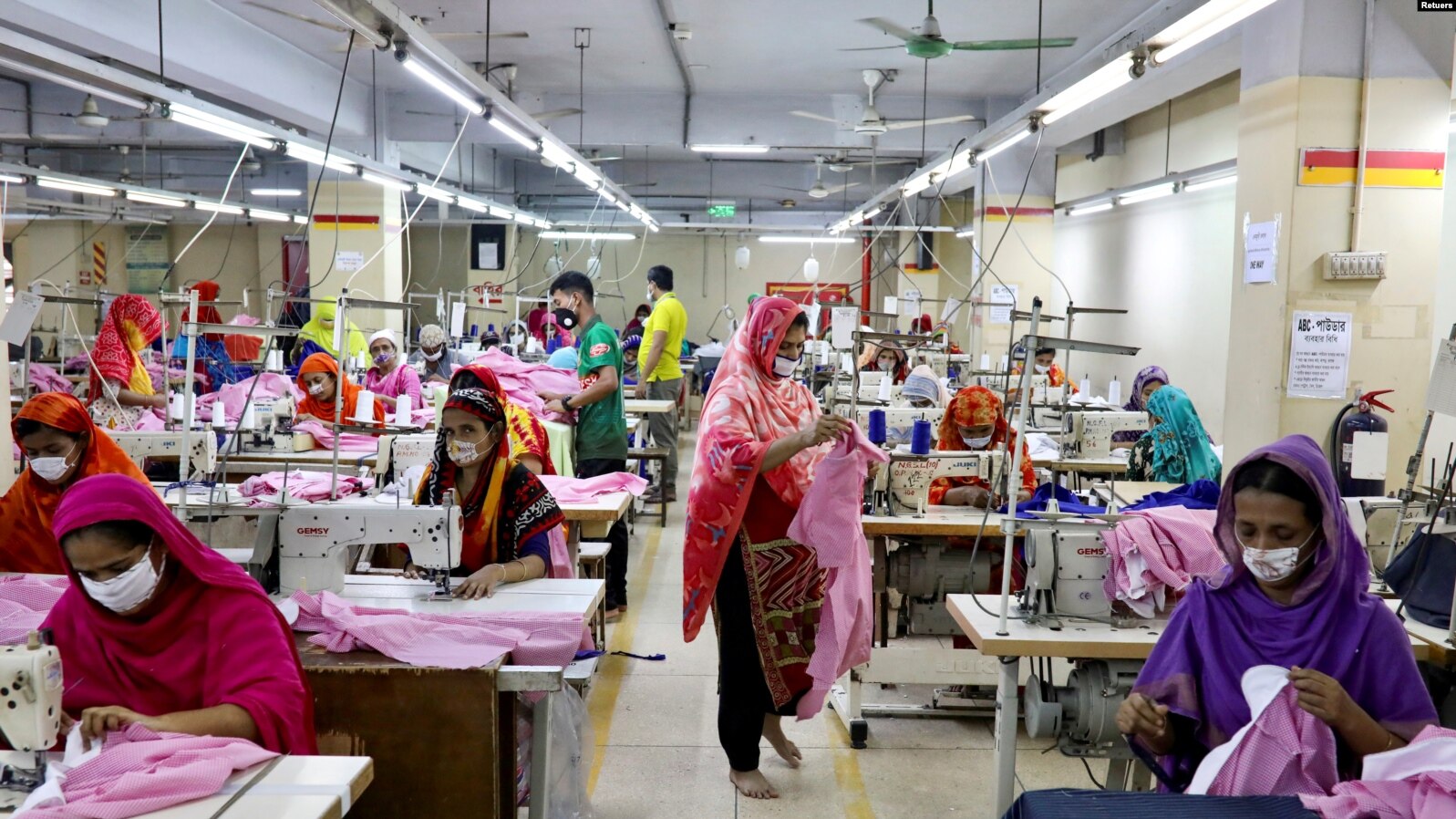
Investing in climate adaptation can help Bangladesh fetch US$122.01 billion in apparel exports by the year 2030 as a significant rise in heat waves and flooding in Dhaka over the last two decades severely impacted workers' health and factory outputs, according to a new study.
"In 2030, Bangladesh is projected to earn US$122.01 billion in apparel exports if the sector invests in climate adaptation," revealed the study of the Global Labor Institute (GLI) at Cornell University.
It further said without adaptation measures, however, earnings could fall sharply to US$95.35 billion, representing a 21.85 per cent loss.
The study said the gap becomes far more pronounced by 2050 as, under an adaptive scenario, Bangladesh's apparel export earnings could reach an estimated US$1038.22 billion.
But without adaptation, earnings are projected to plunge to US$328.11 billion-a remarkable 68.40 per cent loss of potential export earnings, according to the report.
According to the study, Dhaka witnessed a significant 56.1 per cent rise in the average number of hot days over 35 degrees Celsius during the last two decades causing severe and frequent heat waves and flooding directly impacting worker health and factory output.
The joint study also predicted that Bangladesh's capital city might face 64.81 days above the moderate heat stress threshold of 30.5 degrees Celsius Wet Bulb Globe Temperature (WBGT) by 2030, which by 2050 is further expected to soar to 104.48 days.
For Chattogram-- another major production hub-- the projection is 50.10 days by 2030 and 84.86 days by 2050, according to the joint research findings titled 'The heat is on: how heat stress impacts the apparel industry, jobs and workers health'.
The GLI analysed 20 years of climate data since 2005 in 23 apparel production centers across the world with on the ground experiences from the Better Work program?a collaboration between International Labour Organization (ILO) and the International Finance Corporation (IFC).
The research found that over the past two decades, 17 of the 23 production centers recorded increases of more than 10 per cent in the average number of days with dangerously high temperatures of 35°C or more.
It documented an upward trend in the frequency of 'heat stress waves'?defined as three or more consecutive days with outdoor temperatures above 30.5°C on the WBGT index.
This heat has a measurable effect on productivity, as output for moderate effort in manufacturing is estimated to fall by an average of 1.5 per cent for every 1 degree Celsius increase above 25 degrees Celsius WBGT.
The GLI analysis estimates the future impacts of climate change in key apparel production centers-Dhaka in Bangladesh, Phnom Penh in Cambodia, Karachi in Pakistan, and Hanoi and Ho Chi Minh City in Viet Nam, under two scenarios: one in which the industry works proactively to manage heat stress and intensified flooding, and another scenario of no-adaptation.
The five locations were chosen because they account for 18 per cent of global apparel exports and have a combined apparel workforce of more than 10.6 million people.
Under the no-adaptation scenario, the aforesaid four countries are projected to forego a total of $65.8 billion in potential export earnings by 2030, it said.
This translates to a 22 per cent reduction in export earnings versus a climate-adaptive scenario. The industry would also generate nearly one million fewer new jobs across the four countries.
Beyond the rising temperatures, climate change is also driving more intense flooding, a persistent hazard for the low-lying nation like Bangladesh.
An analysis of the 30 heaviest rainfall days in Dhaka shows that average daily precipitation intensified from 41.5 mm (2005-2009) to 42.2 mm (2020-2024), peaking at 46.5 mm between 2015 and 2019.
This water-related risk translates directly to business disruption including worst-case riverine flooding events ("once-in-a-century,") could impact approximately 27 per cent of manufacturing facilities across Bangladesh, with water inundation levels of 0.5 meter or more.
Such disruptions not only damage machinery and materials but also jeopardise workers' safety and their ability to commute to factories, according to the findings.
The economic analysis of the impact is decisive, distinguishing sharply between scenarios with and without climate adaptation investments.
Analysts, however, said the decline is driven by reduced worker productivity during extreme heat, more frequent flood-related disruptions, and increased damage to infrastructure and machinery.
Bangladesh's apparel industry could lose more than a million future jobs by 2050 if rising heat and flooding continue unchecked, according to the ILO-IFC-Cornell GLI climate impact assessment.
In 2030, the RMG industry is expected to have 4.83 million jobs under a climate-adaptive model while without adaptation measures, the number could fall to 4.58 million-a decline of 250,000 jobs, or 5.18 per cent.
The gap widens significantly by 2050. The climate-adaptive scenario projects 6.31 million jobs in the sector, but the no-adaptation measures drop the figure to 5.05 million, meaning 1.27 million jobs will not materialise, equivalent to a 20.05 per cent loss in future employment opportunities, it showed.
The report ranks workers in Bangladesh as the most climate-vulnerable among the 21 apparel production centers it studied.
This extreme vulnerability is compounded by weak national capacity-- the country has a high climate vulnerability score (0.55) but a low climate readiness score (0.28).
This situation is exacerbated by below-average social protection coverage (22 per cent) and low average manufacturing wages (PPP$389.11).
Governments and regulators can set and enforce mandatory standards and brands and retailers can introduce voluntary standards for work hours, rest breaks, effort levels, and hydration based on indoor wet- and dry-bulb standards appropriate to the region, the report suggested.
Its other recommendations include investing in climate adaptation and cooling systems and treating heat stress and floods as health hazards which would entitle workers to paid leave for these events, related illnesses and give workers the right to stop work, individually and collectively, without penalty or loss of income.
Munni_fe@yahoo.com