

BORDER TIGHTENING, SECURITY CHECKS AFTER UPRISING PUT HURDLES
Bangladesh's UN-defined role as regional hub undermined
Re-export trade value hits rock bottom
Published :
Updated :
 For all latest news, follow The Financial Express Google News channel.
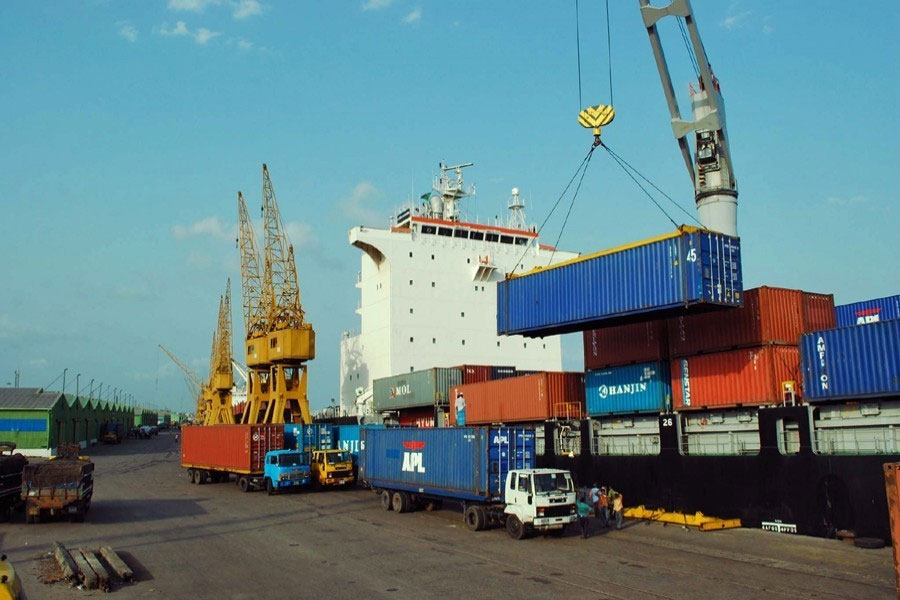
Bangladesh's UN-mandated role as a regional logistics hub is getting undercut as manifest in the value of its re-exported goods plummeting, according to the first-quarter statistics of this fiscal year.
Official data show the value of re-exported goods from Bangladesh fell sharply in the July-September period the fiscal year 2025-26, signifying a slowdown in a trade segment that primarily serves neighbouring landlocked economies.
Re-exports that stand for goods imported into Bangladesh and then shipped onward, mainly to Bhutan and Nepal, aggregated to Tk 1.95 billion in the period-down nearly 78 per cent from a year earlier.
The Bangladesh Bureau of Statistics (BBS) latest data reveal the re-export decline that officials largely attribute to freight hurdles.
Although re-exports add little domestic value, the trade generates handling fees and port revenues for Bangladesh and underpins its role as a regional logistics hub for landlocked neighbours, as mandated under UN trade-facilitation principles.
Bhutan and Nepal rely on Bangladeshi ports to source industrial raw materials and other inputs.
Bangladesh earns modest fees for port use, storage and customs handling, rather than margins on manufacturing or processing.
People familiar with the matter say re-export activity has been on a downturn since political changes on August 05 in 2024, with tighter border controls and security checks - particularly on the Indian side - slowing cross-border movements.
During the fallen previous Awami League government, Bangladesh invested heavily in roads, ports and land customs stations, enabling neighbouring countries and some Indian states to use Bangladeshi port facilities more extensively.
These arrangements generated royalties and handling income, the sources say.
"The recent contraction reflects weaker regional coordination and cooler bilateral relations," says one official familiar with re-export operations, who prefers not to be named.
An economist says Bangladesh could revive the segment by improving connectivity and logistics efficiency, allowing the country to levy multiple charges across transport, storage and transshipment.
"This is essentially a form of transshipment trade - the value addition comes from movement, not manufacturing," he explains this sort of re-export.
Bangladesh signed its first preferential trade agreement with Bhutan in 2020, granting duty-free access to a range of goods in both directions, a framework that could support a rebound if logistics bottlenecks ease.
The main items re-exported through Bangladesh include plastics, rubber, leather and animal gut, paper and paperboard, pulp and printed books, man-made filaments and fibres, specialised yarns and coated fabrics, clothing accessories, stone, cement, glass and glassware, and base metals such as iron, steel, copper and aluminum.
jasimharoon@yahoo.com