

 For all latest news, follow The Financial Express Google News channel.
After much deliberation over whether to buy aircraft from Europe or the United States, the board of Biman Bangladesh Airlines has decided to purchase 14 Boeing planes, reports bdnews24.com.
The decision was taken “in principle” at a meeting of the airline's board on Tuesday, according to Biman’s General Manager for Public Relations Boshra Islam.
For nearly two years, there had been uncertainty over whether Bangladesh’s national carrier would buy aircraft from European manufacturer Airbus or from the US-based Boeing.
Under the previous Awami League government, a policy decision had been announced to purchase 10 Airbus aircraft. But following the fall of the Sheikh Hasina government in a mass uprising, and amid pressure linked to US President Donald Trump’s tariff policies, the order has now moved in Boeing’s favour.
During a visit to Dhaka in September 2023, French President Emmanuel Macron said at a joint press conference with then prime minister Sheikh Hasina that Bangladesh had committed to buying 10 large aircraft from France’s Airbus.
While Bangladesh was reviewing plans to buy eight passenger aircraft and two cargo aircraft from Airbus, Boeing also became active. Both companies lobbied the government at the time. The political upheaval of August 2024, which led to the fall of the Hasina government, followed soon after.
Subsequently, the impact of the trade war launched by President Trump after returning to office was felt in Bangladesh. In July, the interim government announced a decision to buy 25 aircraft from Boeing in an effort to avoid a 35 per cent tariff imposed by the United States.
That announcement cast fresh uncertainty over the earlier commitment to buy 10 large aircraft from Airbus. European governments then stepped up their engagement with Bangladesh.
In June, when Chief Advisor Muhammad Yunus visited the United Kingdom, he met Airbus Executive Vice President Wouter van Wersch. Since then, Airbus representatives have remained in regular contact with senior Bangladeshi officials.
In early November, ambassadors from the United Kingdom, France, Germany and the European Union jointly expressed hope that Airbus would be “fairly considered” in discussions over aircraft purchases.
They repeatedly pointed to Bangladesh’s multi-billion-euro export market in Europe, the country’s transition from least developed country (LDC) status, duty-free access to the UK market and the long-standing partnership between Bangladesh and Europe.
On Nov 26, Germany’s Ambassador to Bangladesh Rüdiger Lotz warned at a meeting that moving away from a “commitment” to buy Airbus aircraft could affect Bangladesh’s trade relations with Europe.
He also said discussions on tariff concessions in European markets could be influenced by Bangladesh’s decision on Airbus.
BIMAN'S DECISION
Despite the prolonged diplomatic and commercial pressure, Biman itself was largely absent from the public debate.
In the airline industry, aircraft purchases are typically initiated based on operational needs identified by the airline concerned. In this case, however, Biman was kept out of the discussion for much of the process.
Ultimately, the airline’s board approved the purchase of Boeing aircraft.
Biman said proposals from both Boeing and Airbus were placed before the airline. After receiving government approval, Boeing formally submitted a detailed proposal on 24 November, outlining aircraft sales, delivery schedules and other terms.
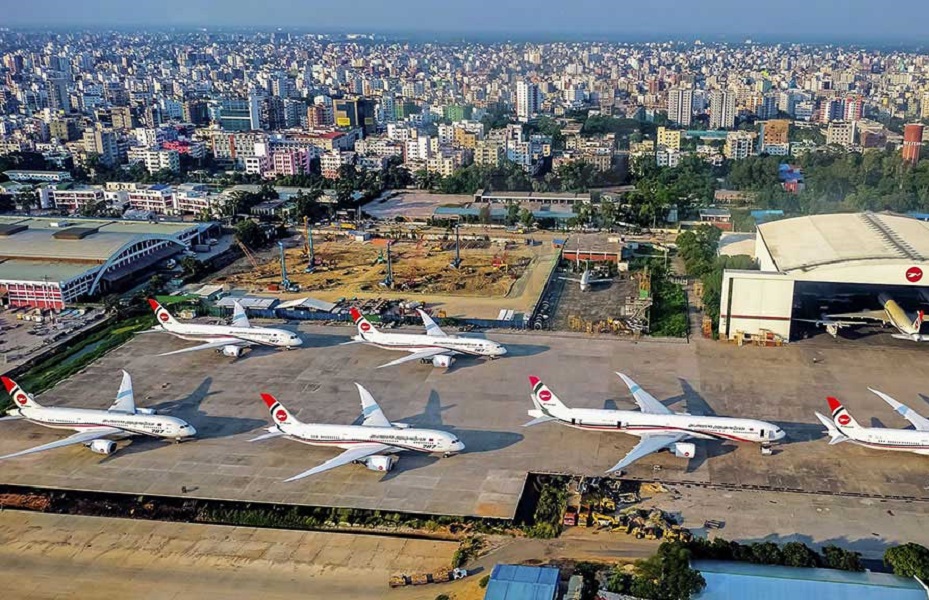
Based on that proposal, the board decided to purchase 14 aircraft from Boeing. These include eight wide-body Boeing 787-10 Dreamliners, two Boeing 787-9 Dreamliners, and four narrow-body Boeing 737-8 aircraft.
Biman will now form a negotiation committee to discuss pricing and technical matters with Boeing before finalising the purchase.