


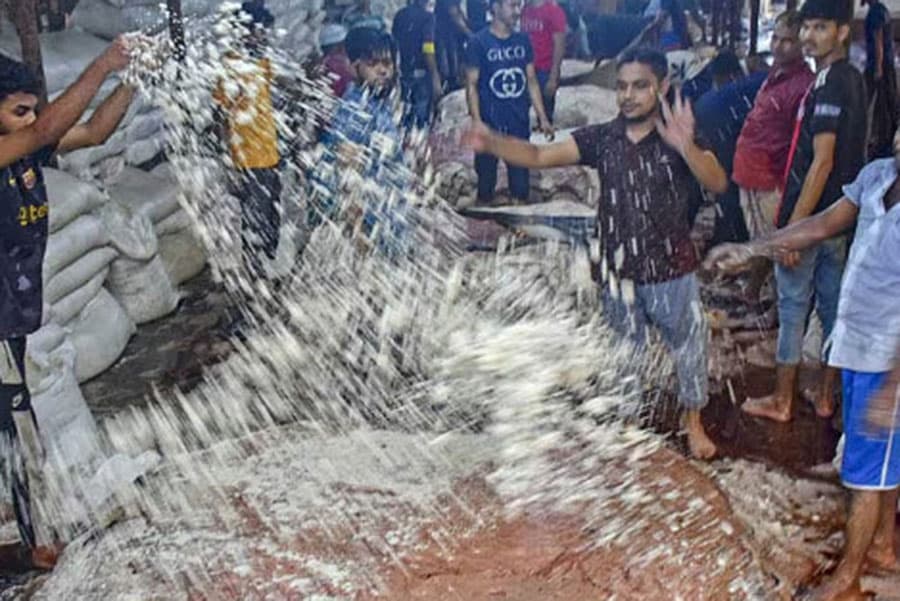
Rawhide traders in Chattogram have set a target of collecting 400,000 sacrificial animal skins this Eid-ul-Azha, up from the 356,500 collected last year, though they say the final figure could vary either way.


According to the Chattogram Rawhide Traders Cooperative Society Limited, more than 300,000 of last year's hides came from cattle, reports bdnews24.com.
Eid is likely to fall on May 28, with sacrifices traditionally continuing for two more days.
Seasonal traders and middlemen will collect raw hides from neighbourhoods and sell them to wholesalers, who will then process and preserve them before selling on to tanneries.
Between 80 and 90 percent of Bangladesh's annual animal hide supply comes from sacrificial animals slaughtered during Eid-ul-Azha, making it the industry's defining season.
The government has set hide collection prices ahead of the festival, raising cattle hide rates by Tk 2 per sq ft from last year.
Tanneries in Dhaka will buy salted cattle hide at Tk 62 to Tk 67 per sq ft, while outside Dhaka the rate will be Tk 57 to Tk 62 per sq ft.
Nationwide, tanneries will buy salted goat hide at Tk 25 to Tk 30 per sq ft and sheep hide at Tk 22 to Tk 25 per sq ft.
Society President Md Muslim Uddin told bdnews24.com the government-set price was the post-preservation rate, something many donors and seasonal traders misunderstood.
"They think dealers will buy hides from seasonal traders at the government-fixed price," he added.
Rawhides collected by Chattogram traders are bought by one tannery in the city, with the rest sold to tanneries in Dhaka and other districts.
Wholesalers say preservation alone costs around Tk 260 per hide after purchase from seasonal traders or middlemen.
Transport, loading and unloading add a further Tk 110 to Tk 120, bringing the total cost of selling a hide locally to Tk 370 to Tk 380.
Selling to Dhaka pushes that up by another Tk 100, to Tk 470 to Tk 480.
Salt Price Complaints
Traders say one sack of salt weighing 74kg is needed to preserve every 100 hides.
But prices spike every year in the weeks leading up to Eid-ul-Azha. A sack that cost Tk 580 during Ramadan has now climbed to Tk 950, they say.
Muslim said the jump had been sharper than usual this year. "Within about a month, the price has gone up by Tk 370 per sack. We have informed the district administrator and the mayor.”
Traders Urge Daytime Deliveries
As in 2019, many seasonal traders last year ended up abandoning hides on roadsides after failing to sell them, blaming wholesalers for colluding to drive down prices.
The Traders Cooperative Society president, however, placed the blame squarely on seasonal traders.
"Many seasonal traders sell their hides in the evening and then go out to collect more, bringing them to the depot in the dead of night. We have our own capacity constraints.
“After collecting hides, there are matters of salt and labour,” he said. “Workers start in the morning and many simply would not work late at night.”
“Because hides were brought in so late, many could not be bought as salt and labour were both in short supply at that hour," he added.
Given the current hot weather, the leader urged seasonal traders not to pile hides under the sun or inside vehicles.
He advised keeping them in shaded areas with salt if possible, and asked traders to deliver the stock in the morning instead of arriving late at night.