
The Bangladesh Petroleum Corporation (BPC) has formally requested permission from the Energy and Mineral Resources Division to import liquefied petroleum gas (LPG) directly, aiming to tackle a domestic supply crisis and price volatility.
In a letter addressed to the division’s secretary on Jan 10, BPC Chairman (Secretary) Amin Ul Ahsan sought authorisation for the imports.
The letter highlighted recent shortages and “abnormal” price hikes in the domestic market, noting reports by national dailies where consumers have been forced to pay significantly above the regulated rates.
On the matter, Power and Energy Advisor Muhammad Fouzul Kabir Khan told bdnews24.com: “We will grant BPC approval if necessary. We are currently exploring the feasibility of importing LPG through government-to-government (G2G) arrangements.”
Such a move could help restore balance to the market, he added. The BPC said the country’s LPG import and supply chain is currently entirely dependent on the private sector.
“Without a state-level mechanism for direct imports via the BPC, the government’s ability to intervene and stabilise the market during artificial shortages or supply disruptions remains limited.
It said the LPG produced as a by-product at Eastern Refinery Ltd through crude oil refining accounts for a mere 1.33 percent of the nation’s total demand.
The state-run corporation admitted, however, that it currently lacks the necessary infrastructure for unloading and storing LPG. “At present, the BPC does not possess its own infrastructure, such as jetty-based pipelines, flow metres, or storage tanks, for the storage and discharge of LPG,” the letter stated.
To bypass these hurdles, the BPC proposed adopting the “lightening” method currently used by private operators in the Kutubdia deep-sea area. This would involve using the lighterage vessels of interested private operators to discharge and distribute the gas.
The BPC suggested that a list of participating firms, import volumes, payment methods, and distribution protocols could be finalised in consultation with the LPG Operators Association of Bangladesh (LOAB).
Citing past precedents, the BPC said that during sudden surges in fuel oil demand or supply crises, additional supplies have been secured through quotations from G2G-listed suppliers. A similar approach could be applied to LPG.
“Since the BPC’s listed G2G suppliers are large-scale refiners capable of producing and supplying petroleum fuels, including LPG, the feasibility of importing through them should be explored,” the letter argued.
The corporation also proposed evaluating other potential international sources to ensure the best possible terms.
The letter concluded by seeking “policy approval” from the Energy and Mineral Resources Division to protect consumer interests and ensure a competitive, stable environment in the LPG market.
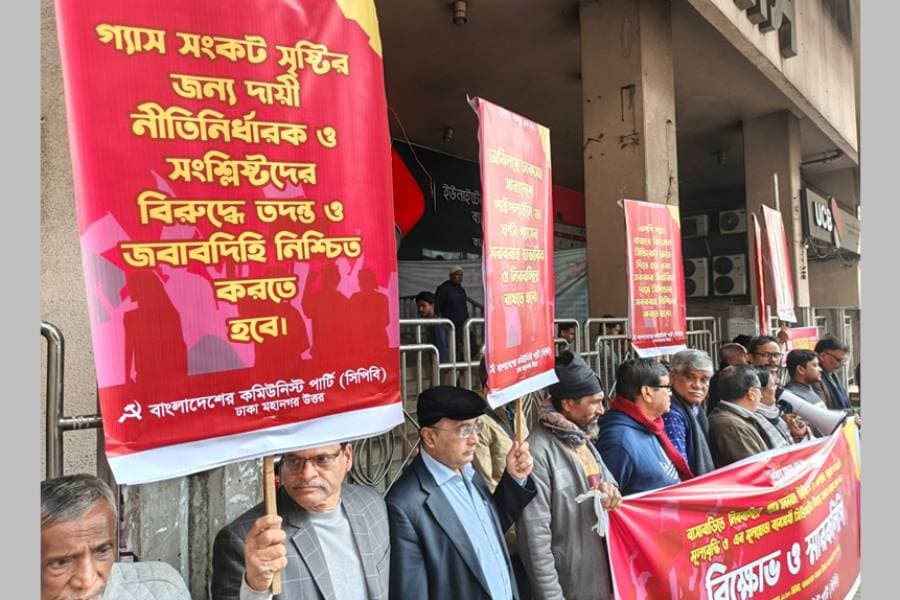
The domestic market has been gripped by an LPG cylinder crisis for over a month due to dwindling supplies. Depending on the volume, prices have surged by Tk 350 to over Tk 1,000 per cylinder.
While the government has introduced measures such as tax waivers, credit-based imports, and increased quotas to ease the pressure, there are few signs of an immediate resolution.
Despite government-mandated price caps, cylinders are rarely available at the official rate. The scarcity has left ordinary citizens struggling, while restaurants and small eateries reliant on LPG face severe operational challenges.
The supply crisis, which began a month ago, has intensified in recent days.
The situation was further exacerbated in early January when a leak in the Titas Gas pipeline forced a major shutdown of piped gas across large sections of the capital.