

Falling Indian Rupee may prove mixed blessing for Bangladesh
Bangladesh must also allow taka to adjust if to maintain competitiveness in export to global market: Dr Zahid
Published :
Updated :
 For all latest news, follow The Financial Express Google News channel.
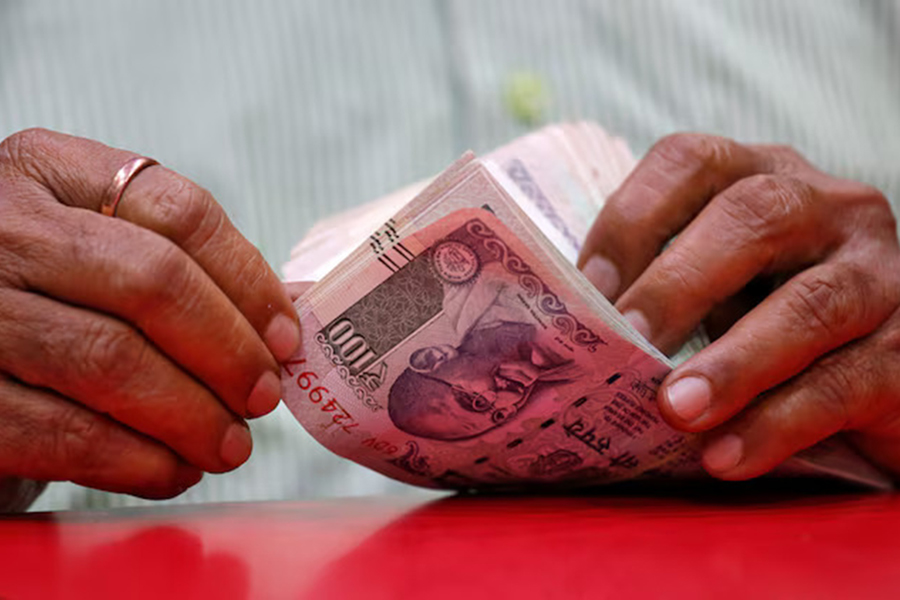
A deep depreciation of the Indian rupee or INR may offer short-term relief for Bangladeshi importers but could pose disadvantage to exporters, particularly apparel sector where India is emerging as a strong competitor.
Economists see the INR slide as a "double-edged sword" for Bangladesh, acting both ways.
The currency weakened to INR 90.17 against the US dollar on Wednesday, compared to about Rs 87 some weeks earlier, making it the worst-performing major Asian currency so far this year.
While the Taiwanese dollar, South Korean won, Singapore dollar and Thai baht have appreciated between 6.0 and 10 per cent, the rupee has fallen about 2.5 per cent against the greenback.
The jacked-up US tariffs imposed on India- along with President Trump's threat of further penalties - are expected to keep the currency under pressure.
A weaker rupee gives India a pricing advantage over its trading partners, including Bangladesh, potentially offsetting part of the tariff impacts, according to economists.
India is Bangladesh's second-largest trading partner, and the rupee's depreciation means Indian goods become cheaper in dollar terms.
In September, Bangladesh imported over US$1.0 billion worth of goods from India, accounting for nearly 13 per cent of total monthly imports.
Imports from China, Bangladesh's largest trading partner, totalled about $2.2 billion during the same period.
But some economists warn that the situation also carries risks.
Bangladesh's top export - ready-made garment- could face stiffer competition as Indian clothing becomes cheaper in global markets.
"The main concern is Bangladesh's exports," says one economist at Bangladesh Bank.
"Importers may get some relief, and it could help ease inflationary pressures, but the export side is vulnerable," he notes, wishing not to be quoted by name.
Other economists say the rupee is entirely market-driven, and the impact will depend on how long the currency remains weak.
"It is true local importers, especially of rice and other essential goods, will benefit and this may soften inflation," says Dr Zahid Hussain, an independent economist.
"But Bangladesh must also allow the local currency, taka or BDT, to adjust if it wants to maintain competitiveness in garment and other export sectors."
A weaker rupee also makes Bangladeshi exports to India more expensive, raising concerns about reduced market access in the world's fifth-largest economy next door.
Bangladesh exported goods worth $174.5 million during September last and India was the sixth-largest destination for Bangladesh during the period.
Exchange rate: US$1.0 =BDT122
jasimharoon@yahoo.com