

Published :
Updated :
 For all latest news, follow The Financial Express Google News channel.
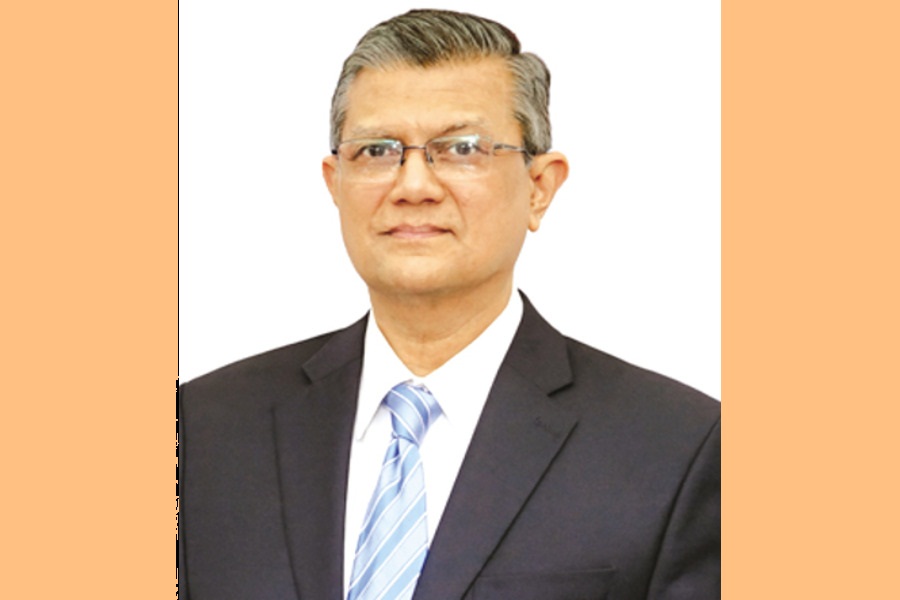
Midland Bank recognizes the transformative potential of agent banking as a cost-effective and inclusive solution for providing financial services to the underserved and under developed areas of the country, said Md. Ahsan-uz Zaman, Managing Director and Chief Executive Officer of the bank in an interview with The Financial Express
Md. Ahsan-uz Zaman, Managing Director and Chief Executive Officer of the Midland Bank PLC, in his interview with The Financial Express, said, "Our journey in Agent Banking reflects our commitment to financial inclusion, innovation, and community empowerment. Since 2017, Midland Bank identified Agent banking as a strategic channel to bridge the gap between traditional banking and underserved populations. The objective was to offer convenient, secure and affordable banking services, particularly in rural and semi-urban regions where banking infrastructure is limited. Our agent Banking initiative was officially launched in 2017. The programme began with a pilot project, focusing on select regions to test operational frameworks, technology infrastructure, and agent capacity. Based on the pilot's success, we expanded the service across the country, ensuring coverage in remote areas. Through our agent banking centres, we provide a wide range of services, including - account opening, deposits, withdrawals, facilitating micro-loans to small businesses and farmers, access to mobile banking, fund transfers and utility bill payments."
On the difference between agent banking and traditional banking, Mr. Zaman said traditional banking operates through physical branches with permanent infrastructure, including offices, counters, vaults, and other facilities. Whereas agent banking relies on authorized agents or centres, such as local shops or business centers, equipped with POS systems, biometric devices and basic technology to provide banking services. In terms of service there is no major differences except the nature of customers in agent banking are marginal ones.
According to him the basic differences between traditional and agent banking affairs are the following:
On the MDB's journey in agent banking operations, he said, the bank started its operation in 2017 to serve the unbanked people and increase the network coverage of Midland Bank PLC. The decision to introduce agent banking was driven by several factors aligned with our mission to enhance financial inclusion and contribute to socio-economic development:
- l Financial inclusion
- l Regulatory encouragement
- l Cost efficiency
- l Convenience and accessibility
- l Empowering local economies
- l Demand for remittances and small savings
He said, as of 31 December, 2025, MDB has 142 agent banking centres with 111 in rural area and 31 in urban area.
Asked whether agent banking services help expand commercial banks' service network among the unbanked people in a faster and low-cost way, he replied in the affirmative and said agent banking services significantly help expand commercial banks' service networks among unbanked population in a faster and cost-effective manner. This is particularly true for Midland Bank, where agent banking has become a cornerstone of our financial inclusion strategy.
Unlike traditional branches, Agent Banking eliminates the need for large-scale infrastructure and high operational costs. Midland Bank leverages existing local businesses as Agents, enabling us to serve communities with minimal setup costs.
Example-MDB has an agent centre in Moshipur, Shahjadpur, Sirajganj where current deposit portfolio is Tk 15.83 crore, number of accounts is 3413 and loan amount Tk 1.02 crore.
He said agent banking has emerged as a pivotal platform for deposit mobilization within the banking sector, effectively extending financial services to unbanked and underserved populations. Midland Bank has strategically leveraged this model to enhance its deposit collection and credit disbursement capabilities.
As of 31 December, 2025, deposit amount of MDB agent banking is Tk. 108.00 Crore and loan amount is Tk 4.88 crore.
On lending to agent bank clients, he said in 2025, number of loan accounts for male are 144 and female 39 which amount are respectively Tk. 3.57 crore and Tk 1.31 crore. In 2024, number of loan accounts for male are 95 and female 29 which amount are respectively Tk 11.11 crore & Tk. 0.96 crore.
He said, total loan & advance of MDB is 6,328.50 crore & total deposit of MDB is 7,520.94 crore. Agent banking loan and advance is 4.88 crore & deposit is 108.00 crore which are respectively 0.19% & 1.22% of the total portfolio of MDB.
Mr Zaman said the MDB expects to raise the number of agent outlets to 500, deposit amount Tk 200 Crore & loan amount to Tk.30 Crore.
He said agent banking has proven to be a transformative model for financial inclusion, but its effective operation and expansion face several challenges that need to be addressed: The challenges are:
(a) Lack of awareness and financial literacy: Banks should invest in financial literacy campaigns to educate communities about the benefits and security of agent banking;
(b) Limited Infrastructure in rural areas: Collaborating with telecom providers to improve internet penetration and deploying solar-powered or offline-capable equipment can address these gaps.
(c) Agent management and training: Comprehensive training Programmes and periodic performance reviews for agents to ensure they meet service standards.
(d) Fraud and security concerns: Banks should implement robust biometric authentication, end-to-end encryption, and fraud monitoring systems.
(e) Regulatory compliance: Streamlined regulatory processes and collaborative frameworks between banks and regulators can ease compliance challenges.
(f) Liquidity management: Banks should establish mechanisms for frequent cash replenishment and allow agents to access additional liquidity quickly.
(g) Customer trust issues: Banks should engage with local leaders and community influencers to build trust and provide guarantees for funds.
Moreover, sub branches are the major challenges for agent banking. Agent outlets are provided the banking services since the last few years & doing good but sub branches are going there rapidly.
Mr Zaman said lending through agent banking can be perceived as riskier compared to traditional lending channels due to several factors, including the challenges of assessing creditworthiness in rural and underserved areas, potential mismanagement at the agent level and the lack of collateral or formal documentation for many borrowers. However, it does not necessarily lead to higher Non-Performing Loan (NPL) rates if properly managed.
Factors increasing risks in lending through agent banking
- Credit risk in low-income areas
- Limited agent oversight
- Lack of formal documentation
- Cultural and financial literacy barriers
- Mitigating NPL risks in agent banking lending
- Data-driven credit assessment
- Comprehensive training for agents
- Loan monitoring and recovery mechanisms
- Partnerships with local leaders or cooperatives
- Regulatory safeguards
In some cases, rural people are enjoying the credit facilities from NGO and Cooperative Society who do not report credit facility in Bangladesh Bank CIB. So, potential of NPL risk can be higher.