


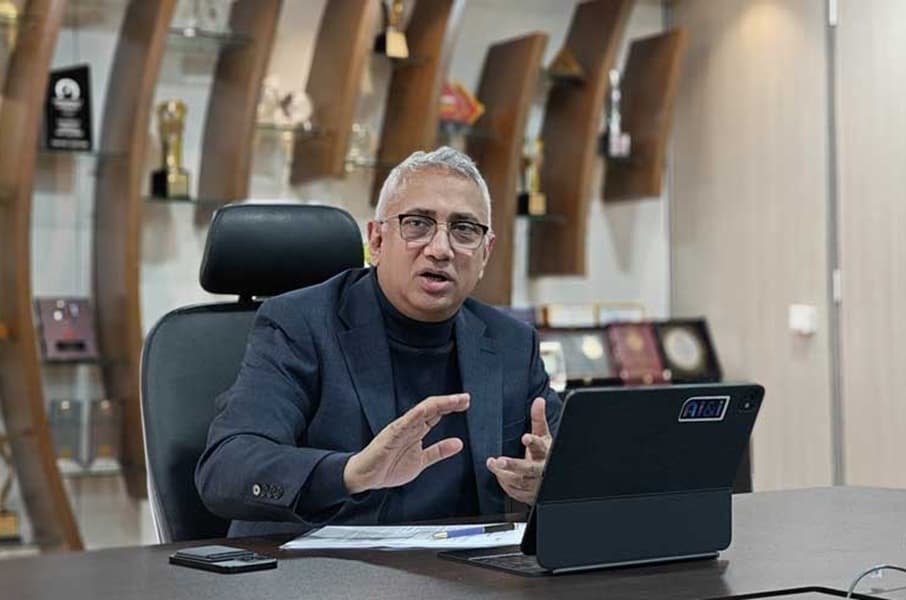
Grameenphone CEO Yasir Azman has said foreign investors are losing interest in Bangladesh as a telecom sector investment destination due to the “tax burden and long-standing financial disputes.”


He said the negative sentiment is affecting not only the telecom sector but also other sectors, reports bdnews24.com.
Speaking to several media outlets on Jan 6, Yasir said: “Foreign investors are losing their investment appetite in Bangladesh. This is our biggest cause for concern.”
“I am not saying this only from Grameenphone’s perspective. As the president of AMTOB (Association of Mobile Telecom Operators of Bangladesh), I am witnessing the same concern among other operators as well,” he said.
The “lack of interest” is driven by excessive tax burden and the financial disputes that have remained unresolved for years.
“We have been in operation for 28 years. There has not been a single year during the time of the operation when audit objections were resolved,” he said.
Noting that the investors of all three operators are foreign, he said: “How can they even consider making substantial investments in Bangladesh under these circumstances?”
While Grameenphone has cited a “lack of interest” from foreign investors, the interim government presents a different picture.
On Jan 15, Bangladesh Investment Development Authority (BIDA) Chairman Ashik Chowdhury said in a Facebook post that FDI rose 80 per cent in the first nine months of 2025, led by power, healthcare, and banking sectors, with major investments from China and Singapore. Equity, reinvested earnings, and intra-company loans all grew, he said.
SOLUTION TO THE FINANCIAL DISPUTE?
Yasir sees international arbitration as the solution to the unresolved financial disputes.
“As citizens, we have a responsibility. If investment doesn’t come, Bangladesh will suffer. On Grameenphone’s shoulder alone lies Tk 125 billion in unresolved disputes, and Robi and Banglalink face the same,” he said.
He added that national courts could take 10 years to resolve the matter, with interest accruing, making business unsustainable.
“With the country now having an arbitration law, we are engaging regulators to take the issue to the International Arbitration Court,” he noted.
Yasir said operating capital-intensive sectors like telecom with local investment is extremely difficult.
He stressed the need for strong global investors, possibly with local partners.
On taxes, Yasir noted that 55 per cent of every Tk 100 in revenue goes to tax and VAT, stifling innovation.
He refused to link the lack of interest in foreign investors to the country’s political situation.
CUSTOMER GRIEVANCES, OPERATOR CONCERNS
Rising mobile data and call charges are a concern for customers, while operators struggle to make profits, Yasir said.
Customers’ expenses doubled in the last two years, but the operators’ income per customer has not increased, he said.
He said that operators were reducing data prices, but consumers are witnessing their expenses go up in keeping up with an increase in their data consumption.
Yasir said high taxes are a major barrier. Home internet faces 5 per cent VAT, while mobile operators pay 55 per cent, creating a huge pricing gap.
DATA SUBSIDY
Customers’ anger over rising data prices ignores that the company reduced data rates last year, Yasir said.
He claimed the data business runs largely on subsidies, supported by profitable voice services.
Yasir warned that falling voice usage -- down from 450–470 million daily minutes to around 300 million -- combined with high taxes, could make Grameenphone unprofitable within five to seven years.
Bangladesh Telecommunication Regulatory Commission statistics show that mobile phone subscribers have dropped by around 9 million over the past one and a half years.