



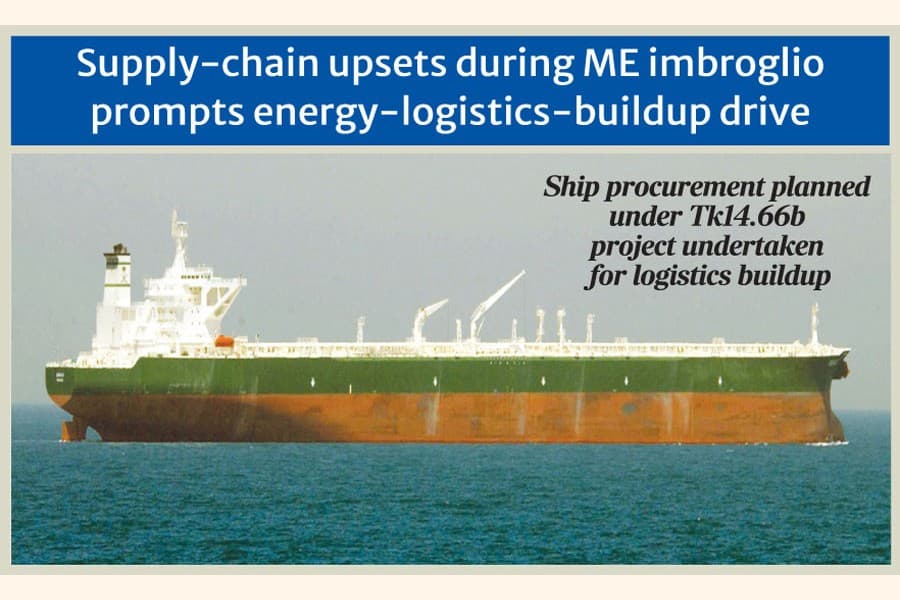
A government move gets underway to import two oceangoing oil tankers to beef up energy security as the Mideast imbroglio, officials say.
Each vessel is of 40,000-55,000DWT (deadweight tonnage) capacity, which is planned to build up on the country's energy logistics.
The state-owned Bangladesh Shipping Corporation (BSC) will procure the two vessels on an emergency basis under a Tk 14.66-billion project taken up for the logistics buildup, BS officials say.
The entire fund is proposed to be borne by the Bangladesh government from its own exchequer, they mention.
The corporation has sought the project approval from the Planning Commission (PC).
"We have proposed the project and sent to the Planning Commission for getting approval. After purchasing the oil tankers, BSC's fleet will be enriched," says a senior Shipping Ministry official.
"Since BSC always supports the government in transferring its necessary products, procured from overseas markets, the proposed couple of vessels would be very helpful to bringing fuel amid the supply impediments," he told the FE.
Bangladesh has reeled from fuel crisis, especially oil crunch, as the US-Israel war with Iran created import obstruction from the country's major suppliers in the Arab Gulf countries -- Saudi Arabia, the UAE, Bahrain and Qatar in particular.
Following the war panic and supply crunch against the demand, many cars, vehicles, and motorbikes wait for hours daily in the queue for refueling their vehicles.
So, thousands of work-hours are wasted daily across the country for such inadequate oil supply and sudden higher demand.
According to the project proposal, BSC would procure two vessels through international tender so those could reach the country within a couple of years.
Once operational, the project is projected to generate an annual profit of Tk 1.25 billion and save approximately US$10 million in foreign exchange annually, according to the BSC officials.
Additionally, it is expected to create employment for around 120 seafarers each year and generate roughly Tk 400 million in port revenue through associated charges.
The proposal has already been cleared by a Project Evaluation Committee (PEC) and is currently awaiting final approval from the Executive Committee of the National Economic Council (ECNEC), they say.
This move follows a strategic shift toward strengthening maritime infrastructure amid global supply risks, specifically potential disruptions in the Strait of Hormuz-a vital route for the country's oil shipments.
Managing Director of BSC Commodore Mahmudul Malek confirms that the vessels will be sourced from the resale market, specifically targeting ships already under construction at reputable shipyards and are 50-70-percent complete.