


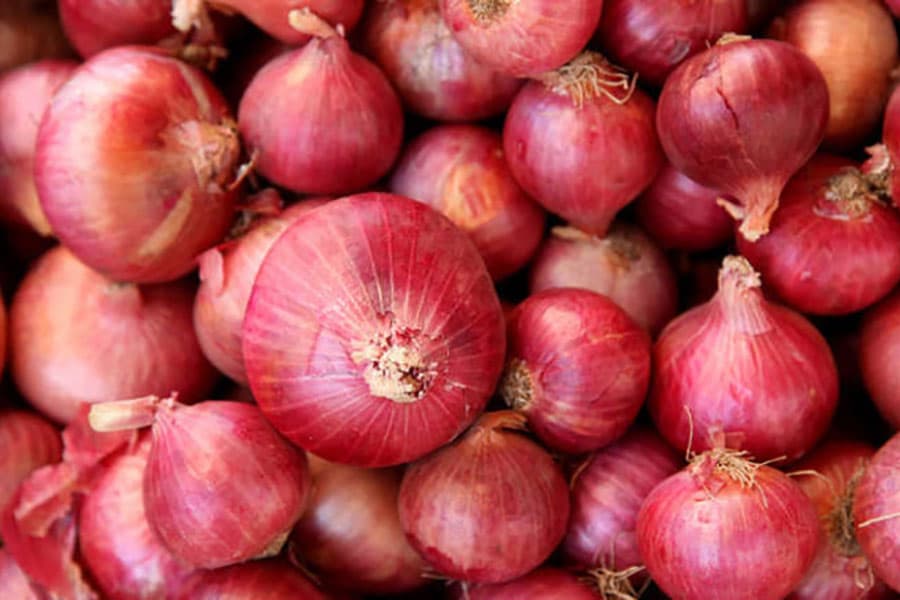
Every winter, Bangladesh produces a glut of onions. Prices collapse within weeks of harvest, now at Taka 60 a kg (kilogramme). Farmers sell below the cost, and tonnes of bulbs rot in open sheds. Months later, shortages reappear. Middlemen become active. The government permits to import. After some weeks, prices spike again, hitting the limited-income group of people.


At the heart of this recurring crisis lies a missing piece of infrastructure: commercial-scale food irradiation. Despite years of planning by the Ministry of Agriculture, the government has yet to commission a dedicated irradiation centre capable of preserving perishable crops such as onions and spices.
The delay is costly for farmers, agro-processors, and exporters, and it is also draining the country's hard-earned foreign currency.
"This highlights a broader weakness in the country's post-harvest losses and food security," said Kamruzzaman Kamal, marketing director at PRAN-RFL Group. He added that while an irradiation centre alone cannot solve agricultural volatility, it is a critical missing link.
Officials from the Department of Agricultural Extension (DAE) estimate that 25-30 per cent of onions are lost each year due to inadequate preservation facilities. Without irradiation, onions are sold immediately after harvest, flooding the market and triggering price crashes.
Irradiation uses controlled gamma rays to inhibit sprouting and reduce microbial load, significantly extending shelf life. This technology is widely available in advanced economies and in neighbouring India.
"This helps extend shelf life by several months," said Dr Sariful Haque Bhuiya, director general of the Bangladesh Institute of Nuclear Agriculture (BINA). The institute, located at Bangladesh Agricultural University (BAU) in Mymensingh, is implementing the long-planned irradiation centre to serve agriculture and related training programmes.
Initially, the project was slated for Faridpur, a major onion hub, but it is now being developed in Gazipur with an estimated cost of Tk 1.15 billion, supported by international partners, including the International Fund for Agricultural Development (IFAD).
The BINA chief acknowledged delays due to extensive national and international regulatory safety and compliance requirements, which are common for nuclear-related infrastructure.
"Food irradiation requires approvals and safeguards that go beyond conventional agricultural infrastructure," he said, adding that compliance with international radiation safety standards and export market protocols is essential.
Currently, Bangladesh has only limited irradiation capacity under the Bangladesh Atomic Energy Commission (BAEC) through the Institute of Food and Radiation Biology, which primarily serves pharmaceutical products. This setup cannot handle onions or other spices, putting both domestic and export markets at a disadvantage.
Exporters of turmeric, onion, chilli, and similar spices are struggling to meet international food safety and phytosanitary standards. Many must send samples to Singapore or India for certification, increasing costs and delivery times.
"This puts Bangladesh at a disadvantage compared with Vietnam, India, Pakistan, and other peer economies," said Md Ziaul Hoque, proprietor of Things to Supply.
The delay exposes contradictions in Bangladesh's regulatory framework. While mandatory radiation testing rules have been in place since 1997, infrastructure to support food irradiation has lagged behind.
Most countries tightened radiation controls after Japan's Fukushima nuclear disaster in 2011 but later adopted risk-based approaches. BAEC maintains that current laboratories can issue clearances at modest cost.
Industry experts argue that testing alone is insufficient -- preservation and shelf-life extension are critical, particularly for politically sensitive items like onions.
For farmers, the absence of irradiation infrastructure translates directly into income losses, said agricultural economist Dr Mohammad Jahangir Alam, a professor at BAU. Onion, potato, and cabbage growers, in particular, are trapped in a cycle of bumper harvests followed by distress sales.
"Without preservation, glut becomes a curse," Dr Alam said. "Farmers are forced to sell immediately, while consumers later pay higher prices due to shortages."
jasimharoon@yahoo.com