

Published :
Updated :
 For all latest news, follow The Financial Express Google News channel.
Petrol pump owners say they want to stop selling petrol and octane at night due to concerns over security and unrest.
They have sent a proposal to the government to set a 7am–8pm timeframe for the sale of these fuels to small vehicles.
However, diesel sales, they said, will continue uninterrupted.
In addition, pump owners’ demands include filling the chambers of tank lorries, strengthening the monitoring system, and ensuring additional security.
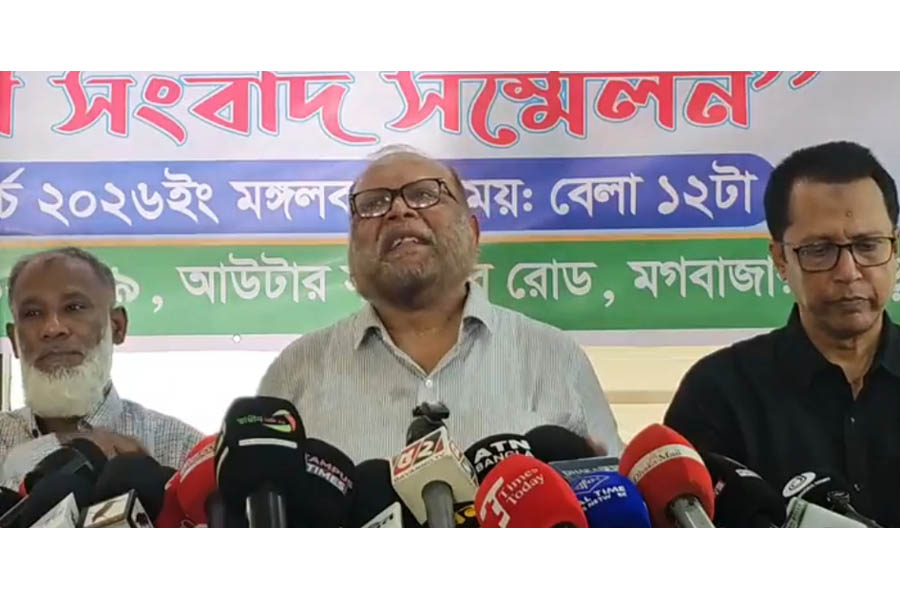
The Bangladesh Petrol Pump Owners Association presented these demands at a press conference in the Dhaka's Moghbazar on Tuesday.
The pump owners faced a barrage of questions from the media over the decision to halt sales at the pumps while oil was still available.
The organisation's President Nazmul Haque said at the beginning of the briefing, "Under the current circumstances, unless our immoral appetite for fuel is eliminated, the crisis will not end.”
Nazmul presented a few specific demands and proposals. They are:
• Adequate security should be provided at petrol pumps.
• Adequate oil should be supplied in light of the current situation.
• Buyers should be patient.
• When the tank of a petrol pump is empty, one should refrain from rushing to buy oil.
• A timeframe for selling petrol and octane should be fixed from 7am to 8pm.
• The fuel capacity of a trunk lorry is 4,500 litres, and oil should be supplied accordingly.
• Government monitoring systems should be strengthened.
• Unnecessary attacks on petrol pumps and the unilateral blaming of petrol pump owners should not be allowed.
Nazmul provided an explanation for the limited sales timeframe, saying: "At night, naughty boys and troublemakers become more active. That is why order cannot be maintained at night. That is why we are saying that petrol and octane cannot be supplied at night.
"However, diesel supply will be uninterrupted at pumps across the country, including on highways, so that there is no issue with the movement of buses and trucks."
In response to a question about the proposed timeframe, Nazmul said: "Oil is now being sold according to such schedules all over the world. Many countries have made public transport free so that people do not crowd oil pumps. Now, if oil pumps are attacked and set on fire at 2am or 3am, who will handle it?”
"A petrol pump manager was hit by a vehicle while he was heading home at night after selling oil. Think how much anger there is! Who will take responsibility for such a situation?"
Nazmul said if tank lorries are not filled with oil, it will drive up transportation costs.
"The tank lorry's chamber will have to be filled. Each lorry carries 4,500 litres. If only 2,000 litres of oil are provided, the transportation cost will double.
"No matter who you give it to - once a week, or once a month - the chamber will still have to be filled. And another thing - the government had said that when a vehicle leaves the depot, the chamber should be full. If the chamber is empty, there is a risk of theft."
The government has repeatedly said there is no oil shortage in Bangladesh. But most pumps remain closed, and long queues have formed at those that remain open.
Reporters asked the pump owners why this was the case if they are not facing a fuel shortage.
In response, Nazmul said: “Taking on the responsibility, I will say that those who commit illegal irregularities are responsible for them. If any petrol pump is doing this, I will inform the government to cancel its dealership. I do not know what percentage of petrol pumps are doing this.
“You have to understand one thing. If you suck out all the oil from a petrol pump tank and then try to fill it with oil, air gets locked in there. In that situation, it takes more than an hour to check the pipes and restart the oil supply system.
“That is why petrol pumps have to turn it off (halt the supply system) when there is at least 200-400 litres of oil in the tank. Otherwise, it would take more than an hour to check the line after filling the tank the next time.”
He claimed that no petrol pump has the option of not selling oil when they have it because each pump now has an assigned tag officer.
“The owner can’t do any more. He (the tag officer) is determining how much oil is coming, how much to give, and how much goes to whom."
When asked whether arrangements would be made to reopen closed petrol pumps, the petrol pump owner leader responded, "Which pumps are closed?"
When reporters pointed to several instances, particularly where fines had been issued for halt in oil sales, the president of the Petrol Pump Owners Association said: "It is natural that anyone who commits irregularities will be punished. I am not saying that 100 percent of my people are faultless."