

UCB Chairman calls on next govt to take action on known loan defaulters
Published :
Updated :
 For all latest news, follow The Financial Express Google News channel.
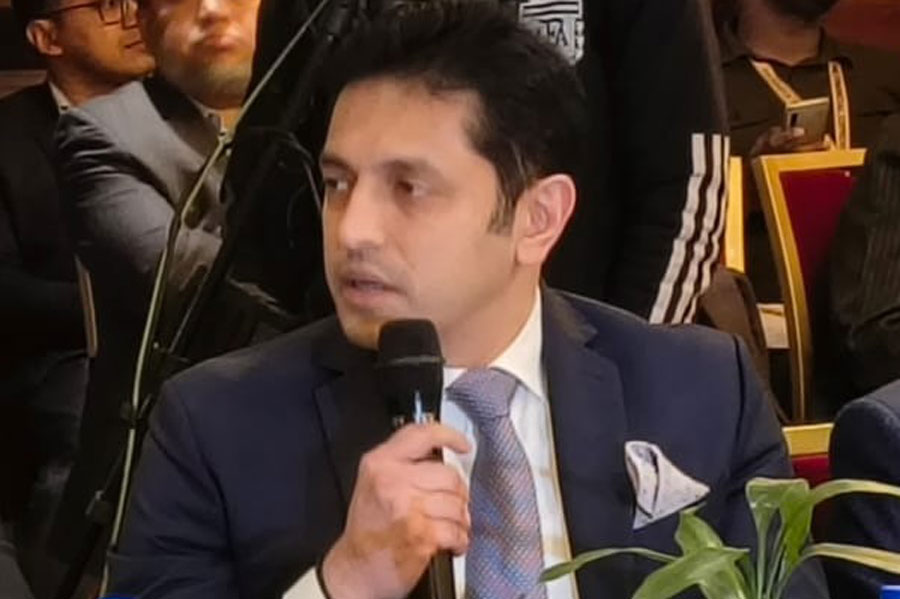
Sharif Zahir, Chairman of United Commercial Bank (UCB) PLC, has called for a clear political commitment from the future elected government to address Bangladesh’s growing banking sector challenges, particularly non-performing loans and capital shortfalls.
He made the remarks at the MTB–FE roundtable on “Banking Sector Reforms” held at Six Seasons in Dhaka on Thursday, organised by The Financial Express.
Sharif Zahir said the capital adequacy ratio of banks has fallen to worrying levels, and accurately identifying and classifying actual non-performing loans has become the sector’s biggest challenge. This is negatively affecting banks’ capital, their ability to engage in international transactions, and access to credit lines from foreign lenders.
He noted that some progress has been made recently in recovering loans, mainly through legal action against genuine and honest businesses. However, recovery from major loan defaulters remains very limited.
“The future elected government must make a clear political commitment. The names of known loan defaulters must be publicly announced, and no concessions should be given to them under any circumstances,” Sharif Zahir said.
He added that banks involved in export and trade financing are seeing their lending activities increasingly restricted. Even in sectors like garments, where many firms operate professionally, institutions linked to corruption and criminal practices have not yet been separated from mainstream banking.
Sharif Zahir emphasized that problematic loans must be removed from banks’ balance sheets. Stronger action by the Anti-Corruption Commission would have helped, but the institution is still not fully equipped to handle financial crimes according to international standards.
He warned that recovery of funds laundered abroad is critical to solving the non-performing loan problem. Drawing on international experience, he said rapid court case resolution, effective legal measures, proper mortgage registration, and a functional platform for asset sales are essential. “Who will buy the seized assets, and is there enough liquidity in the market?” he asked.
To address the capital adequacy crisis, he called for fast rights issues by existing shareholders and urged Bangladesh Bank, BSEC, and other relevant authorities to work together in a coordinated way.
He also highlighted delays in bank bond approvals and issuance, which are weakening banks’ balance sheets. While institutional investors participate in the bond market, retail investor involvement remains very low. Without sufficient profitability and provisions, investor interest will decline, worsening the capital shortfall.
On foreign investment, Sharif Zahir said attracting large private equity firms requires proper incentives. A clear plan for the total capital shortfall and the funding needed in the market is necessary; without it, meaningful progress will be difficult.
Concluding his remarks, he said practical measures and politically neutral decisions are essential to resolving the non-performing loan crisis. He cautioned that political interference could further complicate the situation in the future.
The roundtable was attended by Dr Salehuddin Ahmed, Adviser at the Ministry of Finance, as the chief guest, and Dr Ahsan H Mansur, Governor of Bangladesh Bank, as the special guest. Dr Shah Md Ahsan Habib, Professor at BIBM, delivered the keynote speech, while the event was chaired and moderated by Shamsul Huq Zahid, Editor and CEO of The Financial Express.
Mutual Trust Bank PLC was the title sponsor of the roundtable, BRAC Bank PLC and NCC Bank PLC were gold sponsors, and Trust Bank PLC, Shahjalal Islami Bank PLC, Eastern Bank PLC, and Mercantile Bank PLC joined as co-sponsors.
newsmanjasi@gmail.com