

UN team meets business leaders, calls for roadmap on STS for sustainable LDC graduation
Published :
Updated :
 For all latest news, follow The Financial Express Google News channel.
The United Nations assessment visiting team at Dhaka has urged local businesses to develop a roadmap on the Smooth Transition Strategy (STS) that would help ensure a sustainable graduation of the country from the Least Developed Country (LDC) status.
In response to that, business leaders at a meeting held on Sunday informed the visiting UN team that STS has been taken, but its implementation rate is very poor, which, in the next year, might not be possible to fully implement.
Highlighting the challenges the country might face during this transition; they said Bangladesh would need at least five more years to take the full preparations.
According to meeting sources at the meeting, the UN delegation wanted to learn about these challenges from the business community and requested a roadmap of the STS detailing how it would be implemented if a time extension is granted.
“We informed the UN team that a little of the STS has been implemented during the last several years and still there is a lack of proper preparation for a smooth graduation from LDC status," Fazlee Shamim Ehsan, president of the Bangladesh Employers Federation (BEF), who attended the meeting, said.
Bangladesh still depends on a single product--ready-made garments while also depending on a few markets, he told the FE after the meeting.
He said the team wanted to know the details of the challenges the industry faces and also asked for a roadmap outlining its preparations over the next five years.
“The roadmap from the industry side will be shared with them shortly,” he noted.
Leaders from the ready-made garment sector, the Federation of Bangladesh Chambers of Commerce and Industry (FBCCI), and other major business organisations attended the meeting.
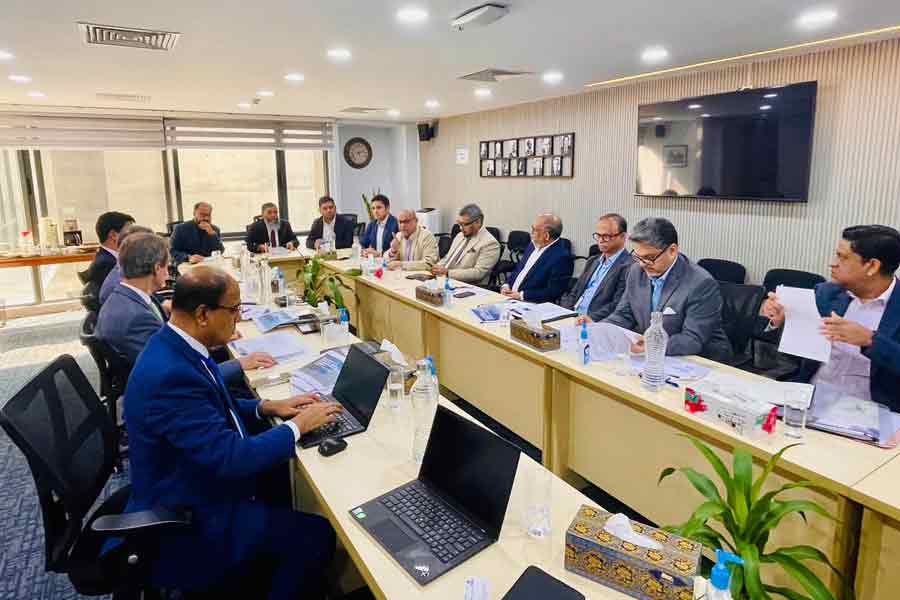
There were two the meetings at the UN House in Gulshan, where a three-member UN delegation led by Roland Mollerus, Director of the Office of the High Representative for the Least Developed Countries, Landlocked Developing Countries and Small Island Developing States (UN-OHRLLS), met with business leaders.
The delegation is currently visiting Dhaka to conduct an independent assessment of Bangladesh’s LDC graduation preparedness.
The team is also scheduled to meet with government officials and political leaders.
A statement by the Bangladesh Garment Manufacturers and Exporters Association (BGMEA) said several major challenges were presented during the meeting.
Mahmud Hasan Khan, president of BGMEA, said, “At this crucial juncture of LDC graduation, Bangladesh’s apparel industry is simultaneously facing rising operational costs and infrastructural constraints.”
The BGMEA president also said, exporters are struggling with logistics inefficiencies.
Despite existing delays and inefficiencies at ports, the Chattogram port charges were increased by 41 per cent in October 2025, and long transportation times on roads further undermined industrial competitiveness.
Citing the 2023 wage hike and an enhanced annual increment to 9.0 per cent in the last year, he said, “60 per cent reduction in cash incentives without any compensatory support measures has placed this export-oriented sector at high risk, pushing it towards economic vulnerability.”
The BGMEA president further identified key macroeconomic weaknesses, such as slower GDP growth, persistent inflation above 8 per cent, a low tax-to-GDP ratio of 6.6 per cent, and a foreign exchange reserve of $27.5 billion (as per BPM6), as among the major challenges.
munni_fe@yahoo.com