

Published :
Updated :
 For all latest news, follow The Financial Express Google News channel.
Presently, his biography is not mentioned in school or college textbooks, neither in Bangladesh nor elsewhere. Yet, was he not a significant presence in our 20th-century history? I can cite a few examples, as other writers have done. In 1943, Murshed stood by famine-stricken people in undivided Bengal. During the communal riots of 1946, he took part in humanitarian and social welfare activities with the Anjuman Mufidul Islam. He visited Hindu temples and offered reassurance. He was involved in the struggle for liberation from British rule. In 1949, to reassure minority and refugee communities in East Pakistan and West Bengal and to ensure their rights, he played a crucial role in the historic Nehru-Liaquat Pact. In the 1960s, while serving briefly as an ad hoc Supreme Court judge, he was also the Red Cross Chairman, providing relief to flood and cyclone victims.
During the 1952 Language Movement, on February 21, he defied Section 144 alongside his uncle, the undisputed leader of undivided Bengal, Sher-e-Bangla AK Fazlul Huq. On February 21, 1952, he and his uncle were briefly detained for leading a procession after attending the Janaza of the language movement martyrs. In the 1954 elections, he took a leading role in drafting the United Front's 21-point program alongside Abul Mansoor Ahmed. In 1956, he assisted as a judge, Huseyn Shaheed Suhrawardy, in drafting the first democratic constitution for Pakistan, which included provisions for parliamentary democracy. In 1961, he opposed the Pakistani military leadership and chaired the centennial celebrations of Rabindranath Tagore's birth in East Pakistan, joining the struggle for Bengali cultural freedom. In early 1964, he became Chief Justice of the High Court, and in 1966, he contributed to the final draft of the Six-Point Movement led by Sheik Mujib. In late 1967, at the peak of Ayub Khan's dictatorship, he resigned as Chief Justice to join the democratic movement. He actively participated in the 1968-69 mass uprising and arranged legal support for the defendants of the Agartala Conspiracy Case. It was largely due to Syed Mahbub Murshed that all the accused in the Agartala Conspiracy Case were unconditionally released. Representing the Bengali nation, he demanded the implementation of the one-person, one-vote principle at the 1969 Round Table Conference. Using this principle, he secured 169 of 300 seats in the Pakistan National Assembly for the people of East Pakistan, paving the way for a likely national government elected by a majority in East Pakistan.
In the 1970 elections, his respected status helped defeat the Pakistani Punjabi ruling clique. During the 1971 Liberation War, he refused to cooperate with the illegitimate Pakistani military authority. In protest against the brutalities and oppression by the ruling military faction, he openly supported the Liberation War. Earlier, Murshed's mobilization with the High Court Bar Association was so strong that, in March 1971, no judge was willing to administer the oath of office to General Tikka Khan as Governor of East Pakistan.
Even after the Liberation War, he remained committed to democracy, human rights, the rule of law, and social justice. Before the war, he advocated separating the executive and judicial branches, and after the war, he continued to demand it. Murshed criticized government actions that were against public interests, but praised good deeds and offered valuable suggestions. He advised the late President Ziaur Rahman to establish SAARC. By the late 1970s, his health had declined, and he died on April 3, 1979. He lived as the worthy heir of Sher-e-Bangla AK Fazlul Huq.
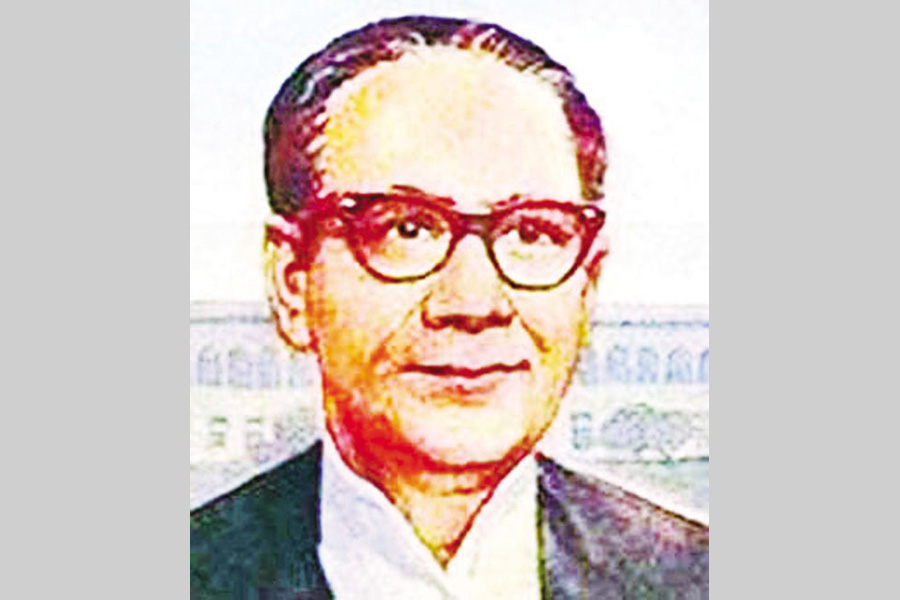
Justice Syed Mahbub Murshed was one of the most fascinating figures in our national political landscape. Born on January 11, 1911, into an esteemed family in Murshidabad, the land of Bengal's last independent Nawab Siraj-ud-Daulah, he was an outstanding student, securing the top position in every class. He ranked first in the matriculation examination from Bogra Zilla School in 1926, earning the highest marks in the larger Rajshahi division. After his entrance exam, he enrolled at Kolkata's Presidency College, graduating with a BA (Honors) in Economics in 1930. He completed his MA in Economics in 1932 and his LLB in 1933 from the University of Calcutta. In 1939, he completed his Bar-at-Law from Lincoln's Inn in the United Kingdom, ranking first with distinction among participants from British India that year. His scholarly pursuits extended well beyond academics. He was knowledgeable in history, philosophy, political science, economics, law, sociology, theology, and English literature. Alongside Bengali, he was fluent in English, Arabic, Persian, Hindi, and Urdu. During his student years, he read notable works in Bengali, English, Persian, and Urdu literature. He was also active in literary and cultural activities during college, serving as editor of the Presidency College Magazine. Renowned as an orator, he led the debating team at the University of Calcutta and earned recognition in sports, organizing the famous Mohammedan Sporting Club in the 1930s.
After completing his studies, he became known as an independent-minded writer, publishing essays on law, literature, culture, and politics in national and international media. His writings on Palestine and Middle East issues in ‘The Guardian’ gained him acclaim throughout the Middle East. In ‘The Statesman’, his critical essays on Muhammad Ali Jinnah, such as 'Quo Vi diz Quaid e Azam,' and other topics gave him early recognition in the subcontinent. He possessed an encyclopedic knowledge of the works of Tagore, Nazrul, Iqbal, Shakespeare, Shelley, Keats, Tennyson, Hafiz, and Sheikh Sadi. His writings and speeches captivated readers and audiences with objective opinions, refined thought, depth of character, subtle humor, profound literary interest, resonant language, and an unshakeable sense of humanity.
Syed Mahbub Murshed joined the High Court in East Pakistan as a judge in early 1955. Although he had achieved fame as a lawyer, his reputation as a skilled, brave judge soared. He viewed law not just as a set of rules but as a matter of realism, courage, and conviction. As Chief Justice in early 1964, he was uncompromising in maintaining the dignity of the judiciary and the rule of law, and he never aligned himself with party politics. He brought significant changes to the judiciary, emphasizing modernization, progress, and excellence. He issued suo motu rules from the High Court to protect minority communities and curtail communal violence. He was the first to introduce writ petitions in the High Court to reduce executive powers and protect fundamental rights. Because of his courage, prominent leaders such as Sheikh Mujibur Rahman and others were released. Even under authoritarian rule, he remained an emblem of ethical integrity and inspired others to pursue justice. He urged lawyers not to be confined to their professional boundaries but to play a guiding role in society's fight for justice and the rule of law. Justice Murshed's judgments reflected an unwavering commitment to truth, empathy for the deprived, clarity and firmness of expression, a profound life philosophy, and steadfast dedication to truth, which earned him national and international acclaim. Justice Syed Mahbub Murshed was a democrat who fought tirelessly for democracy. Although not strictly a politician, he was connected with all aspects of genuine democratic policies. Murshed believed in freedom of the press, thought, writing, and public speaking, and was convinced that without these, society would lose its values and descend into ruin. Saddened by the decline in educational standards after Bangladesh's independence, he urged students, teachers, and academics to rise for educational reform. He spent his life advocating for human rights, tackling every challenge with wisdom, courage, and dignity. This is why his name remains unforgettable and immortal. Today, as we fight for justice, democracy, freedom of the press, culture, education, development, social welfare, and the values of the Liberation War, we feel the profound absence of a figure like Syed Mahbub Murshed.
As a patriotic Bengali, he, like his uncle Sher-e-Bangla, opposed the partition of Bengal. Although divided by British conspiracies, the Bengali nation remained united in spirit, sharing the same language, food, and culture, with the same shared sky and dreams. Even after Murshed's death, he continues to inspire; his absence becomes more deeply felt with the passage of time. In his last words, he expressed, 'even after my death, my spirit will linger around the precincts of the bar.' Hence, we search for him within courtrooms, on the paths of law, in the streets, in peaceful gatherings, and mainly in our struggles. Where can we find him! Will there ever be another person like him in Bengal?
As a patriotic Bengali, he, like his uncle the Sher-e-Bangla, opposed the partition of Bengal. Although divided by British conspiracies, the Bengali nation remained united in spirit, sharing the same language, food, and culture, as well as the same sky and dreams. Even after Murshed's death, he continues to inspire; his absence becomes more deeply felt with the passage of time. In his last words, he expressed that, even after his death, his spirit would linger around the precincts of the bar and in every legal framework. So, we search for him within courtrooms, on the paths of law, in the streets, in peaceful gatherings, and mainly in our struggles. Where can we find him! Will there ever be another Justice Murshed?
The author is a London-based writer and researcher syedmmurshed@googlemail.com