

Published :
Updated :
 For all latest news, follow The Financial Express Google News channel.
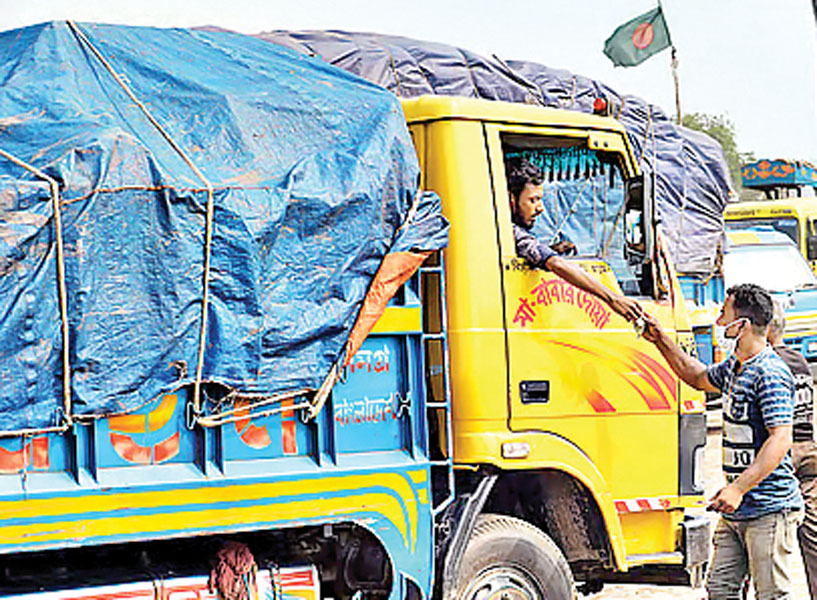
Intermediaries and illegal toll collectors who target trucks that transport agricultural commodities from local markets to urban centres unreasonably push up prices of farm produce several times over when those reach urban customers. How to get around such bottlenecks of traditional supply chain of farm goods to the advantage of both the small-scale growers of agricultural produce and their consumers have been the subject of studies by public as well as private organisations over the years. In a post-colonial agriculture-based developing country like Bangladesh, this is accepted as the reality. But the system has been cheating both farmers, especially small-scale ones in the remote rural areas and the customers at the urban centres. The commerce minister Khandaker Abdul Muktadir while inaugurating the Krishaker Haat (farmers' market) at the Tilagor Point area in the Sylhet city said that the initiative would reduce the intermediary layers and create what he termed a 'win win situation' for both farmers and customers. He further noted that agricultural produce change hands four to five times before those reach consumers. But it was not clear how the krishaker haat managed by the district administration and the Department of Agricultural Extension (DAE) would allow marginal farmers to sell their products directly to consumers without intermediaries. Actually, the krishaker haat in question, as could be learnt, will sit on one specific day of the week at designated spots under the supervision of district and upazila administrations which would monitor the so-called Krishaker Haat or farmers' market so small farmers are protected against any extortion or unexpected cost. But such haats, or weekly markets at the different commercial spots on the banks of rivers or other well-communicated spots in the rural areas are not a new idea in the country. Such weekly haats do already sit at convenient spots in the rural areas as well as at the bigger commercial centres at the upazila and district levels.
However, this has been happening since time immermorial. But these haats are neither free from middlemen such as farias or beparis nor rent-seekers. However, mounting strong monitoring by the district and upazila administrations the problem of middlemen and rent-seekers would be addressed, it was said. In that case, one wonders why despite strict monitoring by the government bodies concerned and mobile courts operated by magistrates and the presence of law-enforcement agencies, price volatility of essential commodities at the retail as well as wholesale markets cannot be controlled in the cities? Are those markets operating at the urban centres under the nose of police free from middlemen or rent-seekers? So, how are the krishaker hats going to be free from these market manipulators? As the commerce minister has mentioned at the launching event of the krishoker haat in Sylhet, agricultural produce actually passes through four to five distinct layers of intermediaries often referred to as middlemen before reaching the urban consumers. So, the prices of agricultural items increase three to four times the prices asked by the original producers- the small or marginal farmers. The primary intermediaries are known as faria, bepari, aratdar, paiker and retailer in that order. The farias are small traders who directly buy the agricultural products from farmers either at the local bazaars or haats or before they reach the haats. Obviously, the volume of the trade between a small farmer and a faria is rather small. But the beparis are larger professional traders who buy the agricultural goods either directly from small farmers or the farias at local markets and transport those, often using trucks that pay illegal tolls on their way to the city markets. At the bigger markets in urban centres we have the aratdars who are essentially commission agents. They own warehouses and control bulk sales in in the city wholesale markets such the Karwan Bazar in Dhaka. The aratdars hold significant power in setting prices of the farm products. At the next stage of this traditional supply chain is the paiker or wholesaler who purchase agricultural goods from the aratdars. The retailers in the kitchen markets then buy the goods from the paikers or wholesalers. The retailers, as we know, are at the end of the supply chain from whom the consumers buy the agricultural commodities such as vegetables originally grown by farmers. As expected, each layers or steps in the supply chain adds margin that accumulates until the goods reach the final stage at level of the paiker or the wholesaler. Researches on this supply chain of agricultural commodities from the rural farmers to the city's paikers have found that the aratdars or commission agents who buy goods from beparis make the highest amount of profits.
Now, this is the supply chain of farm products that range from vegetables and fruits to the items including rice, maize, pulses such as lentils, oil seeds including mustard, tubers (potato, sweet potato, yam cassava, etc. ). There are also cash crops including jute, flax, tobacco, sugarcane, etc., that are transported from the rural areas to the city markets through this supply chain well-ensconced in the market or the economy. These stages in the traditional supply chain are not setups imposed artificially by someone so those could be removed by the government. In fact, those intermediaries have evolved over the millennia. Why? Because the original producers, especially the small or marginal farmers lack financial power to first produce and then sell their products directly to the larger markets. At the production stage they take 'dadon' or loan which is informal credit from loan sharks to buy agricultural inputs like seeds, fertilizers, pesticides, etc. As a result, the growers are beholden to their creditors and have often to sell their products in advance according to prices set by the rural creditors. Of late, there are also credit providing NGOs which the small farmers take their small loans from. But such new creditors have hardly improved the condition of the small farmers since the weekly instalments they (farmers and small rural traders) have to pay to the NGOs leave them with little room to make any substantial gain from the farm produces they sell in the local market. In fact, there is no magic solution to the issue of middlemen in the supply chain of both the agricultural or non-agricultural products. The only solution, if any, is the use of technology, especially the digital one, to leapfrog the traditional links of the supply chain called intermediaries middlemen. But for small farmers to take advantage of this technology they have to be trained by government or non-government agencies so they can operate through digital platforms like the social media or dedicated E-commerce stores to sell their produce directly to customers without the intermediaries. In that the government will have to take the trouble of educating hundreds of millions of small farmers in the art of digital marketing of their products.
sfalim.ds@gmail.com