


Many complain that there were so many reform commissions but no commission on education. It now seems it was better that the sector was left alone. Nowadays, the focus is on the scheduled election and reform agendas hardly figure in deliberations. Chiefs of several commissions have publicly expressed their disappointment at the interim government's inaction. The 11 reform commissions were allocated Tk55.20 million with the constitutional reform commission receiving the highest share of Tk16.40 million.
Had there been an education reform commission, it would also be another futile exercise at a cost. The young learners in this country have time and again been used as guinea pigs for various experiments and caprices. Even the interim government opted half way in the academic year for reverting to the system of education its predecessor, the fallen regime, replaced by a whole new education system.
Two very radical changes among others the new education system Hasina government wanted to bring about are: 1) primary education up to grade eight and secondary education up to class XII; 2) abolition of groups such as science, commerce and humanities at the level of grade 9 and 10. Then the emphasis was more on practical knowledge learnt from assignments. Under the system, challenges are thrown before students to create ideas and knowledge, not receiving instructions like consumers of learning, through hands-on experiences.
About the merit of such involvement with projects there is no doubt. But the problem lay elsewhere. Teachers who had no such experience in their educational life and barely boast holistic development were not the right guides for students. Subsequent governments in this country have put the cart before the horse. This is exactly why some of the good initiatives in the education sector, like other sectors, have tumbled head over heels.
For example, the introduction of creative questions to ignite faculties of young minds fell flat because the majority of teachers were not conversant with the method themselves. Without extensive training, they are unable to pick up the cue and make students appreciate the innate abilities within themselves to question, innovate and solve problems. Thus they put the cart before the horse.
Similarly, the introduction of the much vaunted education was a mismatch. If students are taught the life's skills from an early age by igniting ideas, integrating arts and developing an inquisitive mind, they are more likely to fit in a developed technical education system. In advanced countries in the West, opportunities are not open to the average grade holders for pursuing tertiary education. It is the talented students who are allowed to continue with higher studies in master and doctoral courses. The average and below average students have to limit their studies to bachelor degrees and choose career-building options. In Canada, for example, the performance at grade 9, decides the fate of students whether they would make it to the tertiary education or start preparing for job opportunities when they complete their education at the bachelor level or before.
Bangladesh initiated a highly useful and pragmatic move to make technical education an alternative to general education. Since graduates of the National University remain unemployed at the rate of 28 per cent with the tertiary-educated youth unemployment ratio staying at 13.50 per cent, expansion of technical education could be a window of opportunity.
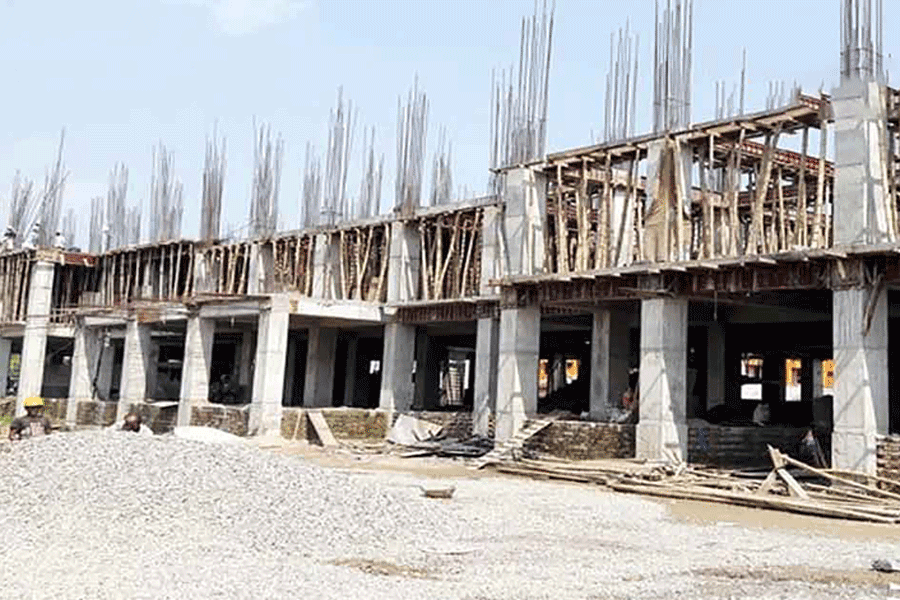
Two projects undertaken in 2014 and 2020 respectively for construction of 100 and 329 technical schools and colleges (TSCs) could bring about a radical change in the country's education and unemployment. If implemented timely, the 429 technical institutions could enroll 463,000 students out of a total of 9.4 to 9.5 million students at the two levels. But bureaucratic inertia has been responsible for stalling the projects originally estimated to cost Tk9.24 millions and Tk205.26 respectively.
The first one has witnessed its deadline extended six times and another extension has been sought to complete the project by June 2027. In the meantime, the cost overrun, as proposed now, has reached at Tk25.25 billion. The bigger project has to its credit hardly any progress. It could spend only Tk1.06 billion. Although the implementing agency has failed to initiate construction of a single technical school and college (TSC), it now seeks another extension up to December, 2028. This is how the bungling bureaucracy spoils initiatives that could bring about a discernible change in the pattern of youth education and unemployment.
When the discussion should rivet on how to improve the technical education at the secondary and higher secondary levels, the agencies in charge of execution of the two projects have been sitting on those to stymie the whole process of education considered suitable for the country. Policymakers of different regimes have tinkered with education policy in their own ways without taking a long view of the systemic change needed for taking up challenges of the time. It was the learners who have been a casualty in the process. Timely updating the system would have prepared the workforce for even the 4th industrial revolution spearheaded by artificial intelligence (AI).
This country's advantage of reaping demographic dividends will start to diminish soon. In fact, the proportion of working-age population between ages 15and 64 has started to decline around 2022-2023 and the absolute number is projected to decrease after 2045. This shows the country is running out of time. Between 2013 and 2022, working-age population increased at a rate of 1.5 per cent while the growth rate of employment was recorded at 0.2 per cent. This brings to the fore the need for comprehensive technical education as well as upskilling training.
The agencies charged with execution of the two projects for putting in place a total of 429 TSCs have ditched the nation sending the country's initiatives on a retrogressive road. They should be made accountable for their gross failure. There is no point approving any more time extension and cost overrun. They have proved their inefficiency and therefore teams with proven competence ---even if it needs outsourcing---should be given the task of completion of the projects within a reasonable time.