

Published :
Updated :
 For all latest news, follow The Financial Express Google News channel.
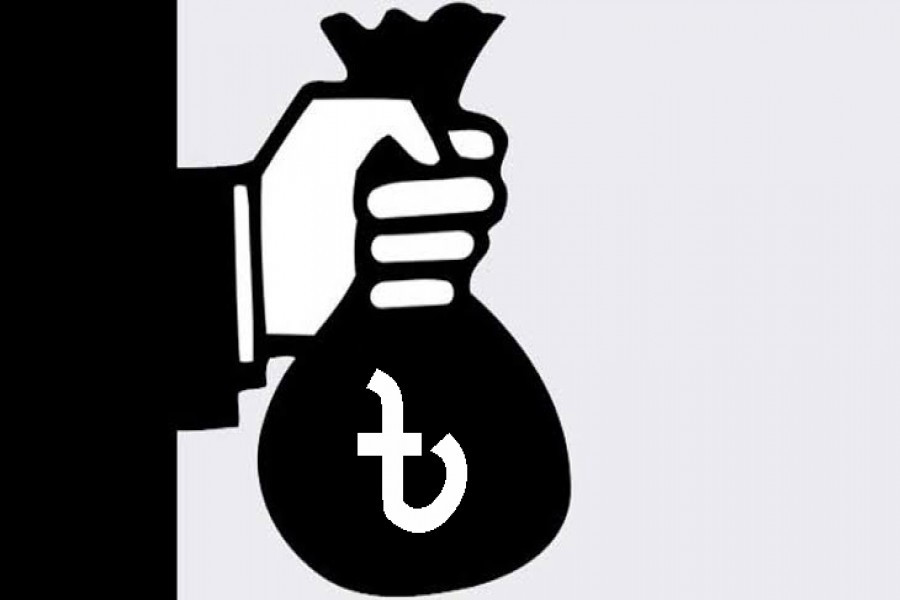
The concern expressed by leading economists over influence of money in politics, lack of good governance and its impact on economy portrays a grim picture of the country's political and economic landscape. This worry of the economists, which is also the worry of common citizens, was articulated on Monday at the closing session of the Annual BIDS Conference on 'Democracy and Development' held at the conference hall of the Parjatan Bhaban.
Eminent economist Professor Rehman Sobhan went to the heart of the issue, stating: "Unless we can democratise our political process, and also the economic process, we are not really going to be exposed to any very significant changes in the system." He lamented the absence of a functioning democratic process in the country, which has allowed a systemic crisis of governance to take root.
The root cause of the problem, as he puts it, lies in the nature of electoral contestation. The current system enables only a particular class of people - those with substantial money and muscle power to effectively contest and hope to win elections. This undue practice has given rise to an elite-dominated political and electoral system, which he identifies as "the source of many of our problems."
Recalling the pre-independence 1970 elections, Professor Rehman Sobhan said "Many of those who contested the 1970 election used to travel around their constituencies by bus or rickshaw. Their resources were limited. Today, no one can even imagine running for office without their own Pajero. And if they win, they will receive another duty-free Pajero - that is the incentive. In this way, the very social character of the electoral process has completely changed. Now, contesting an election requires an enormous amount of money."
He concludes that unless we can democratise the existing culture of contesting in polls which people from all social backgrounds and with limited resources can actually contest and hope to win elections, a particular class of people will continue to occupy the legislatures.
Many more expert opinions as well as studies also confirm that the influence of money in politics has become a serious and deep-rooted problem in Bangladesh. Earlier, by analysing the affidavits of MPs in the 12th parliamentary election, the non-governmental organisation Shushasoner Jonno Nagorik (SHUJAN) revealed that about 66.89 per cent of the elected lawmakers were businessmen; while as many as 89.97 per cent were millionaires. This has led many to resent that politics has largely gone into the pockets of businessmen.
As a matter of fact, during the previous government, the incomes of those who won elections increased by several thousand times within a span of five years. This is a glaring example of how elections have been transformed into a highly lucrative business venture. The result is a system where politics is commercialised and business is politicised. Unless this vicious cycle of money and power can be broken and honest candidates are elected to parliament, all the crucial reform initiatives undertaken by the interim government, which require the legislature's approval, may ultimately be rendered futile.
Contrary to the public expectation, the post-uprising Bangladesh didn't see any significant improvement in the political landscape. After the ouster of the party whose rank and file had long abused power to amass ill-gotten wealth, another party appeared in the scene and took hold of the country-wide extortion rackets.
Now, as the post-uprising Bangladesh heads into the 13th parliamentary elections, the question that looms large is, how can the political system be saved from the pervasive influence of money? What specific mechanisms can effectively curb the dominance of wealth in the electoral process? And, most importantly, how can a level playing field be created for honest individuals who are showing the courage to contest elections without possessing substantial money or muscle power?
One potent way to curb the influence of black money during election time is to ensure the integrity of the candidate's affidavits. While submitting nomination papers, candidates are required to submit affidavit, providing eight types of detailed information, including educational qualifications, criminal records and disclosures of their own and their dependents' assets, income and liabilities.
But it is widely believed that many candidates conceal information or submit false data in their affidavits. The entry of these corrupt and self-seeking individuals into the electoral arena could be blocked if the EC would thoroughly scrutinise the affidavits and disqualify candidates who hide or submit false information. If the commission lacks the capacity to perform this arduous task, it should seek assistance from Anti-Corruption Commission (ACC) and the National Bureau of Revenue (NBR), for a comprehensive verification. Without a robust mechanism to scrutinise and hold candidates accountable for their assets, liabilities, source of income, and tax details, the entire practice of disclosing their wealth statements is rendered meaningless.
In addition, effective enforcement of election expenditure limit set by EC is crucial. Although the EC has set a campaign spending cap for individual candidates at BDT 2.5 million, the effectiveness of this limit is severely compromised by a lack of oversight. As things stand, the entire process of fundraising and making expenditures by both candidates and their political parties remain shrouded in mystery and opacity. And it is assumed that candidates of major political parties spend tens of of money in electioneering. To address this systemic loophole, the process of fund-raising and election expenditure must be made clean, public and fully transparent.
Ultimately, it is the voters who hold the decisive power. Only they can elect honest, sincere and qualified individuals as their representatives, and thereby rescue politics from the clutch of money and muscle power.
aktuhin.fexpress@gmail.com