

Published :
Updated :
 For all latest news, follow The Financial Express Google News channel.
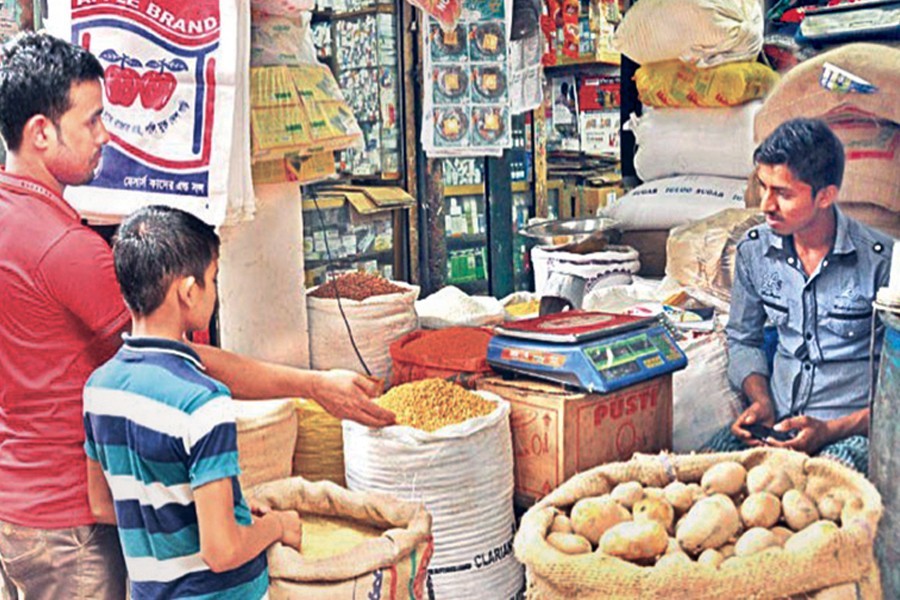
The ongoing price hike of all types of essential products including kitchen goods has hurt all segments of society. They range from the rich, the middle class, lower middle class to the people belonging to the lower social strata. Ironically, it is the lower-middle class which appears to be the worst victims. In fact, there was no distinctive 'middle class' in the sub-continent in the post-WW II era. It began to emerge after the British colonial power had left the Indian sub-continent. Following the creation of India and Pakistan, the political and economic power in the large area went to the politicians and businesses in the two countries. The independent Bangladesh has inherited its economy from that of undivided Pakistan. Essentially an agrarian state with few signs of industries and their future development, Bangladesh had to wait for some time for the emergence of its own middle class. Its Pakistan-style middle class didn't see any radical change in their lot.
However, it didn't take long for the emergence of the Bengalee urban middle class in Bangladesh with their distinctive features. In spite of their being influenced by the non-Bengalee industry owners in the undivided Pakistan, these 'higher middle class' people didn't have to take much time to eventually emerge as the first-generation industrialists in Bangladesh. In a typical socio-economic twist, these industrialists were able to carve out a place normally reserved for the super-rich class.
The pure urban middle class followed the industrialists; whereas the lower-middle class proved to be the offshoot of the middle-income people. There is a general tendency to amalgamate the two under a common category --- Middle Class. The middle class people are educated, economically solvent in most cases and are status-conscious. In the present economic scenario, they are, visibly, the worst victims. They cringe at the idea of queuing up at the government-run OMS outlets alongside the lower-income people. The latter have long thrown away all pretensions of drawing social disapproval. The grim fact is a large percentage of the urban middle class has long begun falling socially and economically. Most of them being office employees and mid-rank businesses, their earnings are tolerably sufficient. But it became hard on their part to accept their plight during and after the corona pandemic. The fallout of the ongoing Russia-Ukraine war, the inflationary pressure in particular, aggravated their overall economic status. Being unable to cope with the pressure of bad times, exacerbated by an uncontrollably heated market, lower-middle class families have been seen collecting furtively the OMS products. The subsidised goods chiefly comprise rice, edible oil, pulses, sugar etc. For the other kitchen items like canned food products, baby food and fruits, they are made to turn to traditional commercial outlets. In the process, the middle class, especially its lower segments, discovers themselves to be severely bruised.
Being a special social class with a history of being part of the social evolution in the country, this segment should not have been made to bear with its present ordeal. Thanks to its being an educated social layer, aware of the pros and cons of contemporary realities, the middle class has always been seen coming out of adverse times --- unscathed by unpalatable realities. The post-World War-II realities followed a single course. It comprised the paying of a heavy cost for the allied force's 6-year involvement in the war. The war made the people of the colonial India look to a sub-continent free of the British rulers. The middle-class politicians had been spearheading this campaign for years. The victory of the Allied Power comprising Great Britain, the United States and the Soviet Union expedited the campaign for the freedom of India. Compared to this unambiguous reality, the recent pandemic times presented a complicated and fraught period before the middle class.
Despite their normal skill of steering clear of adverse times, the middle class has this time discovered itself stuck in an unprecedented economic quagmire. Never before had it thought that it would have to pass through a prolonged two-nation war with global fallout in the 21st century. The middle classes in few developing countries could escape the inflationary pressure triggered by the Russia-Ukraine war. Their counterparts in Bangladesh had never thought of going through the miseries of the punishing price hike of essentials this long. What's worse, despite their denial, the middle and lower-middle class people were eventually drawn into a socio-economic whirlpool. The general people, especially those in the urban areas, have long been feeling either bewildered or dazed. The relatively better placed people, in spite of their being in the fixed-income bracket, have tried to remain poker-faced. But they cannot maintain their stoic posture any more. With few signs of a radically positive change in the direction of the economy, the country's once privileged class continues to find itself in a state of disarray.
Apparently unaffected, sections of the currently vulnerable Bangladesh middle class people have already started showing their newly developed weaknesses. Those cover almost all segments of life --- ranging from price hike of essentials including food items to the rising cost of living in general. The urban low-income people can make do with their adversity-plagued life, even for an indefinite period. The middle class can't. They suffer in silence.
shihabskr@ymail.com