

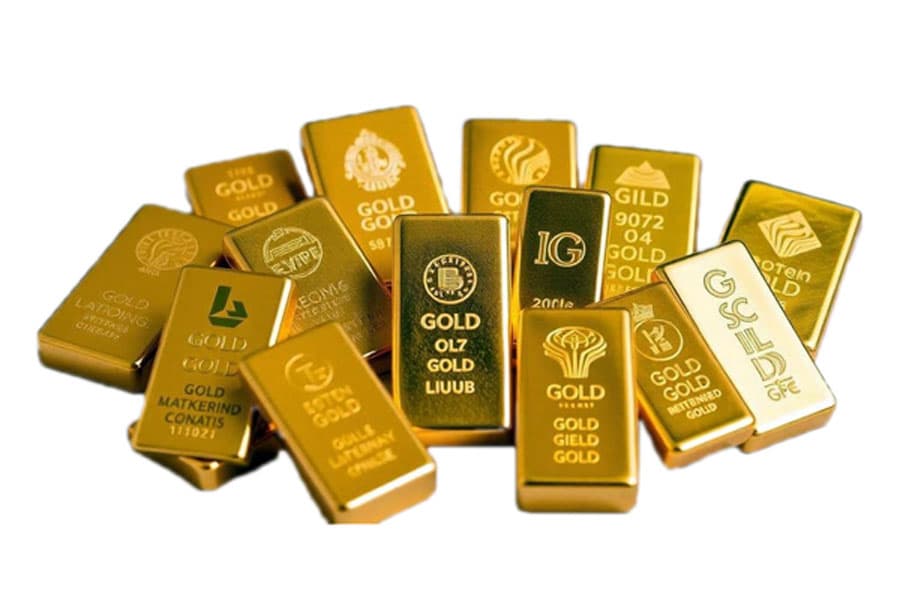
Precious metals including gold and silver have turned pricier recently. This was the trend last year when central banks around the world added hundreds of tons of gold to their reserves, according to the World Gold Council trade association. Similarly, price of silver has also seen a significant rise due to supply tightness and industrial demand. Notably, silver's price increased not exactly due to its worth as investment asset. It is also used in industries for its property as an excellent conductor of electricity and its use in electrical vehicles. China, which is the world's second biggest producer of silver, has said it would restrict the export of the precious metal. That is also a reason for silver's price hike. So, a combination of factors created the perfect storm for 2025's rally of precious metals, not the least of which centred around geopolitical turmoil. As president Trump increased inflation concerns, more investors parked their money in gold as a result. Events in the Middle East and the war in Ukraine contributed to global uncertainty. Inflows into exchange-traded funds (ETFs), which are baskets of securities such as stocks, bonds or commodities that pool investor money to buy a diversified portfolio, trade on stock exchanges just like individual shares, tell the story. Global gold ETFs now have a little more than a half trillion dollars in assets, with inflows on track for their strongest year ever.


The depreciating US dollar also steered more investors to gold. Dollar has fallen about 10 per cent this year versus a basket of global currencies, and more countries are turning to gold rather than the dollar to house their reserves. So, it appears, gold is returning to its heyday of the long past centuries, even millennia ago when it was the sole standard of value and wealth. Throughout human history gold has been considered as a precious metal. Since ancient times it is being used both as jewellery and in trade as something that embodied value. Since early civilisations to the modern time, gold has played a significant role in shaping the economies and societies in various cultures. Gold was used for trade among ancient civilizations, such as the Phoenicians, who traded with the ancient Egyptians. Ancient Lydians (Indo-European people of Asia Minor, Anatolia, who came to prominence between 1180 BC and 546 BC) for instance, minted the first coins from a naturally occurring alloy of gold and silver called electrum. These coins were accepted as a medium of exchange and became the standard currency in the Mediterranean region. The ancient Romans and Greeks used gold primarily for trade and commerce. The Romans minted gold coins which became the standard currency in the Mediterranean world. Their use continued throughout the Middle Ages when gold played a crucial role in European economies. So, since time immemorial, gold is considered a store of value and widely used as an investment. Small wonder that many countries hold significant gold reserves. However, gold is valuable not only as a currency. Its value also lies in its use in industry, especially in electronics, medicine and in the aerospace sectors.
In the 19th and early 20th centuries, gold became the basis for the gold standard. Under the gold standard, the value of currencies was based on the amount of gold held by the respective countries. The gold standard was widely used until the 1930s when most countries abandoned it due to the economic crisis caused by the Great Depression. The gold standard was officially replaced by the US dollar as a fully fiat currency in 1971, when US President Richard Nixon ended the direct convertibility of dollars to gold. This action terminated the Bretton Woods system (established in 1944 after World War II. According to this system, international currencies were pegged to the US dollar, which was in turn convertible to gold for central banks). This move facilitated transition of the global economy to a floating exchange rate system. But, of late, the trends are reversing as nations across the globe have been significantly increasing their gold holdings. This move was prompted by Russia's invasion of Ukraine in February 2022, when Western nations froze Russia's Central Bank funds in US dollar-dominated currencies. It was a major turning point, as it demonstrated the vulnerability of holding assets in the hands of other countries and in their currencies. Gold being a tangible asset typically stored domestically and seen as politically neutral, it is immune to sanctions or counterparty risks. As part of a strategic shift towards diversification and risk management, countries are reducing their reliance on the dollar system. Meanwhile, weakness of US dollar, uncertainties in the international market, geopolitical tensions and a host of other issues have driven up the value of precious metals, especially gold during the entire 2025. Gold and silver prices, according to market analyst, Rania Gule, as quoted by the BBC, have been experiencing a notable rise due to the interplay of several economic, investment, and geopolitical factors. The main driver of the price hike of precious metals are expectations that the US Federal Reserve will cut interest rates again in 2026. In consequence, gold experienced the highest ever price surge by as high as 65 per cent since the beginning of 2025 surpassing the performance of about other risk assets, such as US stocks, global bonds and cryptocurrencies. In other words, that gold is a safe-haven investment was amply demonstrated last year. Even the era of high-inflation of the late 1970s and early 1980s did not experience such a rush of investment in gold.
Consider in this connection that spot gold prices hit an all-time high of around US$ 4,560 per troy ounce (which is equivalent to about 1.097 standard ounces) recently. However, experts believe that gold's bull run might moderate somewhat in 2026. That said, most see the only way gold will fall next year is if global economic growth exceeds expectations. But it might again surge in the event of a substantial global slowdown. To sum up, with the value of US dollar as the reserve currency of the world gradually waning, gold appears to be taking its place. This trend is going to continue until other internationally accepted currencies are developed as an alternative to the US dollar.