


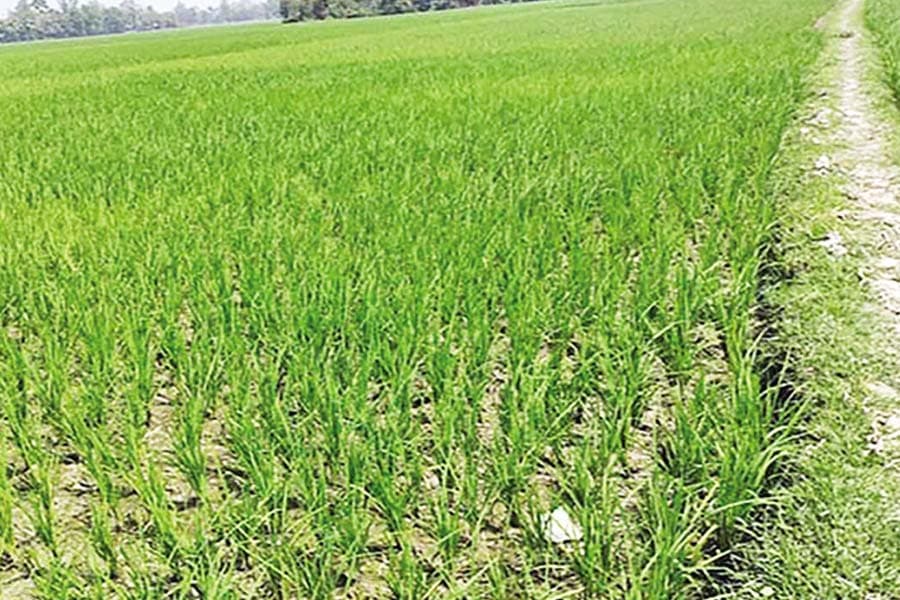
Amid the unprecedented disruption in global oil and gas supplies due to lingering war in the Middle East, problems in the transport sector and concern over energy security are dominating the headlines. However, a parallel crisis is quietly unfolding in a vital sector of the national economy - agriculture.


The war came at a time when the farmers in Bangladesh started Boro cultivation, the country's largest and most productive rice season. Typically harvested from April to June, Boro rice requires intensive fertilisation as well as irrigation. However, farmers are now facing a double whammy: shortages and rising prices of fertiliser, along with disruptions to irrigation due to a lack of diesel.
A recent news report gives a shocking picture of farmers fearing heavy losses during the current Boro season - not because of the vagaries of nature, but due to the whimsical and reckless decisions of distant, war-mongering leaders. A farmer named Abdur Rahman Gazi in Dumuria upazila of Khulna fears a decline of up to 50 maunds in his paddy yield this year due to inadequate irrigation on his two bighas of land. His plight starkly illustrates the devastating impact of the war on Bangladesh's rice fields.
As the authorities have restricted the sale of fuel in canisters or bottles to curb hoarding, farmers are left in difficult situation over securing diesel for irrigation. Even when fuel oil is available in the open market, it comes at exorbitant prices, well beyond the reach of marginal farmers. Consequently, thousands of farmers like Rahman now stare at a massive loss as their fields run dry due to lack of irrigation.
It raises a troubling question: why are those who sustain the nation's food supply being sidelined when it comes to access to fuel oil? The economic hardship that farmers will face as a result of crop failures is undoubtedly a matter of grave concern, but the more ominous aspect of this development is its likely disastrous impact on the nation's food security. Unless an adequate supply of diesel is ensured for irrigation, the consequences will not only be borne by individual farmers but will also ripple through the market and, ultimately, affect every household.
Meanwhile, the war in Iran has disrupted global oil and gas supplies, particularly through the Strait of Hormuz, causing global energy prices to spike. This shock has cascaded into the fertiliser sector, where natural gas is used both as feedstock and as an energy source for producing nitrogen-based fertilisers. Bangladesh has already shut down four of its five fertiliser factories amid a severe gas shortage.
The Ministry of Agriculture reportedly has a stock of 1.8 million tonnes of fertiliser against an annual demand of 6.9 million tonnes. Around 80 per cent of the country's fertiliser needs are met through imports. However, imports are becoming more expensive as global production declines and prices surge, raising concerns about ensuring sufficient supply for the upcoming Rabi and Boro seasons.
Nearly half of the world's traded urea, along with large volumes of other fertilisers, is exported from Gulf countries via the Strait of Hormuz, leaving global agriculture highly vulnerable to any disruption. Al Jazeera reports that urea export prices from the Middle East have surged by around 40 per cent, rising from just under $500 to over $700 per metric tonne as of last Friday-nearly 60 per cent higher than this time last year.
The Chief Economist of the Food and Agriculture Organization of the United Nations (FAO), Máximo Torero, recently warned that the ongoing disruption to the Strait of Hormuz is triggering one of the most severe shocks to global commodity flows in recent years, with significant implications for food security, agricultural production, and global markets. He singled out Bangladesh as one of the South Asian countries facing the most immediate impact, alongside India, Pakistan, and Sri Lanka. He also warned that unlike the 2022 Russia-Ukraine crisis, when countries were able to find alternative sources from the Gulf, this time such alternatives may be far more limited, since the Gulf itself is at the heart of the problem.
Against this backdrop, proactive policy measures from the government are imperative. First, domestic gas allocation must prioritise fertiliser production over competing uses, such as CNG-run vehicles or cooking, to safeguard food security. Simultaneously, the government should closely monitor global markets and support the private sector in timely imports of fertiliser to prevent shortages.
Second, the Ministry of Agriculture must ensure strict market monitoring to prevent hoarding and black marketing. Experience shows that unscrupulous traders exploit such situations. Recent reports indicate that although the government has fixed the price of a sack of urea fertiliser at Tk 1,250, farmers are paying between Tk 1,450 and Tk 1,460. A similar situation exists for DAP fertiliser, with an extra Tk 200 charged per sack. Farmers allege that dealers are creating artificial shortages to hike up the prices. The problem is not limited to fertiliser alone. Rising costs of pesticides and other agricultural inputs are also forcing many farmers to reduce cultivation.
Over the years, the agriculture sector achieved brilliant successes in terms of research and development of new strains of crops and crop diversification, brining the country close to achieving self-sufficiency in food production. These achievements of the sector not only contributed to the relative economic stability of the country but also to an increased calorie intake of the people thereby helping poverty alleviation. Quality seeds, fertilizers and pesticides are some of the most fundamental inputs that the agricultural sector hinges upon. Slightest compromise on the question of these vital inputs is therefore suicidal for the country.
aktuhin.fexpress@gmail.com